
Home › Refrigeration by industry › Liquor store refrigeration
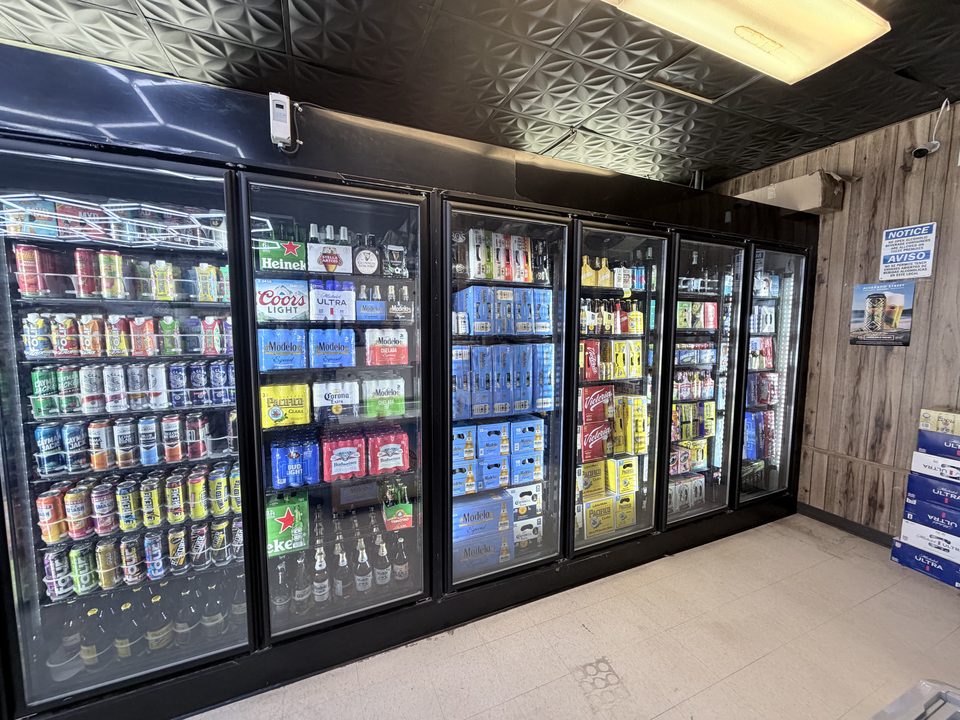
In a liquor store, the cold wall is the store. If the beer is warm or the doors are fogged, customers go down the street. Cool Aid designs, installs, repairs and maintains refrigeration for liquor stores and bottle shops across the Bay Area: beer caves, walk-in coolers with glass doors, beverage merchandisers and ice.
Refrigeration down right now? Call 1-800-266-5243. We answer until 9 PM, 7 days a week, for emergency commercial refrigeration repair across the Bay Area.
Liquor store refrigeration guides
- Walk-in coolers with glass doorsThe glass-door cold wall: planning, installation and repair.
- Beer cave planning guideSpace, doors, safety, sizing and refrigerant rules before you build.
The equipment in a liquor store
- Walk-in cooler with glass doors. The classic cold wall: customers open glass doors on the sales floor while staff restock from inside. See walk-in coolers with glass doors.
- Beer cave. A walk-in cooler customers walk into to pick up cases. See beer cave installation and repair and our beer cave planning guide.
- Glass door merchandisers. Stand-alone beverage coolers by the register or in the aisles. See glass door merchandiser repair.
- Ice. Bagged ice merchandisers and the ice machines that fill them. See freezers and ice merchandisers and ice machine repair.
- Condensing units. Usually on the roof or behind the store. See condensing unit replacement.
What liquor store refrigeration has to do well
Handle constant door traffic
Glass doors and customer entry doors open all day, and every opening lets warm, moist air in. That is why liquor store systems need to be sized for traffic, not just box size, and why door closers matter. Federal rules require automatic door closers on standard-size walk-in doors (10 CFR 431.306).
Keep glass clear
Fogged doors hide product. Door and frame heaters keep glass above the dew point of the store air, and anti-sweat heater controls cut the energy they use. PG&E's business rebate list includes anti-sweat heater controls for cooler and freezer doors (PG&E).
Stay legal to service
Many stores still run R-404A systems. In California, newly produced refrigerant with a GWP over 2,200 may no longer be sold, so those systems are serviced with certified reclaimed refrigerant (HSC 39735). Replacement systems must use refrigerants allowed for new equipment: the federal limit for new remote condensing units is a GWP under 1,400 from July 27, 2026 (40 CFR 84.54), and California bans R-404A in new remote condensing units (CARB). Our refrigerant rules guide explains the timeline.
Food items still follow the food code
Beer and wine are not potentially hazardous food, but if you sell milk, sandwiches or deli items, those follow California's cold-holding rules: 41°F or below for most items, 45°F for pasteurized milk in sealed original containers (HSC 113996).
Maintenance for a cold wall
- Clean condenser coils on the manufacturer schedule. Heatcraft calls for checking condensing unit coils quarterly and cleaning them twice a year (Heatcraft).
- Check door gaskets, closers and heaters. Kolpak notes that frost around the door jamb means a failed heater or too much moisture (Kolpak).
- Keep product off the evaporator and out of the airflow inside the box.
See maintenance plans and lowering refrigeration energy costs. Other industries: convenience stores, restaurants, hotels, all under refrigeration by industry.
Get liquor store refrigeration service →
Frequently asked questions
What temperature should a liquor store beer cooler run at?
There is no food-code temperature for beer. Most stores set a temperature their customers expect for cold beer and keep it steady. If the same box holds dairy or deli items, those must meet the food code, usually 41°F or below.
Can you add glass doors to my existing walk-in?
Sometimes. It depends on the wall the doors would go in, the space in front of it and whether the refrigeration system can handle the extra door traffic. We assess the box before recommending it.
Do you work nights so the store stays open?
Emergency repairs run until 9 PM, 7 days a week. Planned work can often be scheduled around your busiest hours.
More commercial refrigeration
By industry
By equipment
- Walk-in freezer repair
- Walk-in freezer installation
- Beer cave installation and repair
- Reach-in cooler and freezer repair
- Glass door merchandiser repair
- Prep table refrigerator repair
- Walk-in cooler repair
- Walk-in cooler installation
- Ice machine repair
- Condensing unit replacement
- Refrigeration maintenance
- Emergency refrigeration repair
Or start from commercial refrigeration by industry, or the Commercial Refrigeration Help Center if something is failing right now.