
Get a quote1-800-266-5243
Home1-800-266-5243
Hayward sits on the east shore of San Francisco Bay in Alameda County, and that position shapes almost everything about heating and cooling here. Air off the bay and the marshes along the Hayward Regional Shoreline carries salt and moisture inland across the flats, while the neighborhoods climbing toward the hills above Cal State East Bay sit above the fog and run warmer on the same afternoon. One city, two very different loads on the same equipment.
Cool Aid has been a family business since Glenn McKinny founded it in 1966, and his son Jim runs it today. We work out of Santa Clara and serve Hayward, licensed in California for both HVAC (C-20) and refrigeration (C-38), EPA Universal certified, and available for emergency calls 24 hours a day.
Still comparing contractors? See our list of the best HVAC companies in Hayward, including companies other than ours.
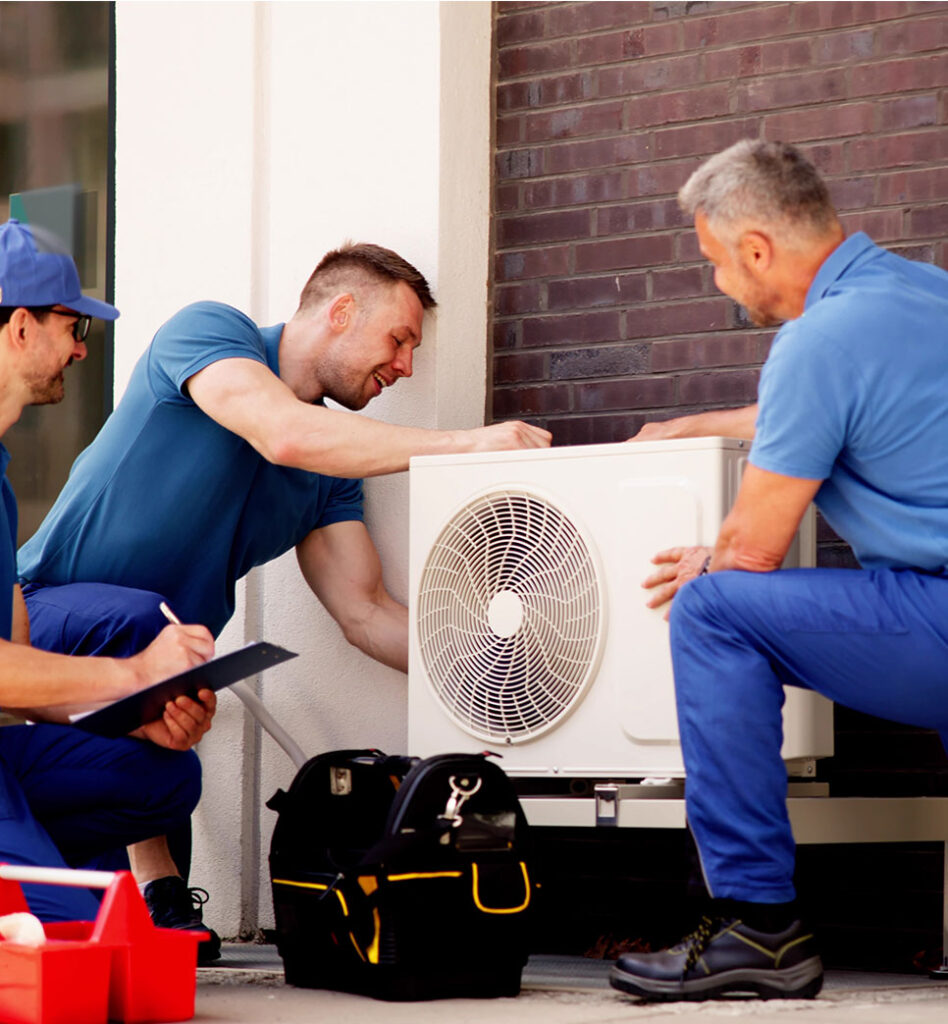
Hayward's building stock runs from postwar tract houses on the flats to hillside customs, older bungalows near downtown and B Street, dense townhome and apartment construction around the BART corridor, and warehouse and light industrial space along Interstate 880 and Clawiter Road. Service work has to fit all of it, which means everything from wall furnaces and small ducted splits to rooftop packages and cold storage. A complete scope of work here usually covers:
We work in the single-family tracts around Jackson Triangle and Fairway Park, hillside homes east of Mission Boulevard, apartment and condo complexes, downtown storefronts and restaurants, medical offices, and the distribution and food-handling buildings west of the freeway.
Hayward homeowners can see the full scope on our residential HVAC service page, and property managers, restaurant operators, and warehouse owners will find equipment-specific detail under commercial HVAC services.
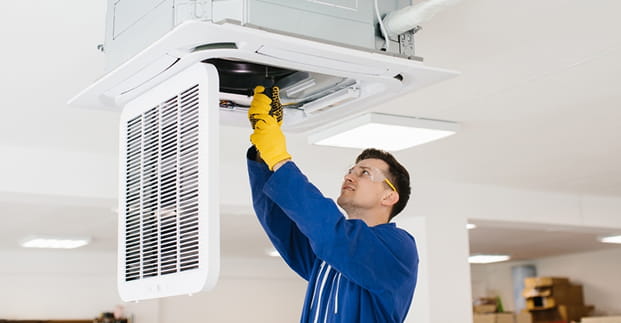
The system mix in Hayward tracks the era a building went up. Tracts built during the city's postwar expansion often still have a gas furnace in a hall closet, or a floor or wall unit, with a condenser added years later and ductwork that was never sized for cooling. Homes in the Hayward hills tend toward larger split systems or zoned equipment because of the elevation change and the west-facing glass.
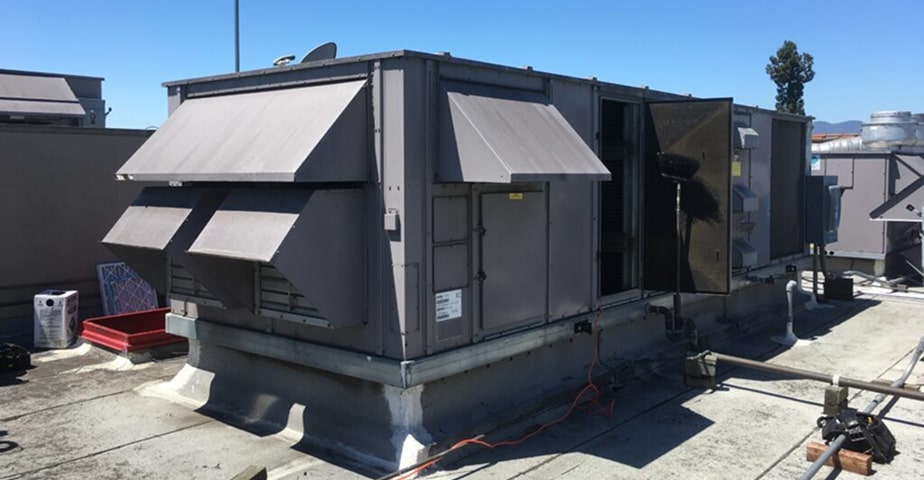
On the commercial side, the retail centers near Southland Mall, the downtown restaurant blocks, and the industrial buildings around Hayward Executive Airport lean heavily on packaged rooftop equipment, with VRF and ductless gear showing up in newer offices and remodeled suites.
Rooftop units carry most of Hayward's retail, office, and warehouse space along the 880 corridor, where flat roofs and salt-carrying bay air make coil condition and cabinet corrosion the things to watch.
Packaged and split systems cover most Hayward homes and small commercial suites, including the many 1950s and 1960s tract houses where a condenser was added long after the furnace and ducts went in.
VRF fits Hayward's newer mixed-use and townhome projects near the BART stations and remodeled downtown office suites, where separate tenants and sun exposures need independent zone control without a mechanical room.
Heat pumps make sense across most of Hayward given the mild winters near the bay, and they let a homeowner retire a gas furnace and an old wall heater in one permitted project while meeting current efficiency standards.

Hayward gets the marine layer most mornings through spring and summer, pushed in over the shoreline marshes and burning off by midday on the flats while the hills clear earlier. That daily swing is hard on equipment. A condenser sits in damp, salt-laden air overnight, then works against a warm dry afternoon, and the cycle repeats for months. Coils and cabinets near the shoreline and around the airport corrode faster than identical units set a few miles east.
Then come the fall offshore stretches, when the wind reverses, the fog stops arriving, and inland heat rolls right down to the bay. Those are the days undersized systems in older Hayward tracts give up. Smoke seasons add another layer, loading filters far faster than a normal service schedule accounts for.
Practically, that means specifying coated coils and corrosion-resistant hardware for anything mounted near the water or on a west-facing Hayward roof, and sizing to the handful of genuinely hot afternoons rather than to the foggy average. Oversized equipment short-cycles and never pulls moisture out of a house. Filter changes and coil cleaning also need a tighter interval here than a printed manual assumes, which we cover in our Bay Area residential HVAC guide.
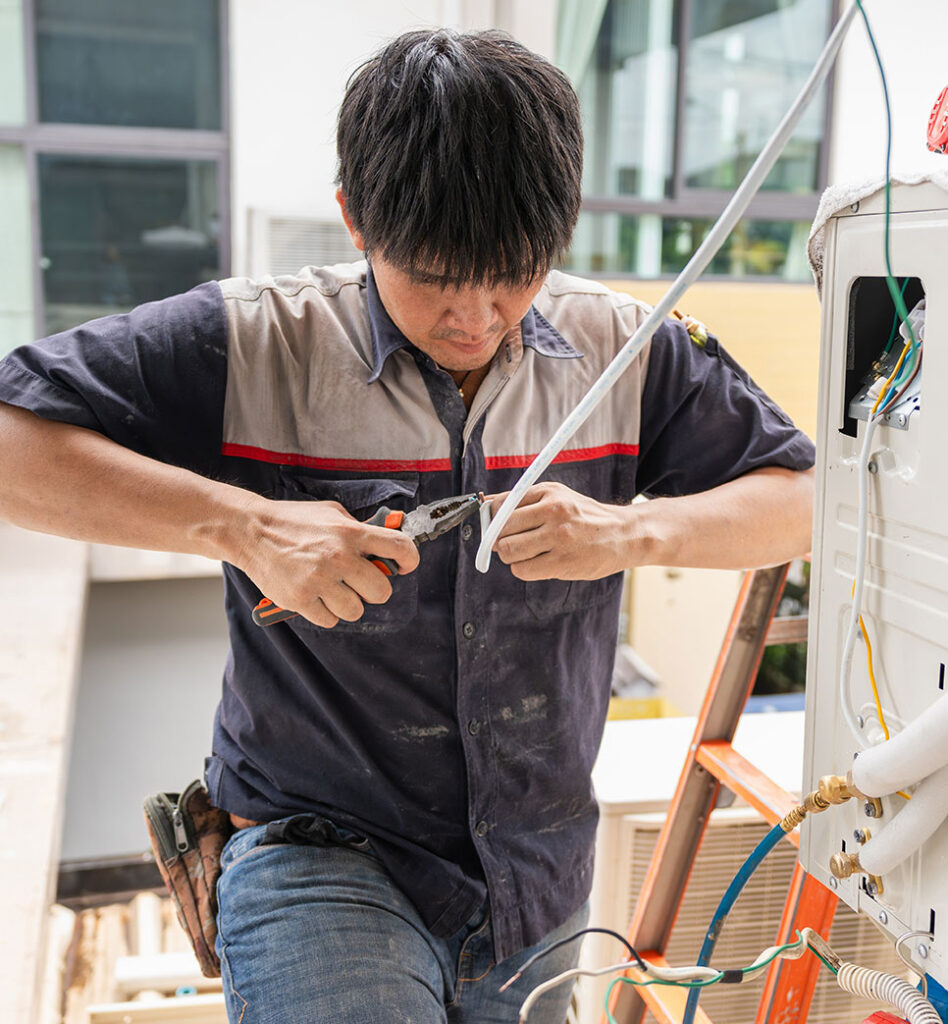
Mechanical work in Hayward is permitted and inspected through the City of Hayward, and replacement equipment has to meet California Title 24 requirements along with current SEER2 ratings. On older tract houses that usually surfaces two problems at once: duct leakage that will not pass a test, and a main electrical panel with no room for a heat pump or a larger air handler. Hillside properties east of Mission Boulevard add access constraints, since a long hose run or a lift is often the only practical way to set a condenser on a steep lot.
Key Installation Factors
An installation that is only close enough costs the owner every month it runs. We handle the load calculation, equipment selection, duct sealing and repair, refrigerant line work, permit filing, inspection coordination, and final performance testing, so a system in a Hayward home or storefront actually delivers what the rating plate promises. The work is backed by our one-year parts and labor warranty.
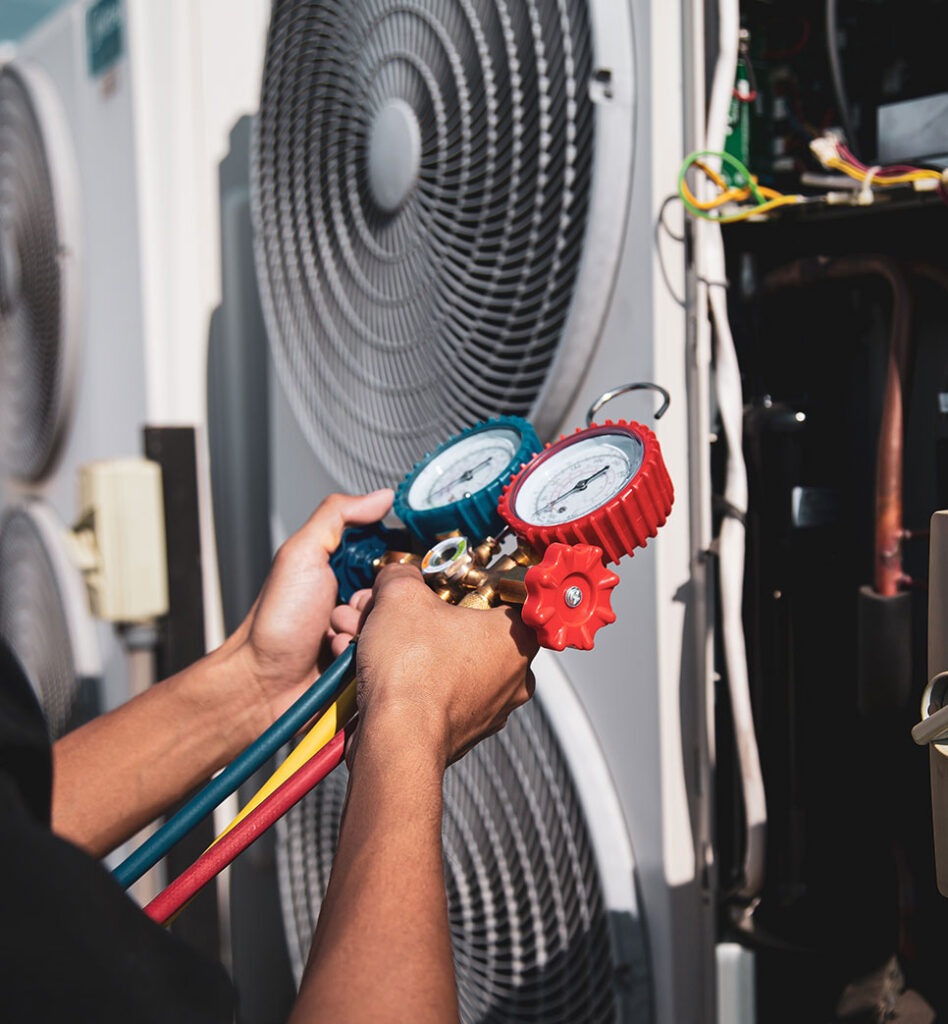
Hayward repair calls cluster in two windows. The first is the first real heat of the season, when a condenser that idled through months of fog is asked to run all afternoon and does not. The second is the fall offshore stretch, when the bay breeze quits and the flats heat up faster than anyone plans for. Restaurants downtown and along Mission Boulevard call for a different reason, usually a walk-in or an ice machine going down mid-service.
We repair residential and commercial equipment throughout the city, and our emergency HVAC repair service runs around the clock, because a warehouse cooler or a server closet in Hayward does not wait for business hours.
Common HVAC Problems We Fix
We chase the cause, not the symptom. A Hayward house that will not cool is often a duct or return-air problem rather than a failing compressor, and a rooftop unit tripping on high head pressure near the shoreline is frequently a corroded, dirty condenser coil. Once we know what is actually wrong, we lay repair and replacement out side by side, including how much service life is realistically left in the equipment, and you make the call.
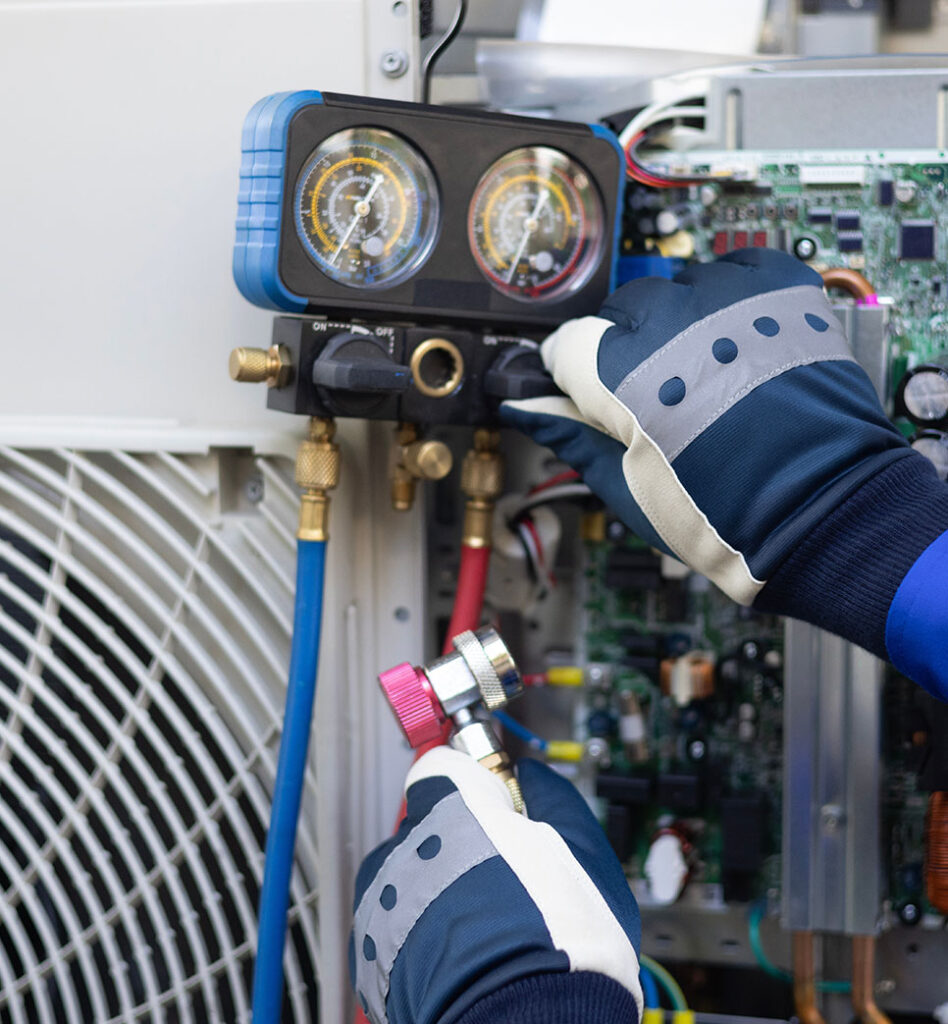
Equipment in Hayward ages on two clocks. Salt and moisture off the bay work on coil fins, fasteners, and sheet metal all year, and the damage stays quiet until efficiency drops or a cabinet starts to rust through. Meanwhile the long mild stretches lull people into skipping service, so the first hot week finds a system with a loaded filter, a dirty evaporator, and a capacitor that has been marginal since last summer.
Smoke season compounds it. Fine particulate fills filters quickly, and a restricted filter starves airflow, ices coils, and puts strain on the blower and compressor. Regular service catches all of that before it becomes a no-cooling call in September.
What’s Included in HVAC Maintenance
For Hayward's warehouses, restaurants, medical offices, and retail centers, a scheduled program is mostly about downtime and access. Rooftop units are out of sight until they fail, and refrigeration failures put product at risk the same day. Homeowners in the older tracts need something simpler and just as consistent: filters changed on a real schedule, coils cleaned, condensate drains cleared, and controls checked before the weather turns.
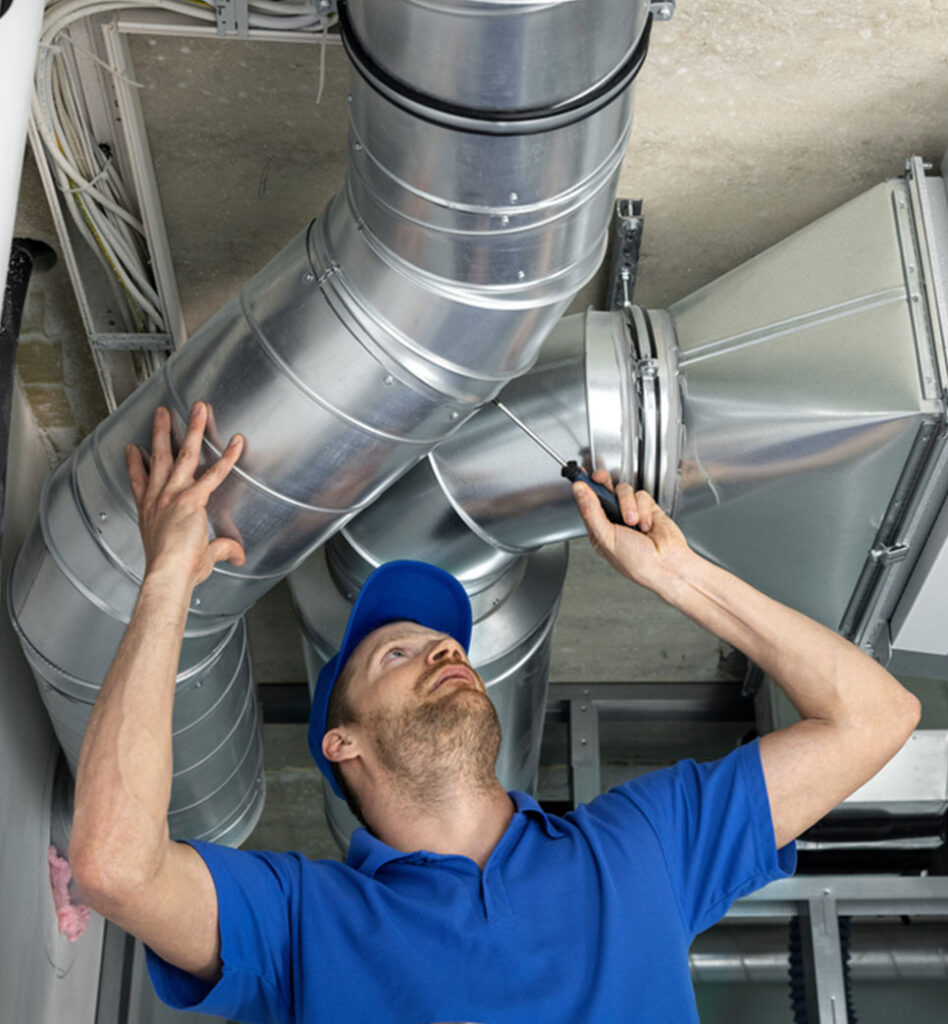
PG&E rates make efficiency a monthly line item in Hayward, not an abstraction. Much of the city's housing was built with a gas furnace and no cooling at all, so the upgrade conversation is usually about adding capability and lowering operating cost in the same project. A properly sized heat pump does both, and Hayward's mild winters near the bay sit comfortably inside the range where heat pumps perform without leaning on backup heat.
New equipment also arrives under current SEER2 standards and, increasingly, with lower-GWP refrigerants such as R-454B or R-32 as the industry moves away from R-410A.
Ways to Improve HVAC Efficiency
For commercial owners along the 880 corridor, the biggest gains usually come from replacing aging rooftop units, adding economizers and better controls, and sealing distribution that has been leaking into a warehouse ceiling for years. For Hayward homeowners, the order is often duct sealing and insulation first and equipment second, because a new high-efficiency system feeding leaky 1960s ductwork gives back much of what it promised. We look at the building before we recommend hardware.
We are based in Santa Clara and serve Hayward along with the neighboring East Bay communities: San Leandro and San Lorenzo to the north, Castro Valley and Cherryland to the east, Union City and Fremont to the south, and the shoreline stretch out toward the San Mateo Bridge approach.
Local knowledge is not a slogan here. Knowing that a house in the Hayward hills carries a different cooling load than the same floor plan down near Hesperian Boulevard, or that shoreline and airport-area equipment corrodes faster, changes what we specify and how often we recommend service. That is the difference between a system that reaches its expected life and one that gets replaced early.
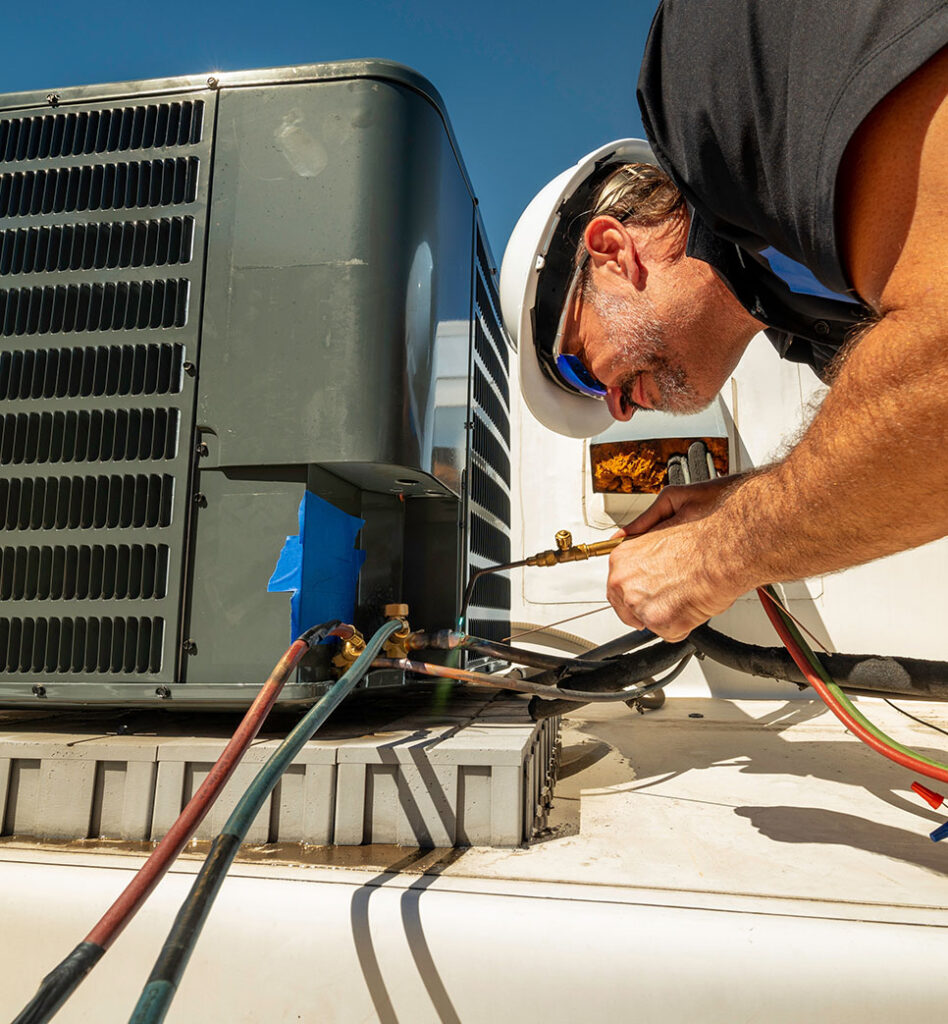
Cool Aid has been in the trade since 1966, when Glenn McKinny, a former US Navy Chief Engineer, started the business. His son Jim McKinny owns it now and has more than 37 years of his own in the field. That continuity is the reason a Hayward homeowner and the operator of a warehouse off Clawiter Road get the same standard of work.
We are licensed in California for both HVAC and refrigeration, EPA Universal certified, and we back parts and labor for a year. Doing it right the first time is cheaper for everyone, and on a Hayward rooftop it also means not making a second trip up the ladder in a bay wind.
What Sets Us Apart
We diagnose before we quote. That means measuring airflow and refrigerant charge, checking electrical components and controls, and looking at the ductwork instead of assuming the box outside is at fault. When there is more than one reasonable path forward, a Hayward customer hears all of them, including the option of keeping older equipment running another season when that is genuinely the better value.
Usually, yes. Many Hayward tract homes from the postwar years have a furnace and ductwork but no cooling, and the real questions are whether the existing ducts can carry the airflow, whether the main electrical panel has capacity, and where a condenser can sit on the lot. In a lot of those houses a heat pump replacing the furnace is the cleaner answer, because it adds cooling and upgrades the heating side in one permitted project.
Yes. Air off the bay and the marshes at the Hayward Regional Shoreline carries salt, and it settles on condenser coils and cabinets. Over time that shows up as fin corrosion, reduced heat transfer, and rusted fasteners and panels. Equipment within a few miles of the water benefits from coated coils, regular rinsing, and more frequent coil cleaning than the same unit would need several miles inland.
Yes. Changeouts and new installations are permitted and inspected through the City of Hayward, and the work has to meet California Title 24 energy requirements, which on older homes often includes duct leakage testing. We file the permit, coordinate the inspection, and handle any corrections, so you are not tracking paperwork or waiting on an inspector yourself.
Yes. We hold a California C-38 refrigeration license and are EPA Universal certified, and we service walk-in coolers and freezers, ice machines, and prep tables for downtown Hayward restaurants, markets along Mission Boulevard, and the food-handling and distribution buildings near the 880 corridor. Refrigeration failures are time-sensitive, which is why our emergency service runs 24 hours a day.
Smoke loads filters far faster than normal, and a restricted filter chokes airflow, which can freeze an evaporator coil and strain the blower and compressor. During smoke events we suggest checking filters much more often than the usual interval, closing outside air dampers on commercial units where the design allows it, and sealing ducts and returns so the building is not pulling smoky air in through gaps.
You call, we take down the details of the property and the equipment, and we set a window that works for you. A technician arrives with the tools to find the actual problem, walks you through what was found, and lays out the options in plain terms before any work begins. For Hayward commercial sites we coordinate roof access and after-hours timing so your operation keeps running.
Whether it is a no-cooling call up in the Hayward hills, a rooftop unit down at a business off Interstate 880, or a walk-in cooler that stopped holding temperature overnight, reach us at 1-800-266-5243 or through our contact page. Emergency service is available 24 hours a day.