
Get a quote1-800-266-5243
Home1-800-266-5243
Gilroy sits at the south end of the Santa Clara Valley, far enough inland that summer afternoons run hot and dry while the marine air pulling through the Pajaro gap drops the temperature sharply after sundown. That daily swing, plus a farming and food-processing economy that never really shuts off, makes cooling in Gilroy a different job than it is in Santa Clara or along the bay. Equipment here runs long, dusty hours.
Cool Aid has been a family business since Glenn McKinny founded it in 1966, and his son Jim McKinny runs it today. We hold California C-20 and C-38 licenses, our technicians are EPA Universal certified, and we answer emergency calls 24 hours a day, seven days a week.
Still comparing contractors? See our list of the best HVAC companies in Gilroy, including companies other than ours.
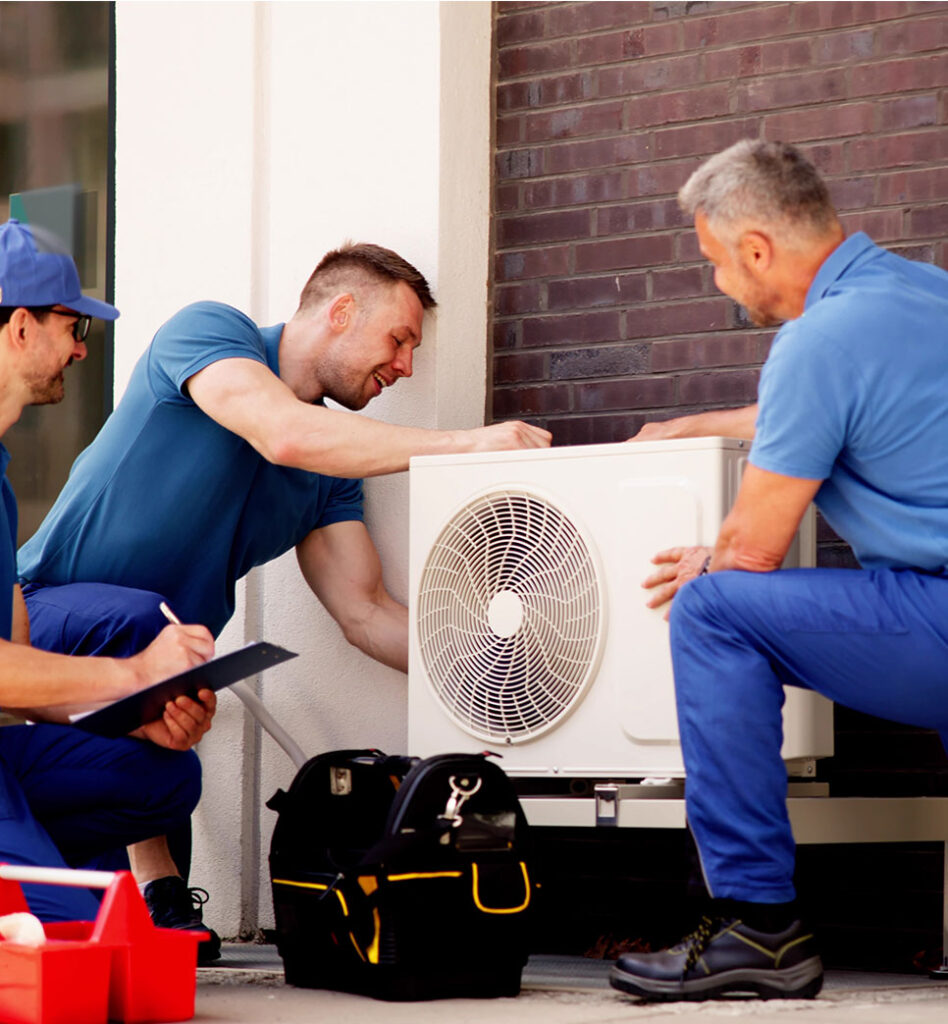
HVAC service in Gilroy covers a wide spread of property types, from bungalows off Monterey Street and 1970s tracts on the east side to newer subdivisions toward Hecker Pass, plus outlet retail, packing sheds, restaurants and cold storage along the 101 corridor. Summer load here is real, so sizing, airflow and refrigerant charge matter more than they do closer to the coast. A complete service visit generally includes:
We work on single-family homes, hillside and ranch properties west and south of town, apartment and townhome buildings, downtown storefronts, medical and dental offices, restaurants, retail centers, and agricultural and food-processing facilities around Gilroy.
Homeowners can review what we handle on our residential HVAC service page, and Gilroy business owners with rooftop units, split systems or process cooling can start with our commercial HVAC solutions.
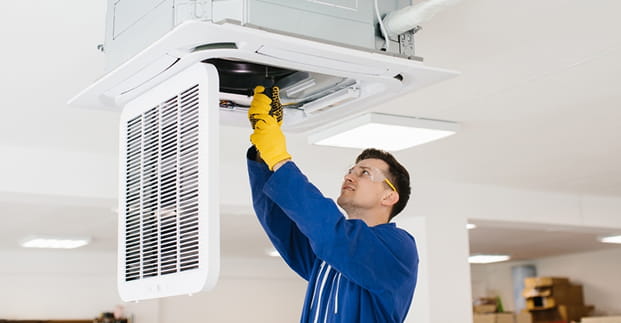
What gets installed in Gilroy tracks closely with when the building went up. Homes from the 1960s and 70s near downtown and the older east-side neighborhoods usually run a gas furnace in a closet or garage with a split-system condenser added at the side yard, often on undersized or leaky attic ductwork. Newer construction toward the west side and the hillside developments near Hecker Pass leans toward higher-efficiency split systems, zoning and, increasingly, all-electric heat pumps.
On the commercial side, the outlet center, the shopping plazas along First Street, and the light-industrial and agricultural buildings on the valley floor are almost all rooftop-unit territory, with dedicated refrigeration on top of that wherever produce or prepared food is involved.
Rooftop units carry most of Gilroy's retail, warehouse and packing-facility load. They sit fully exposed to valley heat and field dust, so coil condition and economizer function get checked first.
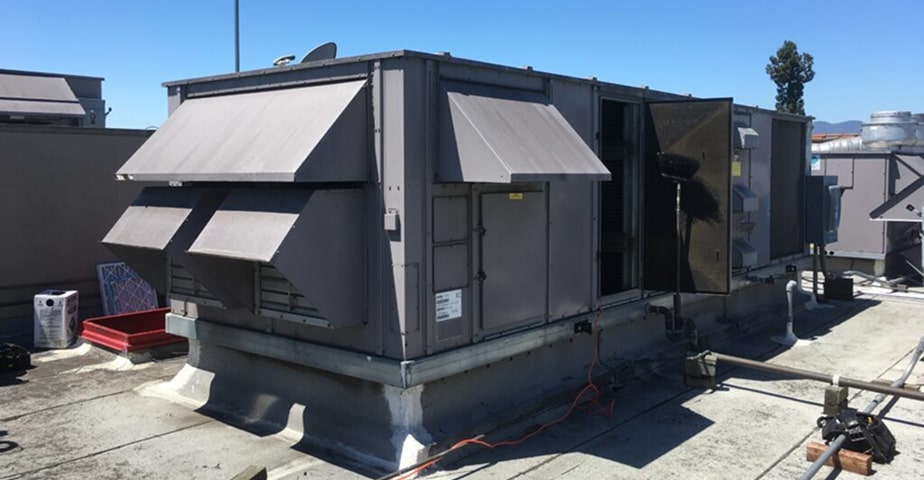
Split systems dominate Gilroy housing and small offices, while packaged units are common on older commercial buildings and on manufactured and ranch homes outside the city limits.
VRF makes sense in Gilroy's multi-tenant medical and office buildings and in mixed-use downtown conversions, where separate suites need independent control without a roof full of small units.
Heat pumps suit Gilroy's mild winters well, and with newer subdivisions built all-electric we are converting more furnace-and-condenser pairs to a single high-SEER2 heat pump.

Gilroy runs hot. Being at the inland south end of Santa Clara County, well away from the bay, it sees long stretches of dry triple-digit-adjacent afternoons through summer, and condensers here work far more annual hours than the same equipment would in Santa Clara or Sunnyvale. Then the marine influence comes through the gap from Monterey Bay in the evening and the temperature falls off fast, so systems cycle across a wide daily range instead of holding steady.
Agriculture is the other factor. Field dust, harvest debris and pollen load up condenser coils and clog filters faster than in a suburban setting. Winter brings tule fog and damp air to the valley floor, and wildfire smoke seasons push fine particulate through return systems that were never filtered for it.
All of that changes the specification. Equipment for Gilroy has to be sized for genuine peak cooling load rather than a mild coastal average, ducts need to be sealed and insulated because attic temperatures get extreme, and coils need cleaning on a shorter interval than a manufacturer's generic schedule suggests. Filtration deserves real thought too, both for dust and for smoke. Our Bay Area residential HVAC guide walks through how those choices interact.
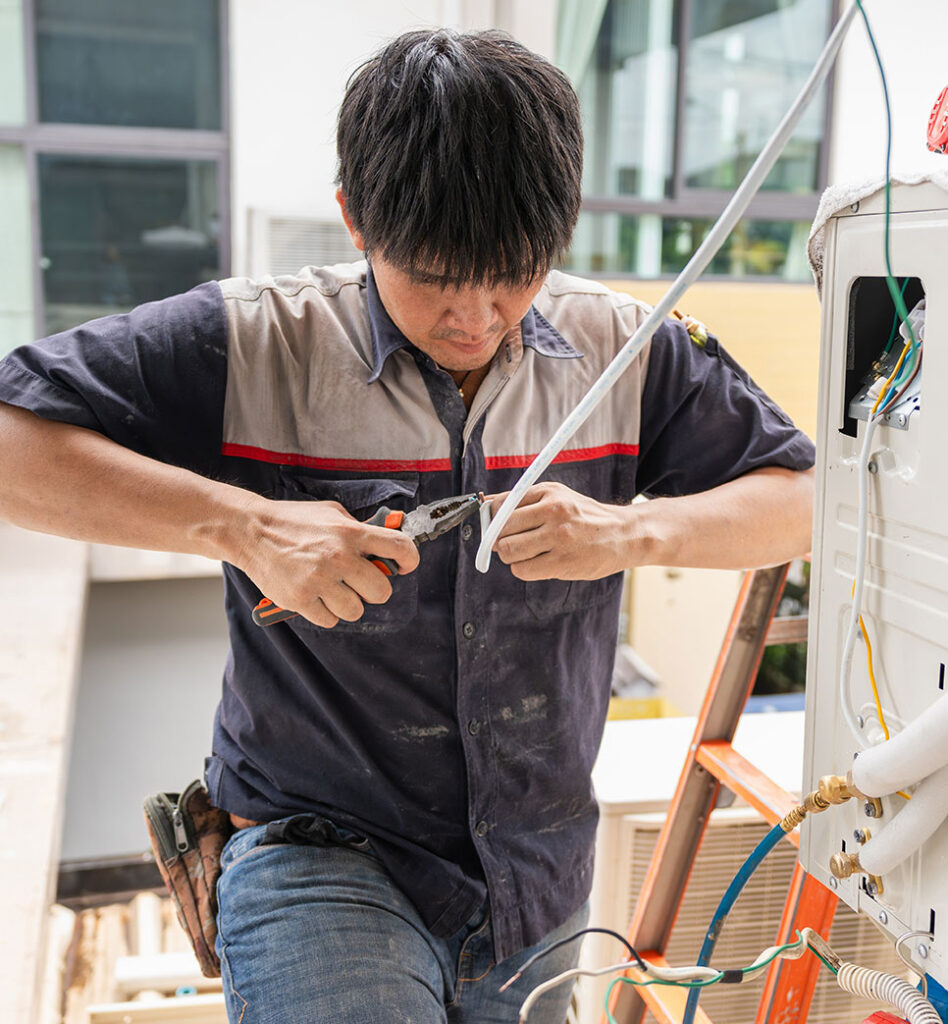
New equipment in Gilroy is permitted and inspected through the City of Gilroy building division, and every changeout has to document Title 24 compliance, including duct leakage and refrigerant charge verification where required. We handle that paperwork rather than leaving it to the owner. On older homes near downtown, the constraint is usually the electrical service, since a 100-amp panel may not support a heat pump conversion without an upgrade or a load calculation.
Access varies too. Hillside lots on the west side and single-stair roof access on older commercial buildings both affect how equipment gets set.
Key Installation Factors
A correct install is what determines whether a Gilroy system holds temperature on a 100-degree August afternoon or falls behind by mid-day. Duct design, static pressure, charge and airflow matter more than the badge on the box. We handle load calculation, equipment selection, permitting and inspection coordination, refrigerant line work, startup and performance testing, and we back the work with a 1-year parts and labor warranty.
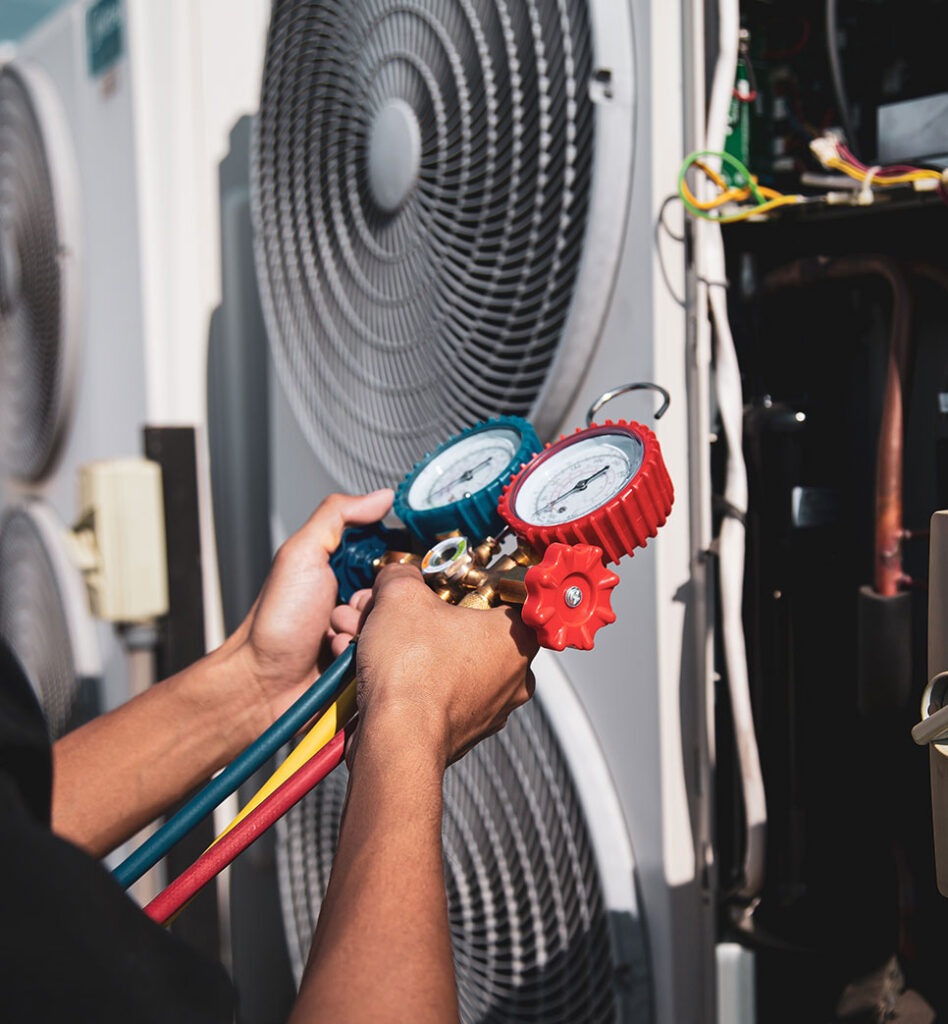
Failures in Gilroy cluster around heat spikes. When the valley strings together several days above the 90s, capacitors, contactors and compressors that were already marginal give out, and that is exactly when a house with no working AC becomes uncomfortable in a hurry. Commercial calls carry a second cost, because a down rooftop unit at a restaurant or a failed condensing unit on a walk-in means product at risk, not just discomfort. We answer emergency HVAC repair calls around the clock.
We repair residential split systems, packaged and rooftop equipment, heat pumps, ice machines, prep tables, and walk-in coolers and freezers.
Common HVAC Problems We Fix
We look for the cause rather than the symptom. A Gilroy condenser that trips on high head pressure is often telling you the coil is packed with field dust, not that the compressor is finished. Short cycling frequently traces back to restricted return air or a leaking duct run in a hot attic. Once we know what actually failed, we lay out the repair-versus-replace math honestly, including the equipment's age and where refrigerant availability is heading as the state moves away from R-410A.
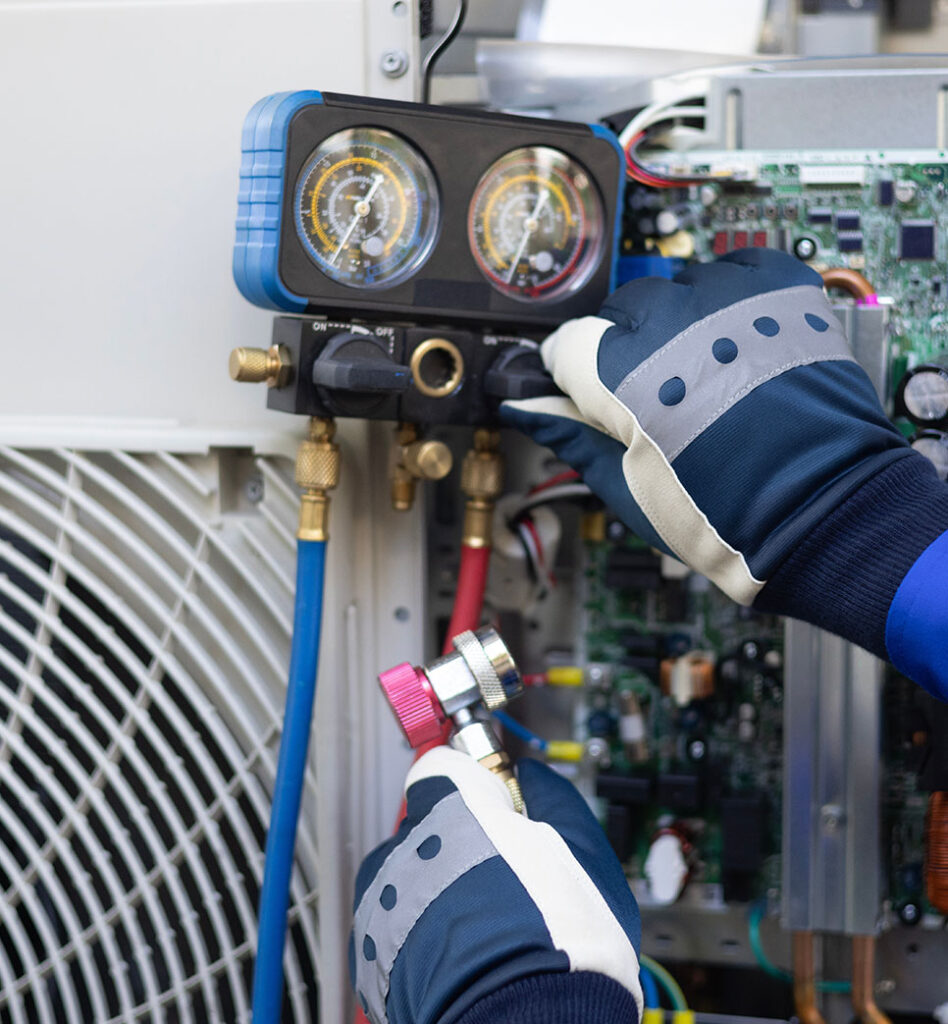
Equipment in Gilroy ages on an accelerated schedule. Run hours are high because the cooling season is long, and the dust load from surrounding farmland means condenser coils and filters foul quickly. A dirty coil raises head pressure, which raises amp draw, which shortens compressor life and shows up on the PG&E bill long before anything actually breaks.
The wide day-to-night swing adds thermal cycling stress on electrical components, and winter fog leaves standing moisture on outdoor units and rooftop cabinets. Maintenance in Gilroy is mostly about staying ahead of that: clean coils, correct charge, tight ducts and filters changed on a realistic interval rather than an annual one.
What’s Included in HVAC Maintenance
For Gilroy restaurants, grocers, food processors and packing operations, a scheduled program matters because refrigeration and rooftop failures cost inventory and hours, not just comfort. We build those visits around the busy season instead of the calendar. For homeowners, a spring check before the first real heat wave catches weak capacitors, low charge and blocked returns while there is still time to fix them without an emergency call.
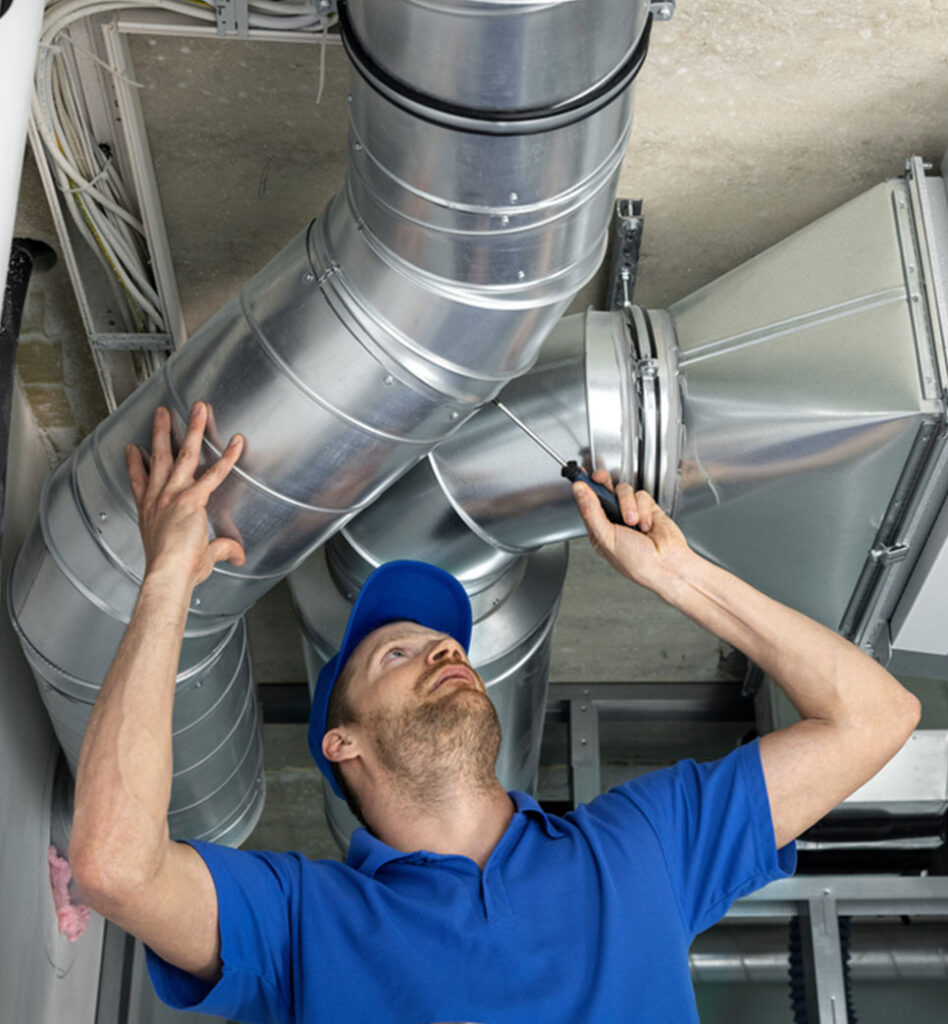
Gilroy's long cooling season means efficiency shows up on the bill faster here than in milder parts of the county. With PG&E rates where they are, the gap between an aging single-stage condenser and a modern SEER2 system or variable-capacity heat pump is measurable across a Gilroy summer, particularly on west-side homes with large glazing and afternoon sun exposure.
Newer construction around town is already trending all-electric, and heat-pump conversions on older homes are increasingly practical given how little heating Gilroy actually needs. The limiting factor is usually panel capacity and duct condition, not the equipment.
Ways to Improve HVAC Efficiency
For commercial owners along First Street and the 101 corridor, the highest-return work is often unglamorous: economizer repair, controls and scheduling, and rooftop units replaced before they fail rather than after. For homeowners, sealing and insulating duct runs frequently returns more comfort per dollar than a larger condenser would. We look at the building, the usage and the existing distribution before recommending anything.
We are based in Santa Clara and serve Gilroy along with the rest of South County, including Morgan Hill, San Martin and the surrounding unincorporated areas out toward Hecker Pass, Uvas and the Pacheco Pass side of town. Running the 101 corridor regularly means we know the difference between how equipment behaves up the valley and how it behaves down here.
That matters because Gilroy is not a coastal climate and should not be specified like one. Sizing, coil maintenance intervals and filtration all need to reflect inland heat and agricultural dust.
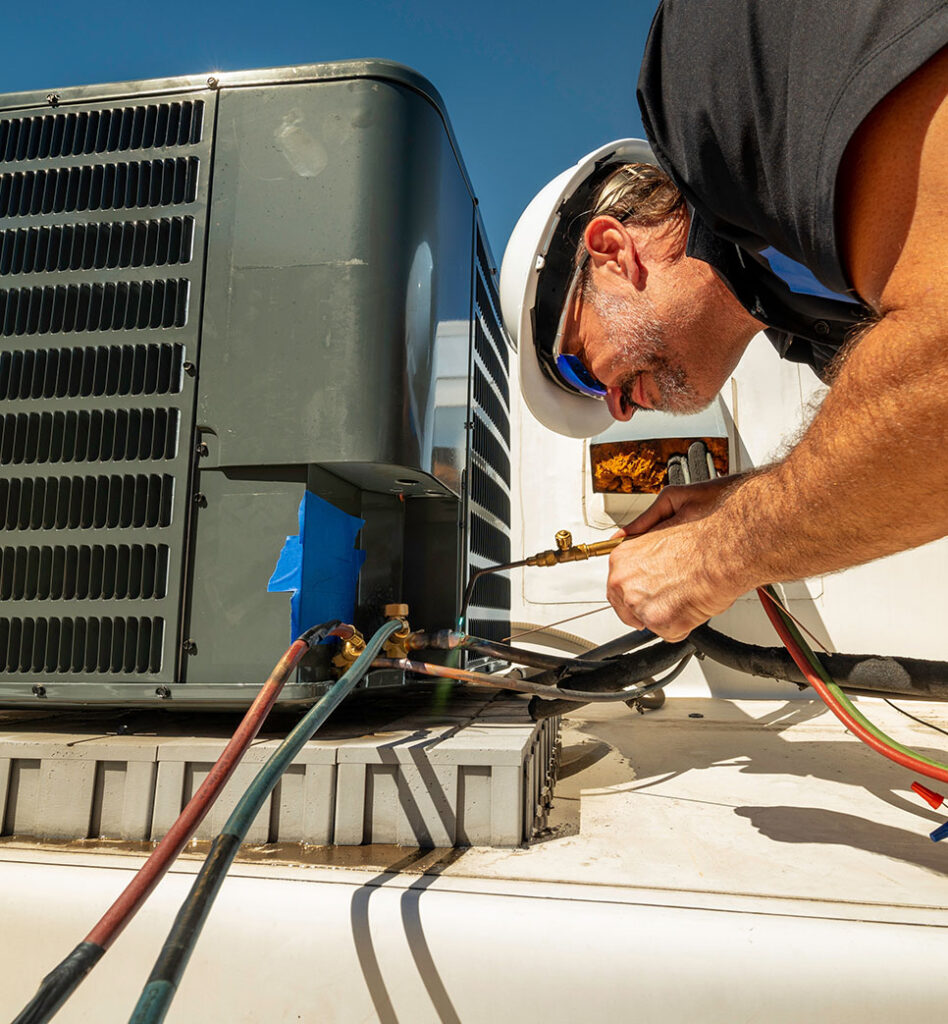
Cool Aid started in 1966 when Glenn McKinny, a former US Navy Chief Engineer, opened the doors. His son Jim McKinny owns the business now and has 37-plus years in the trade. That continuity is the whole point: the person accountable for the work has been doing it for decades, not for a season.
For Gilroy customers, that shows up as equipment sized for actual inland load, refrigeration work handled under a real C-38 license, and installations that pass inspection the first time. Every job we do carries a 1-year parts and labor warranty, and we answer the phone at all hours.
What Sets Us Apart
We diagnose before we quote. On a Gilroy service call that usually means checking static pressure and airflow, reading superheat and subcooling, inspecting the coil for dust loading, and looking at the duct system before assuming the equipment is the problem. Then we explain what we found and give you the options, including the one that costs less, so you can decide with the full picture in front of you.
Usually because the system is running at or past its capacity during peak load. Gilroy afternoons are far hotter than the coastal averages some equipment was sized against, and when evening marine air arrives the load drops and the same system catches up easily. The common causes are undersized or leaking ductwork in a hot attic, a dust-fouled condenser coil, low refrigerant charge, or equipment that was simply sized too small for an inland south-valley home.
Yes, noticeably. Gilroy is surrounded by working farmland, and airborne soil, harvest debris and pollen settle into outdoor condenser coils and load up return filters faster than in a purely suburban area. A blanketed coil cannot reject heat, so head pressure and amp draw climb, cooling capacity drops and compressor life shortens. We generally recommend a shorter coil-cleaning and filter interval here than the manufacturer's generic schedule suggests.
Yes. We hold a California C-38 refrigeration license and our technicians are EPA Universal certified, so we service walk-in coolers and freezers, ice machines, prep tables and reach-ins for Gilroy restaurants, markets, and food-processing and packing operations. Because a refrigeration failure puts product at risk rather than just comfort, we take those calls 24 hours a day and can set up scheduled maintenance timed around your busy season.
Often, yes. Gilroy winters are mild enough that a modern heat pump handles heating comfortably while giving you high-efficiency cooling for the long summer. The question with an older downtown home is rarely the climate and more often the electrical service and the ductwork. We check panel capacity, existing circuits, duct sizing and leakage first, then tell you honestly whether a conversion makes sense now or after other upgrades.
Yes. A change of equipment in Gilroy is permitted and inspected through the city building division, and California Title 24 requirements apply, which can include duct leakage testing and refrigerant charge verification depending on the scope. We pull the permit, schedule the inspection and handle the compliance documentation as part of the job so you are not managing that process yourself.
You tell us what the system is doing, we schedule a visit, and a technician arrives and actually tests before recommending anything. For a Gilroy call that means checking airflow, charge, electrical components and coil condition, then explaining what we found in plain terms with the options laid out. If parts are needed we tell you what and why before the work starts.
If your system is down or you want a look at it before the next Gilroy heat wave, call us at 1-800-266-5243. We answer around the clock for emergencies. You can also reach our team through the contact page to schedule a visit at a time that works for your home or business.