
Get a quote1-800-266-5243
Home1-800-266-5243
Cupertino sits in the west valley of Santa Clara County, pressed up against the foothills of the Santa Cruz Mountains, and that position drives most of the heating and cooling decisions made here. Summer afternoons on the flats along Stevens Creek Boulevard run hot and dry, then drop off quickly once the evening breeze works its way inland. The hills west of Foothill Boulevard hold heat differently than the neighborhoods near the Sunnyvale line, so two houses a few miles apart rarely need the same equipment.
Cool Aid has been family owned since 1966, when Glenn McKinny, a former US Navy Chief Engineer, started the business. We hold California C-20 and C-38 licenses, our technicians are EPA Universal certified, and we answer emergency calls 24 hours a day.
Still comparing contractors? See our list of the top HVAC companies in Cupertino, including companies other than ours.
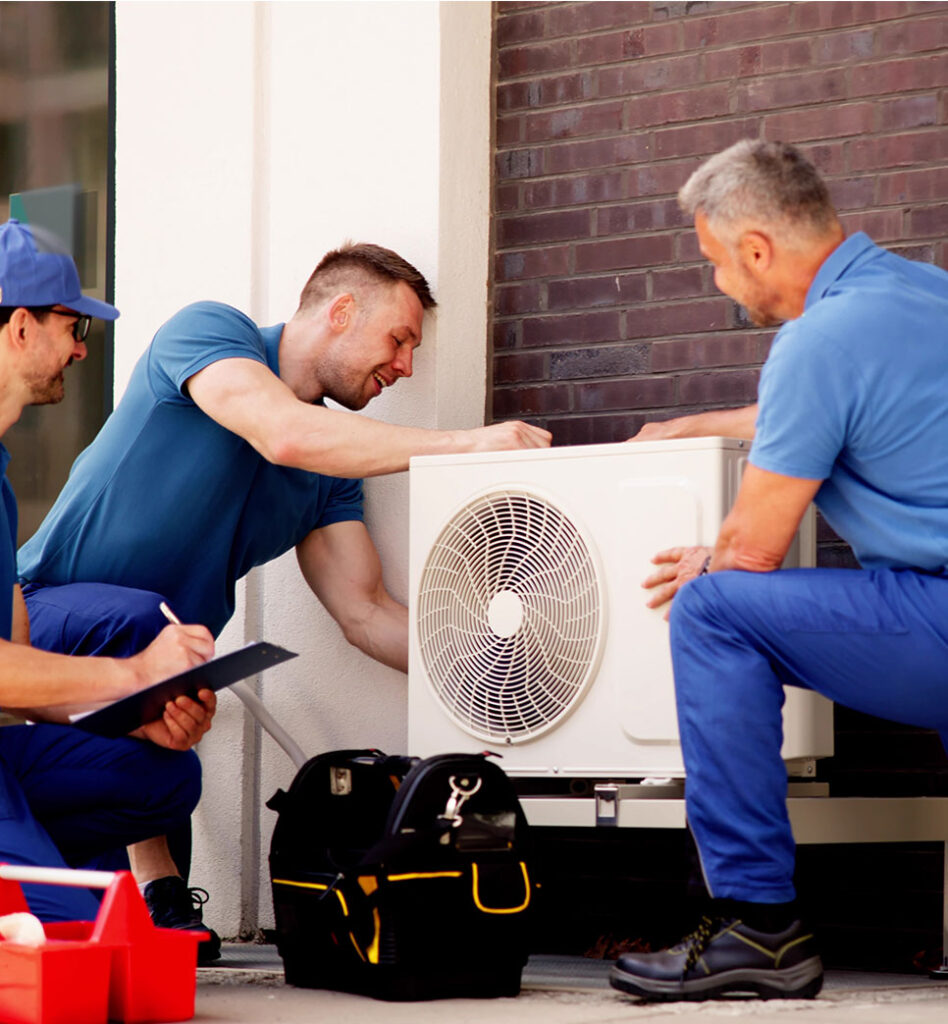
Cupertino property runs the range from postwar ranch tracts in Rancho Rinconada to hillside homes above Monta Vista, dense new townhomes along the Stevens Creek corridor, and research and office buildings that carry equipment loads every day of the year. Service here means matching the work to the building rather than applying one checklist to all of them. For most Cupertino customers, professional HVAC service covers the following:
We work on single-family homes built in the 1950s and 1960s, Eichler-style flat-roof houses, newer condo and townhome construction near Main Street Cupertino, retail centers, restaurants and markets, medical and dental suites, schools, and tech office space along De Anza Boulevard.
Homeowners near Blackberry Farm and Creekside Park can review our residential HVAC service options, while property managers and facility teams along the Stevens Creek corridor will find equipment coverage detailed on our commercial HVAC service page.
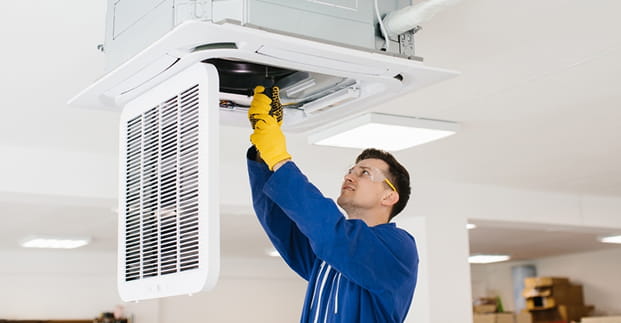
The equipment mix in Cupertino follows the way the city was built. The older tracts east of De Anza Boulevard were laid out with gas furnaces and, in many cases, no cooling at all, so a large share of the residential work here is a retrofit rather than a straight replacement. Newer townhomes and mid-rise units built closer to the Vallco site and Main Street tend to arrive with compact high-efficiency equipment and tight mechanical closets.
On the commercial side, office and research buildings, retail centers and the restaurants clustered around Cupertino Village and Homestead Road each call for something different. These are the system types we work with most often here:
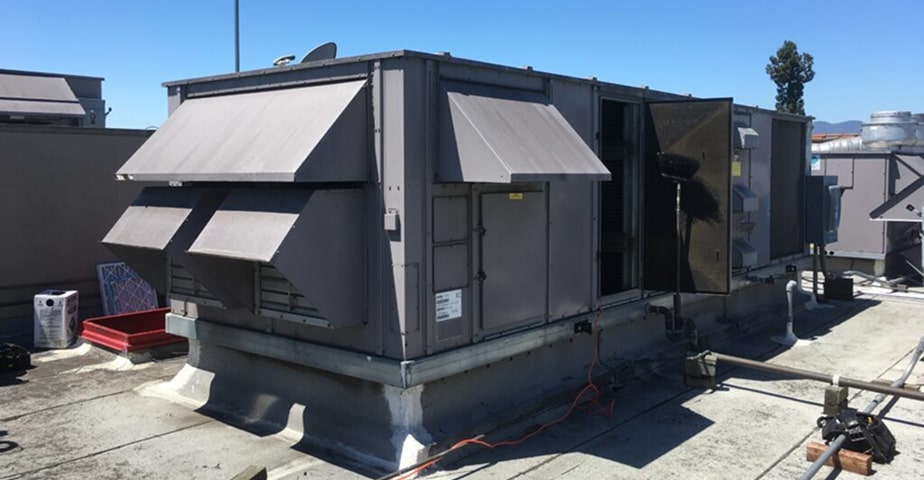
Rooftop units carry most of the retail centers, office buildings and school sites in Cupertino, where flat roofs are common and ground space along Stevens Creek Boulevard is at a premium.
Packaged and split systems handle the bulk of Cupertino's single-family homes and small suites, and split equipment is often the practical choice where a 1960s house has an attic but no existing condenser pad.
VRF suits Cupertino's multi-tenant office space and larger custom homes in the western foothills, where individual zones face very different sun exposure and occupancy through the day.
Heat pumps fit Cupertino well. Winters are mild, freezing nights are uncommon, and a single system replaces both the furnace and the air conditioner in homes that never had cooling to begin with.

Cupertino sits far enough inland that the marine layer usually burns off well before noon, and far enough from the bay that salt-air corrosion is not the main threat to a condenser here. The real stress is heat and dust. Summer afternoons build steadily, the foothills west of town radiate warmth into the evening, and the diurnal swing between a hot afternoon and a cool night puts equipment through a full cycle every single day.
Two other local factors matter. Dry grass and open space at the edge of the Santa Cruz Mountains mean fine dust and pollen load coils and filters faster than they do in the flat valley interior, and late-summer wildfire smoke drifting over the ridgeline turns indoor filtration into a comfort issue rather than a technical footnote.
Those conditions change how we size and specify equipment in Cupertino. Oversized cooling short-cycles badly in a climate with cool nights, so it never dehumidifies or runs long enough to filter the air properly. Coils need cleaning on a real schedule because of dust and pollen, filter racks should be sized for a media the homeowner will actually replace, and outdoor units set on the sunny south side of a Rancho Rinconada ranch house need clearance and shade to hold their rated capacity. Our Bay Area residential HVAC guide walks through how sizing and airflow decisions play out.
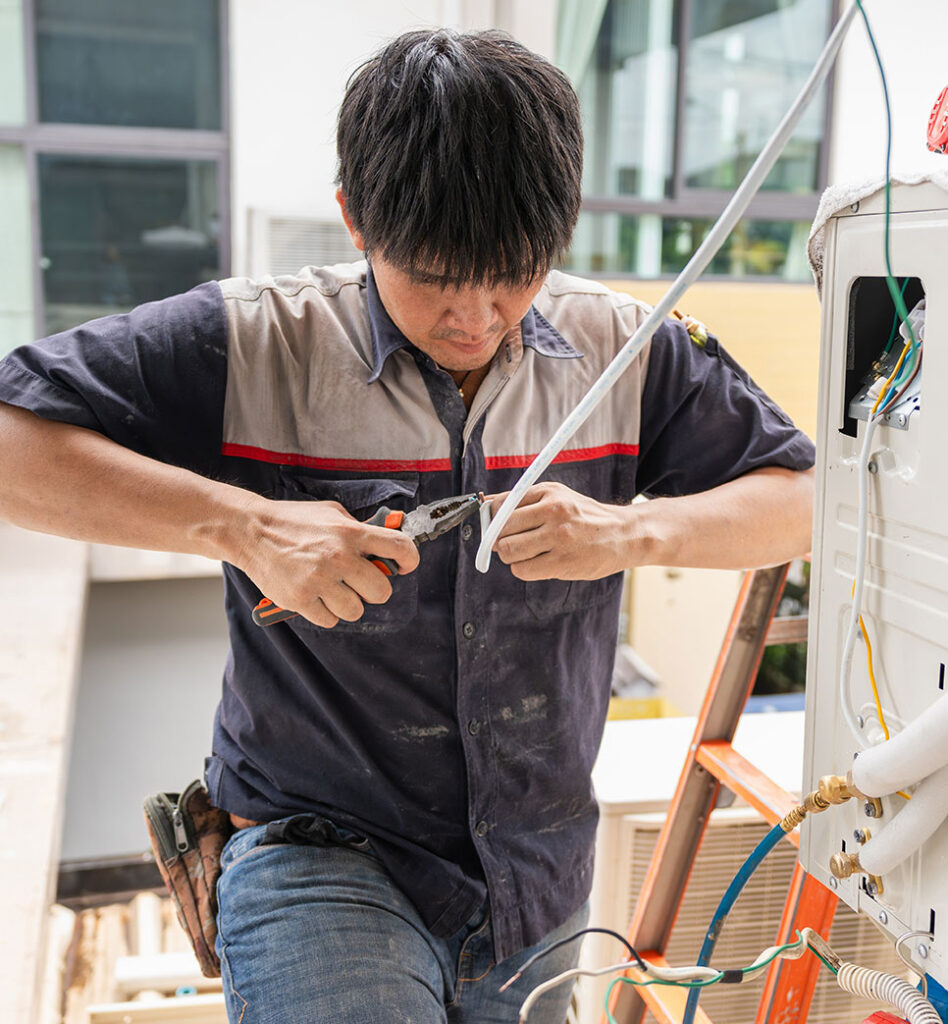
Changeouts and new installations in Cupertino are permitted and inspected through the city's building division at City Hall on Torre Avenue, and the work has to meet California Title 24 energy requirements along with current SEER2 efficiency minimums. On older homes, panel capacity is often the first thing we check. A 1960s house on a 100-amp service may need an electrical evaluation before a heat pump goes in.
Access shapes the job too. Hillside lots above Monta Vista and Regnart Road have narrow driveways and tight side yards, Eichler-style flat roofs give you no attic to run duct through, and rooftop work on Stevens Creek Boulevard retail usually has to be scheduled around business hours.
Key Installation Factors
A correct installation is what decides whether the equipment performs for its full life. Duct that leaks into a hot Cupertino attic, a condenser crowded against a fence, or a system sized off a rule of thumb instead of the actual building will cost the owner money every month it runs, and it will fail early.
We handle the whole sequence: load calculation, equipment selection, refrigerant line work, permitting and inspection coordination, startup and performance testing. The work is backed by our 1-year parts and labor warranty.
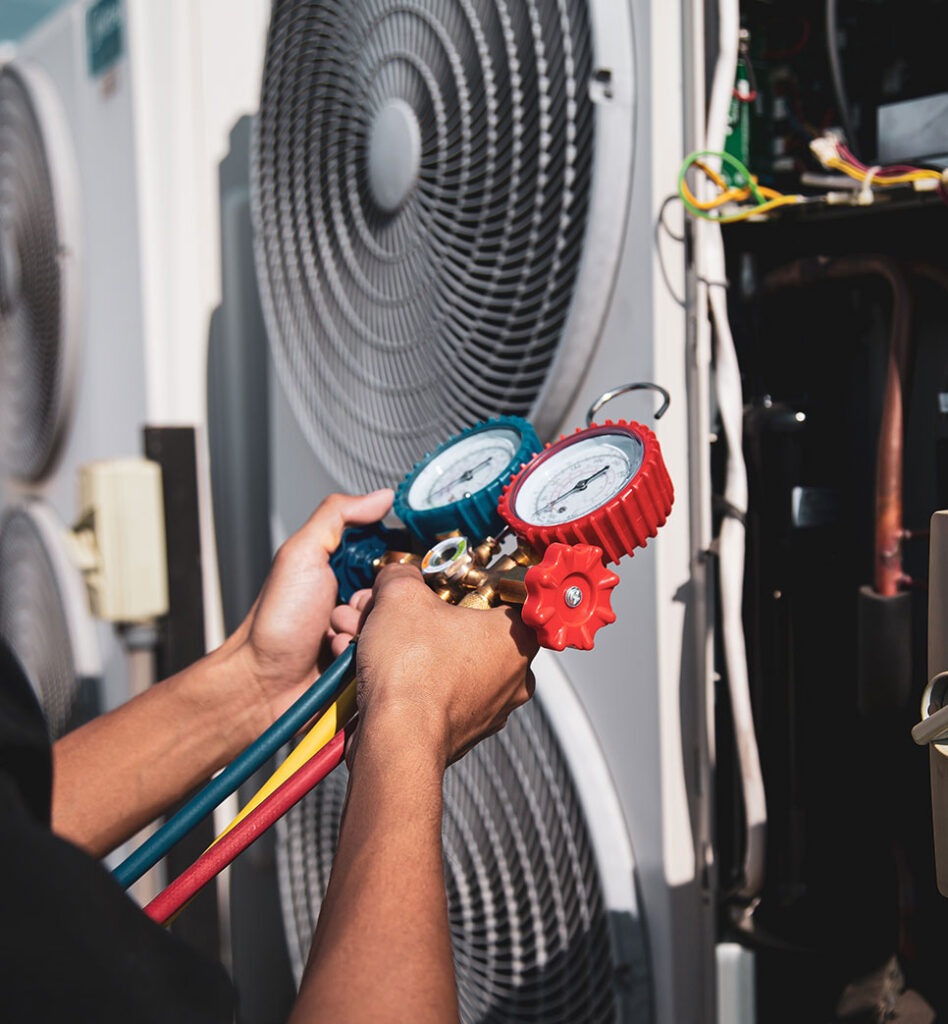
Cooling failures in Cupertino cluster around the hot stretches, when a system that has been coasting all spring is suddenly asked to run for hours at a time. That is when a weak capacitor, a dirty coil or a marginal compressor finally gives out. Heating calls come the other direction, usually during the first cold, damp mornings of the season after a furnace has sat unused since spring.
Commercial downtime works on a different clock. A rooftop unit down over an office suite off De Anza Boulevard or a walk-in cooler failing at a Cupertino Village restaurant is a business problem, not a comfort problem, which is why we run 24/7 emergency HVAC repair across the area.
Common HVAC Problems We Fix
We diagnose to the root cause rather than swapping the part that failed and leaving. A compressor that burns out twice in two years is usually telling you something about airflow, refrigerant charge or electrical supply, and replacing it a third time will not change the outcome.
When a Cupertino system is old enough that repair is a judgment call, we lay out the honest version: what the repair buys you, what condition the rest of the equipment is in, how the refrigerant it uses is being phased down, and what a replacement would actually change about your operating cost.
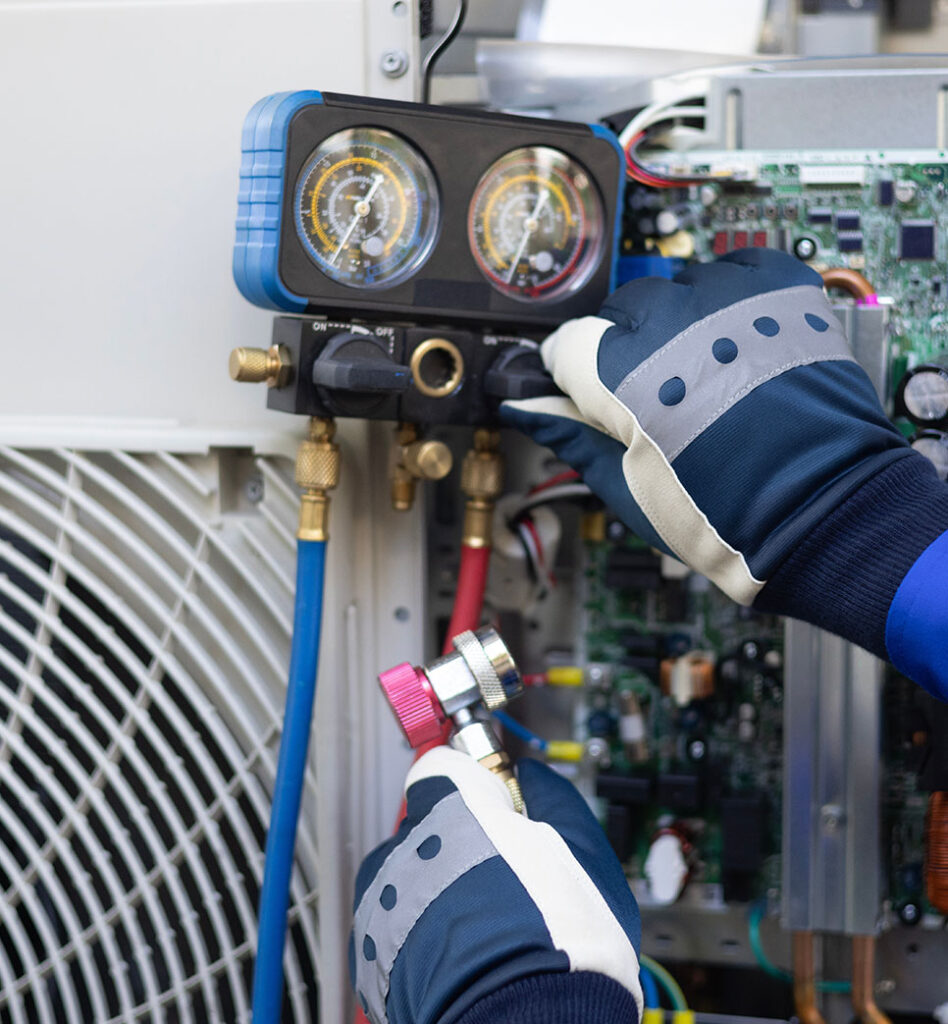
Equipment in Cupertino degrades in a predictable pattern. Long dry summers pull dust, grass seed and pollen off the open hillsides and the creek corridors, and it ends up packed into condenser coils and filters. Once a coil is loaded, head pressure climbs, the compressor works harder than it was designed to, and efficiency drops well before anything actually breaks.
The daily temperature swing adds to it. Systems here cycle hard through hot afternoons and then sit idle through cool nights, which is rough on contactors, capacitors and belts over time. Late-summer smoke episodes from fires in the Santa Cruz Mountains load filters faster than anyone expects and are a common reason a Cupertino homeowner notices reduced airflow.
What’s Included in HVAC Maintenance
For Cupertino businesses, a scheduled maintenance program is about uptime and planning. Quarterly rooftop service on a retail center or office building catches worn components before a summer failure, and refrigeration equipment in restaurants and markets needs its own cadence for coil cleaning, defrost checks and door seals.
For homeowners, upkeep is simpler but still matters: change filters on a real schedule, keep the outdoor unit clear of landscaping, and have the system checked before the first hot week rather than during it.
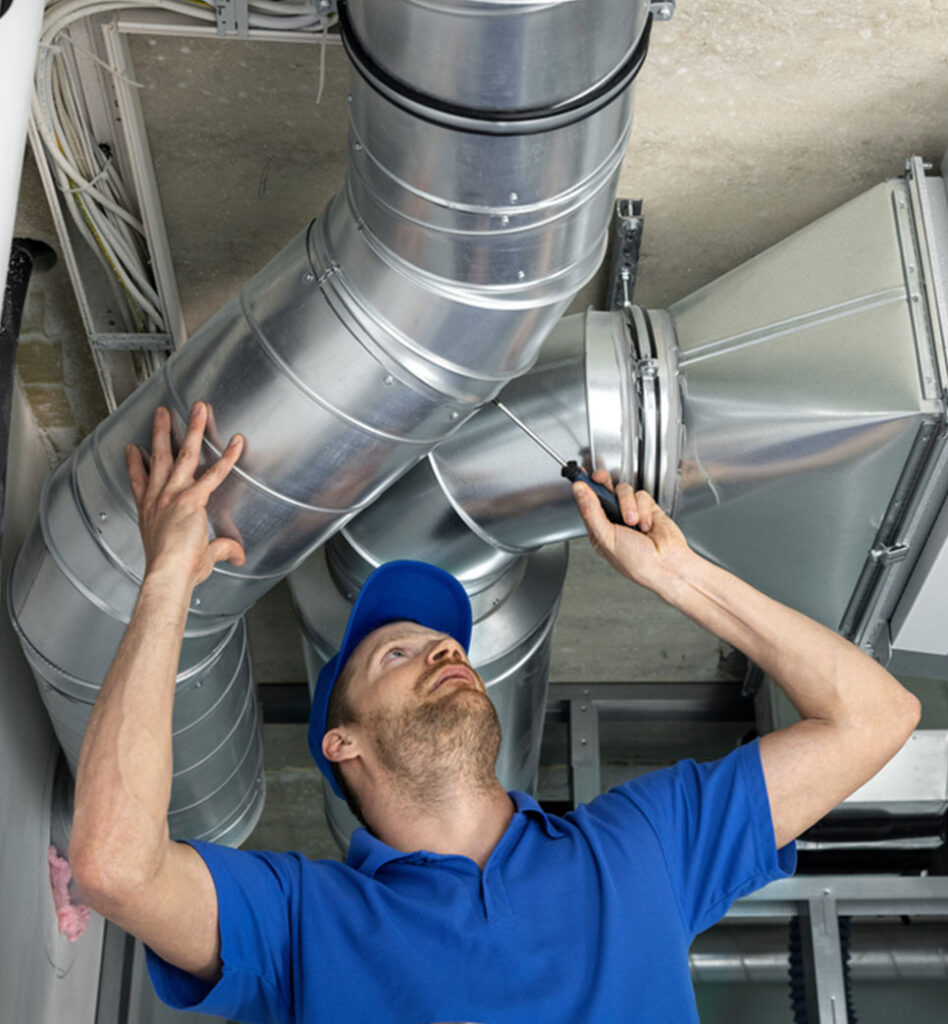
PG&E rates make efficiency a practical concern in Cupertino, not an abstract one. Many of the city's homes were built in the 1950s and 1960s with minimal insulation and duct systems that have been patched over decades, so a high-efficiency system installed on top of a leaking duct run gives back only part of what it promises. The envelope and the distribution have to be addressed with the equipment.
Heat pump adoption has picked up here for good reason. Cupertino's mild winters play to the strength of the technology, and new construction in the city is increasingly built all-electric from the start.
Ways to Improve HVAC Efficiency
For commercial owners along Stevens Creek and De Anza, the upgrade conversation usually starts with aging rooftop units, control strategy and the shift away from R-410A toward lower-GWP refrigerants such as R-454B and R-32. Replacing on your own schedule beats replacing during a July failure.
For homeowners, we look at what the house is actually doing before recommending anything: run times, room-to-room temperature differences, duct condition and panel capacity. Sometimes the right answer is a smaller, better-installed system rather than a bigger one.
We work out of Santa Clara, a short run up Lawrence Expressway or Stevens Creek Boulevard, and we serve Cupertino along with the communities that surround it: Sunnyvale, Santa Clara, Saratoga, Los Altos, Los Gatos and west San Jose. Cupertino is not an office location for us, it is a service area we have covered for decades.
Local knowledge changes the work. Knowing that Fairgrove has Eichler-style flat roofs, that Rancho Rinconada is full of ranch homes that never had cooling, that Monta Vista access is tight, and that the De Anza College and campus corridor runs on commercial equipment saves time on every call.
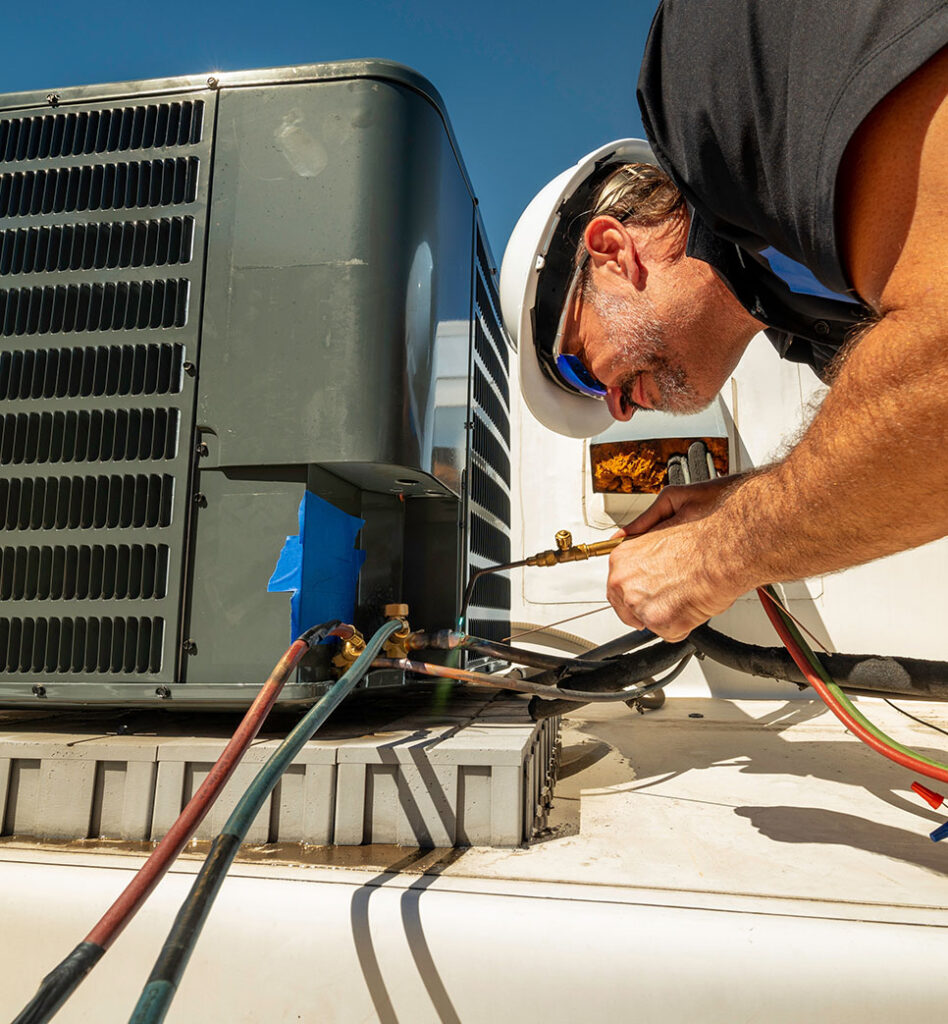
Cool Aid has been in the trade since 1966, when Glenn McKinny founded it after serving as a Chief Engineer in the US Navy. His son Jim McKinny runs the business today with more than 37 years in the field. That continuity means the person quoting your Cupertino job has seen how the equipment installed here in the 1990s and 2000s has actually held up.
Every installation and repair is backed by a 1-year parts and labor warranty. We would rather spend the extra hour getting the load calculation, the duct connections and the refrigerant charge right than come back for a callback that never needed to happen.
What Sets Us Apart
Our approach to diagnosis is straightforward. We measure rather than guess, we check the parts of the system that people usually skip, and we explain what we found in language that lets you make the decision yourself.
When there is more than one reasonable path, you get all of them, including the option of repairing and waiting. Cupertino customers are technical people by and large, and they tend to appreciate seeing the readings behind the recommendation.
Yes, and it is one of the most common jobs we do in Cupertino. Many homes in Rancho Rinconada and the surrounding 1950s and 1960s tracts were built with a gas furnace and no cooling. If the house has an accessible attic, we can often reuse or upgrade the existing duct and add a condenser or convert to a heat pump. We check duct condition, return sizing and electrical panel capacity before recommending an approach.
Yes. Equipment changeouts in Cupertino are permitted and inspected through the city's building division, and the installation has to meet California Title 24 energy requirements. We pull the permit, schedule the inspection and handle the documentation as part of the job. Skipping the permit tends to surface later during a home sale or an insurance claim, and unpermitted work is often the reason a system was installed without proper duct or combustion air.
Carefully, because there is no attic to run duct through and many of these homes use radiant floor heat rather than forced air. In Cupertino's Fairgrove area and similar flat-roof houses, ductless mini-split or multi-zone equipment is usually the cleanest solution, since it avoids soffits and preserves the open ceilings. Placement of the outdoor unit and line routing take planning, and we walk through the options on site before anything is ordered.
Yes. We hold a California C-38 refrigeration license and service walk-in coolers and freezers, prep tables, display cases and ice machines for the restaurants, bakeries and Asian markets around Cupertino Village, Homestead Road and Main Street Cupertino. Refrigeration failures are urgent because product is at risk, so these calls are covered by our 24/7 emergency service.
We do. Cupertino has a lot of office and research space along De Anza Boulevard and Stevens Creek Boulevard with equipment rooms that run a constant load regardless of the season. These spaces need dedicated cooling that does not shut down with the building's after-hours schedule, plus redundancy planning and alarms. We service and install dedicated split systems for server closets and coordinate the work around your operating hours.
You tell us what the system is doing, we ask a few questions about the property, and we arrive with a realistic idea of what we are walking into. The technician tests and inspects before quoting, explains what he found, and gives you the options with the tradeoffs spelled out.
If parts are needed, we tell you the timeline. If a Cupertino permit or inspection is part of the job, we handle that piece and coordinate the schedule with you.
Whether you need a repair on a hot afternoon in Cupertino, a heat pump conversion on an older house, or a maintenance plan for commercial equipment, call 1-800-266-5243 or reach us through our contact page. We answer emergency calls around the clock.