
Get a quote1-800-266-5243
Home1-800-266-5243
Newark sits at the southern end of Alameda County, wrapped on three sides by Fremont and pressed against the salt ponds and marshland at the foot of the Dumbarton Bridge. That position gives the city a comfort problem that neither the fog belt nor the hot inland valleys quite share. Marine air keeps most of the year mild, a handful of stretches turn genuinely hot, and salt-laden moisture off the bay works on every outdoor coil in town.
Cool Aid has worked on Bay Area heating, cooling and refrigeration since 1966, when Glenn McKinny, a former US Navy Chief Engineer, started the business. His son Jim runs it now. We operate out of Santa Clara, hold California C-20 and C-38 licenses, carry EPA Universal certification, and answer emergency calls in Newark around the clock.
Still comparing contractors? See our list of the best HVAC companies in Newark, including companies other than ours.
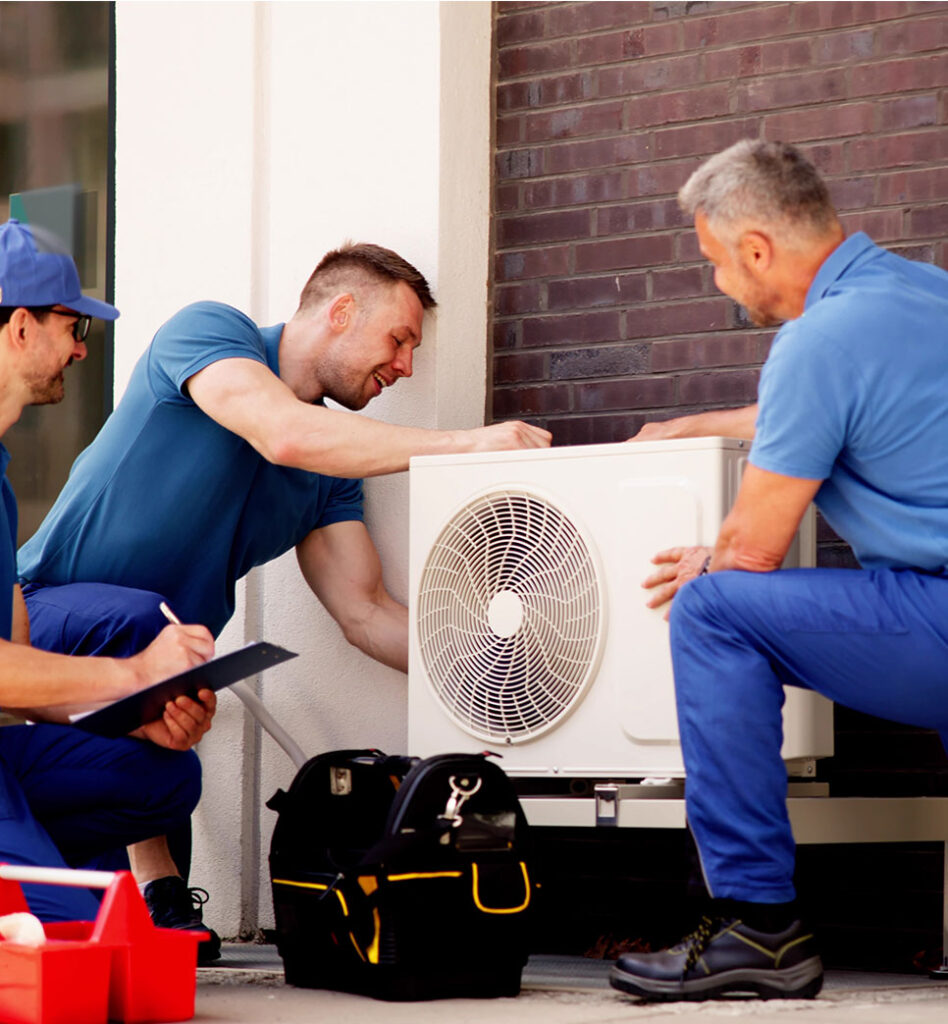
Newark is a compact, flat city with a very mixed building inventory. Postwar tract houses around Lakeshore Park and Newark Boulevard sit a few minutes from newer townhome and condo construction, and both are minutes from the warehouse and light-industrial corridor along Cherry Street and Enterprise Drive. Service work here has to move between residential furnaces, packaged rooftop equipment and refrigeration on the same day. A full scope of work usually covers:
We work on single-family homes from the 1950s through the 1970s, newer attached housing near the Dumbarton corridor, apartment complexes off Thornton Avenue, retail and restaurant space around NewPark Mall, research and office campuses, and the distribution buildings on Newark's industrial west side.
Homeowners can review what we handle on our residential HVAC service page, and Newark facility managers, property owners and restaurant operators can start with our commercial HVAC services for rooftop, packaged and multi-zone equipment.
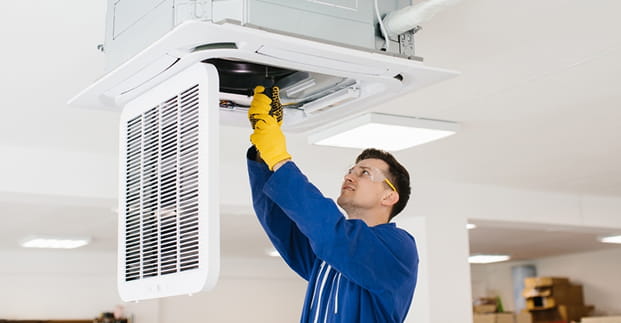
The equipment mix in Newark splits cleanly along the city's own geography. West of Cherry Street, the warehouses, cold storage and light manufacturing buildings run packaged rooftop units and refrigeration systems, often on tall single-story roofs with long duct runs over open floor space. East toward Newark Boulevard and Cedar Boulevard, the housing is mostly slab-on-grade or shallow-attic tract construction, which means compact split systems, furnace and coil combinations, and a growing number of ductless installs where there is no usable duct path.
Because so many Newark houses were built before air conditioning was standard, retrofits are common. Office and lab buildings in the city tend toward multi-zone equipment, and every restaurant and market carries its own refrigeration load on top of comfort cooling.
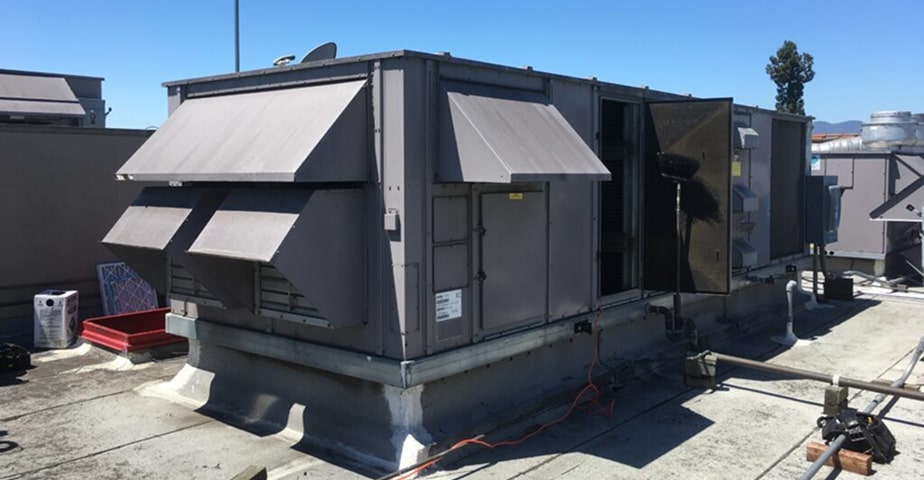
Rooftop units carry most of Newark's commercial load, from the retail buildings near NewPark Mall to the distribution warehouses off Enterprise Drive, where roof-mounted equipment keeps floor space clear.
Packaged and split systems cover Newark's tract housing and smaller storefronts. Tight side yards on 1960s lots often decide where the condenser can legally and practically sit.
VRF makes sense in Newark's office, lab and medical suites, where separate tenants and interior rooms need independent control without a roof full of individual units.
Heat pumps fit Newark well. Winters here rarely get severe, so a single system can handle both seasons, which is why so many local retrofits now skip a gas furnace entirely.

Newark sits low and flat on the eastern shore of San Francisco Bay, with the Don Edwards refuge marshland and the Cargill salt ponds directly to its west. Marine air pushes in through the Dumbarton gap most afternoons, so summer days that start warm often cool sharply by evening. That daily swing is easy on people and hard on equipment, because compressors cycle more than they would in a steadier inland climate like Livermore or Pleasanton.
The bigger issue is what the air carries. Salt and moisture off the bay and the salt ponds settle on outdoor coils, fin stock, fasteners and electrical contacts. Newark condensers corrode faster than identical units a few miles inland. Add the smoke episodes that drift into the East Bay during California's fire season, and filtration becomes a real conversation rather than an afterthought.
What that means in practice is that material choice and placement matter more in Newark than the equipment brochure suggests. Coated coils, corrosion-resistant hardware and sensible clearance from prevailing bay wind buy years of service life. Sizing also has to respect the diurnal swing rather than the peak hour, since oversized cooling short-cycles badly in a climate this mild. Rinsing coils and changing filters on a real schedule is the cheapest maintenance in the city. Our complete Bay Area residential HVAC guide covers the homeowner side in more depth.
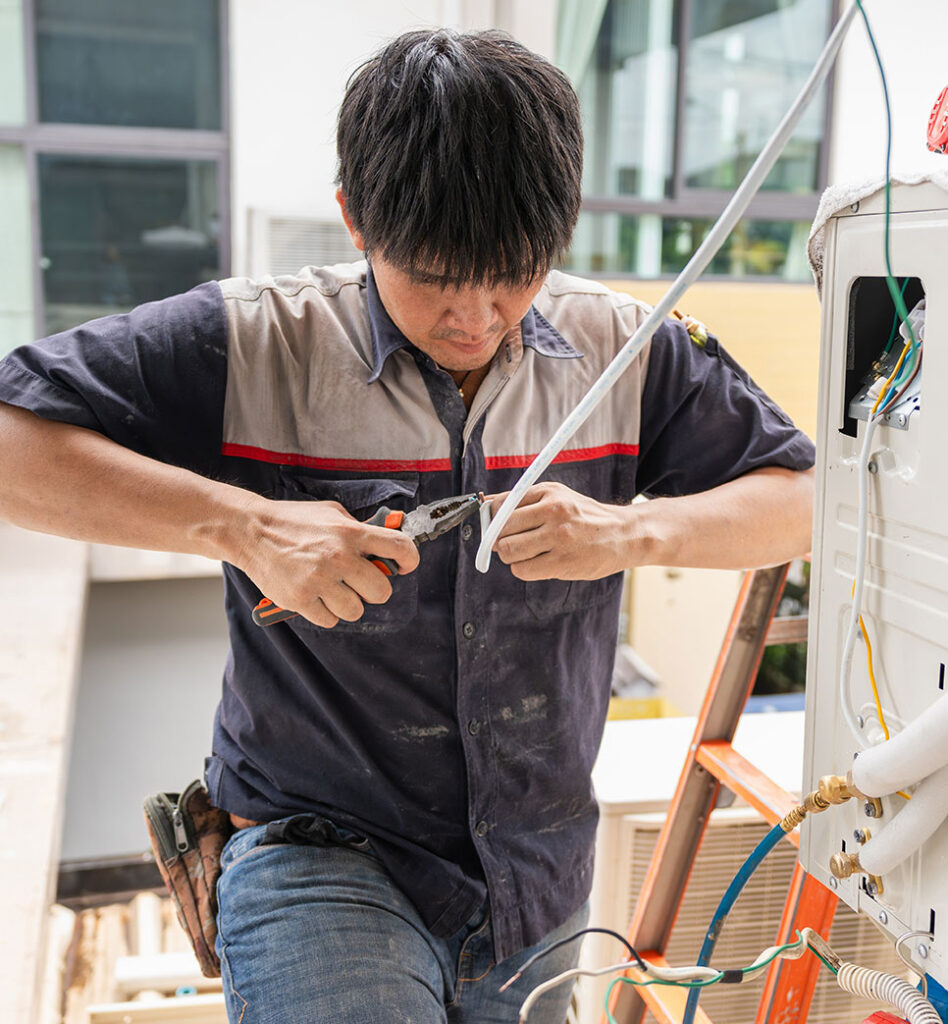
Installations in Newark are permitted and inspected through the City of Newark's building division, and changeouts, new condensers and duct alterations all fall under California Title 24 energy requirements, including duct leakage and airflow verification on many jobs. We pull the permit, schedule the inspection and provide the documentation.
Two constraints come up repeatedly. Older Newark tract homes often have modest electrical service and a full panel, which matters the moment a heat pump enters the plan. On the commercial side, roof access on the Cherry Street and Enterprise Drive buildings dictates crane placement and staging more than the equipment selection does.
Key Installation Factors
A correct installation is mostly invisible work. Load calculations sized to the actual house, duct sizing that matches the equipment, a condensate path that will still drain in ten years, refrigerant charge verified by measurement rather than by feel. Skip those and a Newark homeowner ends up with a system that short-cycles through mild afternoons and struggles on the few hot days that matter.
We handle design, equipment selection, permitting, installation, startup and performance testing as one job, so nobody is left coordinating three trades.
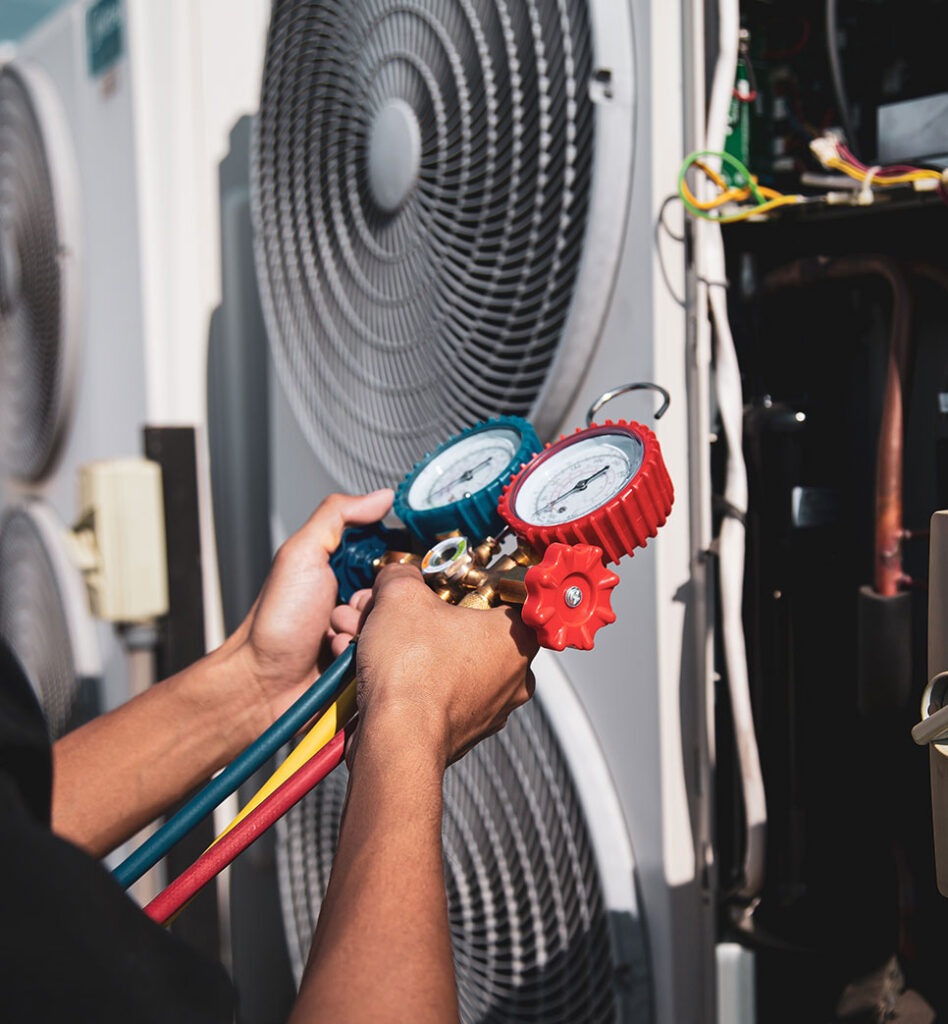
Most Newark service calls cluster into two patterns. The first is the inland heat push, when a hot air mass overwhelms the usual bay breeze and systems that coast through a normal summer suddenly run at capacity. Marginal capacitors, weak compressors and blocked coils all surface in the same forty-eight hours. The second is refrigeration, which does not care about the weather at all.
For a Newark restaurant, market or food distributor, a walk-in cooler losing temperature is a stock loss on a clock. That is the reason we run 24/7 emergency HVAC repair and answer refrigeration calls at night and on weekends.
Common HVAC Problems We Fix
We diagnose to root cause rather than to the loudest symptom. In Newark that often means the failure is downstream of something else, a corroded contactor, a coil packed with salt residue and marsh dust, a return path restricted by an undersized filter grille, or a refrigerant loss that will simply repeat if the leak is not found.
When a system is old enough that repair only buys a season, we say so, lay out what a replacement would involve, and let the owner decide with real numbers in front of them.
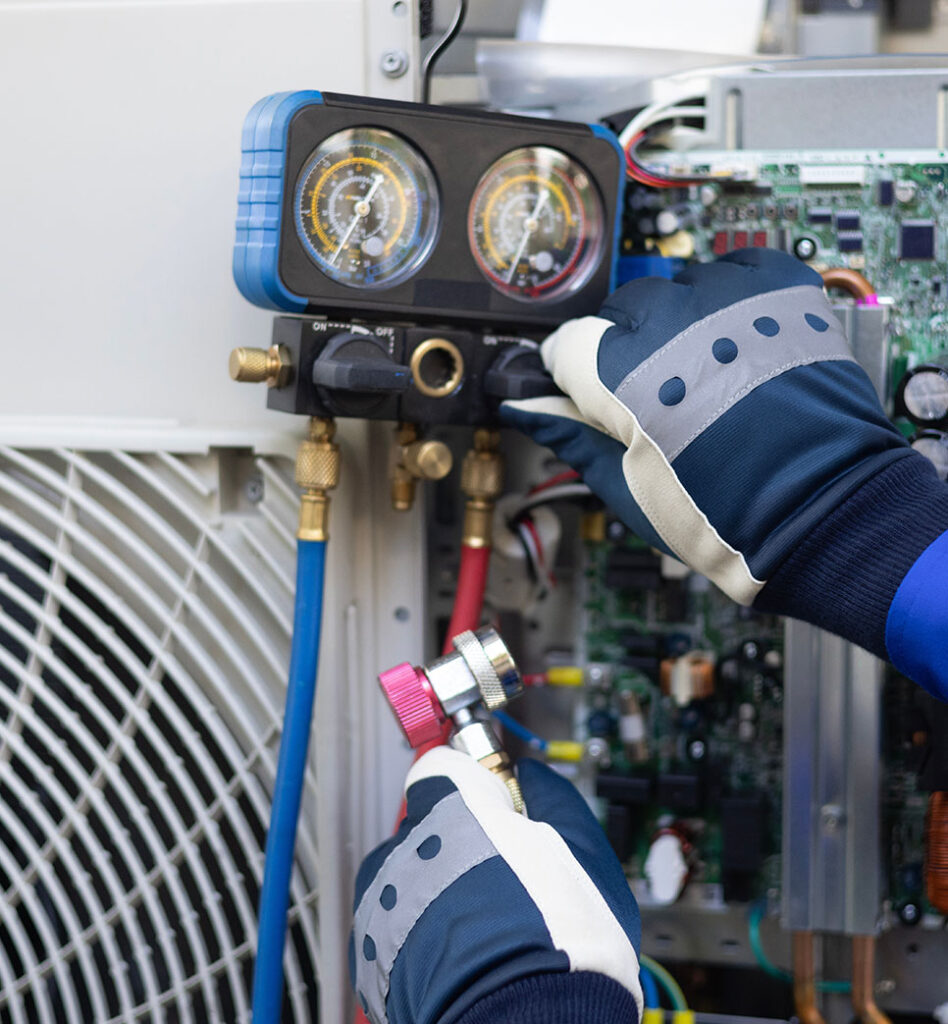
Equipment in Newark degrades on a schedule set by the bay. Salt aerosol and moisture accelerate corrosion on outdoor coils and cabinets, fine marsh and roadway dust loads up filters and blower wheels, and the daily marine cooldown drives more compressor cycles than a steadier climate would. None of it announces itself. Capacity falls off slowly, the system runs longer for the same result, and the failure arrives on the first hot afternoon of the year.
Newark's flat terrain and mild winters make it easy to defer service, which is exactly why so many systems here fail early. Regular coil cleaning, filter changes, electrical checks and charge verification hold off most of it.
What’s Included in HVAC Maintenance
For Newark's warehouses, food service and lab space, scheduled maintenance is about uptime and product. Rooftop units and refrigeration get inspected on a defined interval so problems are found during business hours instead of at closing time. Our commercial maintenance programs are built that way.
For homeowners, the goal is simpler. Two visits a year, one before the cooling season and one before the heating season, keeps efficiency up and prevents most emergency calls.
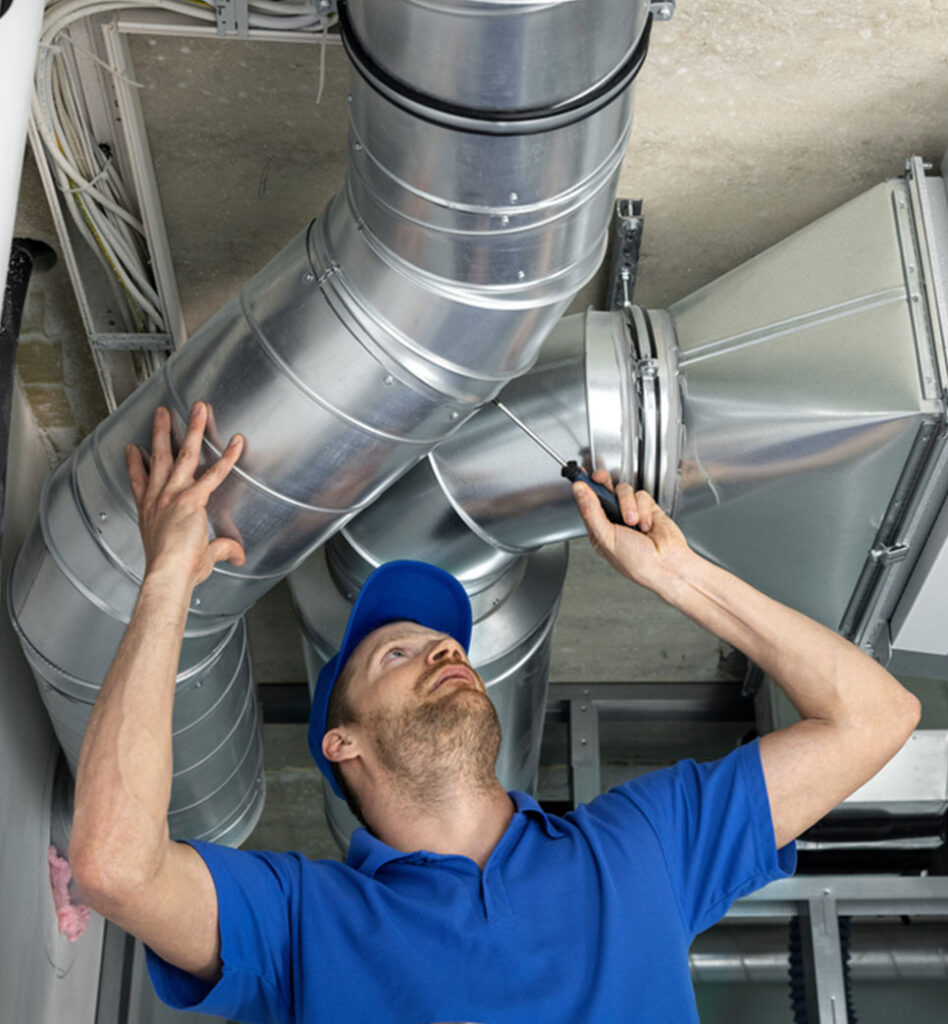
PG&E rates make efficiency a practical question in Newark, not a philosophical one. Much of the city's housing dates from an era when insulation, duct sealing and equipment efficiency were all far below current expectations, and plenty of those homes had cooling added later without the duct system being reworked to match. Upgrading equipment alone rarely delivers what the SEER2 rating promises if the distribution side never changed.
Electrification is moving fast here. Heat pumps suit Newark's mild winters, newer construction is being built without gas appliances, and the industry is shifting away from R-410A toward lower-GWP refrigerants such as R-454B and R-32.
Ways to Improve HVAC Efficiency
For Newark commercial owners, the decision usually turns on aging rooftop units. Replacing several at once, adding controls, and correcting economizers that stopped working years ago often does more for the utility bill than any single high-efficiency purchase.
For homeowners, we look at panel capacity, duct condition and the actual load before recommending anything. Sometimes the right answer is a heat pump, sometimes it is sealing ducts and keeping the existing system a few more years.
We serve Newark from our Santa Clara shop, which is a short run around the south end of the bay, and we work the surrounding communities on the same routes. That includes Fremont on three sides, the Ardenwood district just north of the Newark line, Union City and Alvarado, Hayward, and the Peninsula cities reached across the Dumbarton Bridge.
Local knowledge is not a slogan in this corner of Alameda County. Knowing that a Newark condenser corrodes faster than the same unit in Milpitas, and that Newark's building division handles its own permits and inspections, changes how a job is quoted and how long the equipment lasts.
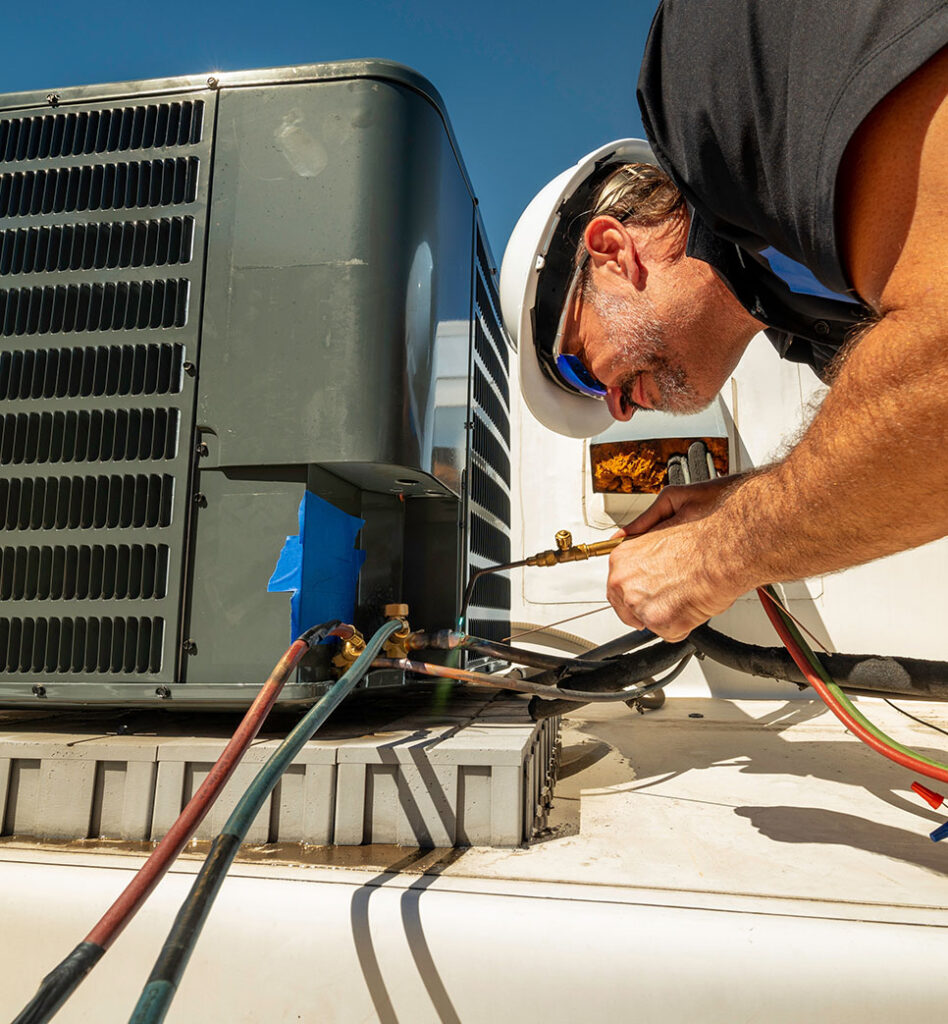
Cool Aid is still a family business. Glenn McKinny started it in 1966 after serving as a Chief Engineer in the US Navy, and his son Jim McKinny owns and runs it today with more than 37 years in the trade. That continuity is the reason we would rather turn down a job than rush one, because the work follows us around the Bay Area for decades.
Every installation and repair we perform in Newark is backed by a 1-year parts and labor warranty, and we hold the California C-20 and C-38 licenses and EPA Universal certification that the work requires.
What Sets Us Apart
We measure before we recommend. Static pressure, temperature split, refrigerant charge, amp draw and airflow tell us what is actually wrong, which is often not what the symptom suggests. In a Newark house that never had ductwork designed for cooling, the equipment is frequently blameless.
Then we lay out the options honestly, including the cheap one. If a repair is the sensible move, we make the repair. If replacement is the better value, we explain why and what it involves.
Yes, and it is one of the most common jobs we do in Newark. Tract homes built through the 1950s, 1960s and 1970s were designed around a gas furnace and mild bay air, so cooling has to be added. Where usable ducts exist, we add a condenser and coil and correct the duct sizing. Where the attic or slab construction leaves no path, ductless systems handle it without tearing up ceilings.
It does, and Newark sees more of it than most East Bay cities because the salt ponds and marsh sit immediately west of town. Salt aerosol settles on aluminum fins, copper tubing, fasteners and electrical contacts and speeds up corrosion. Coated coils, corrosion-resistant hardware, thoughtful placement away from direct bay wind, and regular coil rinsing all extend service life noticeably.
The City of Newark's building division issues and inspects HVAC permits within city limits, and we pull them as part of the job. Equipment changeouts, new condensers and duct work fall under California Title 24, which can require duct leakage testing and airflow verification depending on the scope. We schedule the inspection and hand over the paperwork so it is on file when the property is sold or refinanced.
Yes. We hold a C-38 refrigeration license alongside the C-20, and commercial refrigeration is a core part of the business rather than a sideline. That covers walk-in coolers and freezers, prep tables, reach-ins and ice machines for restaurants, markets and food distributors around NewPark Mall, Thornton Avenue and Newark's industrial corridor. Refrigeration emergencies are answered 24/7 because product loss does not wait for morning.
Sometimes, and it is worth checking before anything is ordered. Newark's older tract housing often has modest service and a panel with no spare capacity, especially if an EV charger or induction range was already added. We evaluate the existing service and breaker space during the estimate. Some heat pumps run on a smaller circuit than expected, and in other cases a panel upgrade becomes part of the project.
The process is straightforward. You tell us what the system is doing, we schedule a visit and arrive in the window, and the technician inspects and measures the system rather than guessing at it. You get a plain explanation of what is wrong, what it takes to fix it, and what the alternatives are before any work starts.
Newark is a quick trip from our Santa Clara shop, so both routine and urgent calls fit the same schedule.
To book a repair, an installation estimate, a maintenance visit or refrigeration service anywhere in Newark, call 1-800-266-5243 or send the details through our contact page. Emergency lines are answered 24 hours a day, every day of the year.