
Home › Refrigeration by industry › Walk-in freezer repair
A walk-in freezer that is warming up puts every case of product inside it at risk. Cool Aid Air Conditioning & Refrigeration repairs walk-in freezers and commercial freezers for restaurants, hotels, liquor and convenience stores and food businesses across the Bay Area, with C-38 licensed refrigeration technicians and EPA certified refrigerant handling.
Refrigeration down right now? Call 1-800-266-5243. We answer until 9 PM, 7 days a week, for emergency commercial refrigeration repair across the Bay Area.
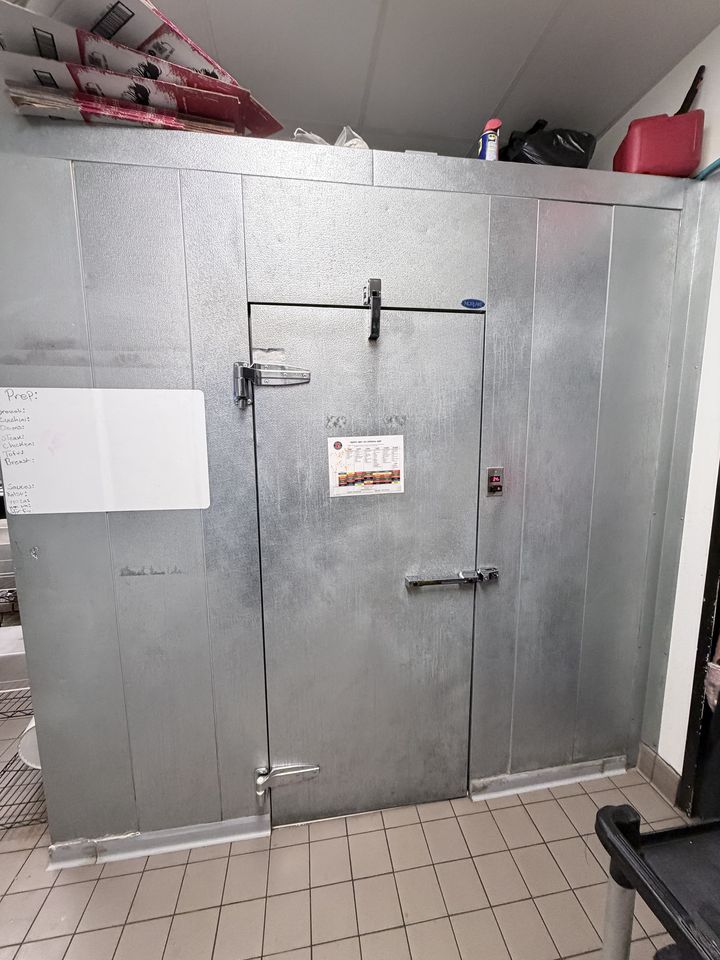
First steps while the technician is on the way
- Keep the door shut. Every opening lets warm, moist air in, which is also what builds ice on the coil and the floor.
- Read the thermometer and write the time down. California requires a thermometer in the warmest part of each refrigeration unit (HSC 114157). A time and temperature log is what you, your technician and an inspector will all want.
- Keep frozen product frozen. CalCode requires frozen food to be stored and displayed frozen (HSC 114018). If product has started to thaw, follow our food safety guide for refrigeration failures and your county's guidance before you decide what to keep.
- Do the quick checks. Breaker, controller setting, a door left ajar, a condenser blocked by boxes. The refrigeration emergency checklist walks through them in order.
What goes wrong with walk-in freezers
Most walk-in freezer calls come back to a short list of failures. Freezers run below freezing all day, so moisture that gets in turns to ice, and the defrost system has to clear it several times a day.
| What you see | Common causes | What we check |
|---|---|---|
| Box warming, fans running | Ice-blocked evaporator coil, failed defrost, low refrigerant | Coil face and rows, defrost heaters, timer and termination, pressures |
| Ice in the drain pan or on the floor | Defective drain line heater, plugged drain, failed pan heater | Heater circuits, drain line, pan |
| Frost around the door frame | Door frame heater out, torn gasket, door not sealing | Heater power, gasket, sweep, closer |
| Unit cycling on and off | Low refrigerant, a mis-set low pressure switch, missing low ambient controls | Leak search, switch settings, condensing unit controls |
| Loud, hot condensing unit | Dirty condenser coil, failed condenser fan, high head pressure | Coil, fan motor, airflow around the unit |
Causes drawn from the Turbo Air walk-in refrigeration system manual (source), the Kolpak walk-in manual (source) and the Heatcraft condensing unit manual (source).
Ice on the evaporator coil
Turbo Air's walk-in manual is blunt about it: once ice forms in an evaporator coil it keeps building, and long-term ice can crush the refrigerant tubes and cause leaks. It lists the symptoms as loss of air circulation, loss of room temperature and no off-cycle time, and says two to four defrost cycles per day should be adequate for most applications (source). When a coil is solid, we defrost it manually, then find out why the defrost system did not clear it: a failed heater, a bad termination switch or timer, or a schedule that does not match how often the door is opened. For more on the symptom, see walk-in freezer ice buildup.
Door heaters, gaskets and closers
Kolpak's manual says frost or condensation around the door jamb means the electric heater is not working or there is too much moisture, and that the gasket should seal around the entire door perimeter (source). A freezer door that does not close on its own is a repair, not a habit problem: federal rules for walk-ins call for automatic door closers on standard-size doors (10 CFR 431.306).
Refrigerant leaks
A freezer that needs refrigerant has a leak. Since January 1, 2026, federal leak repair rules cover commercial refrigeration systems holding 15 pounds or more of HFC refrigerant: once the leak rate passes 20 percent, the leak must be found and repaired within 30 days (40 CFR 84.106). Many older Bay Area freezers run on R-404A. In California it can still be serviced, but newly produced refrigerant with a global warming potential over 2,200 may no longer be sold, so service uses certified reclaimed refrigerant (HSC 39735). Our refrigerant rules guide explains what this means for your equipment.
How a repair visit works
- We check box temperature, coil condition, pressures and the defrost system before touching anything, so the fix matches the cause.
- We tell you what failed, what it takes to fix it, and whether anything else is close to failing.
- We repair with the right parts, restart the system and confirm it pulls the box down.
- Every job carries our 1-year parts and labor warranty.
Repair or replace?
Age, refrigerant type, how often it has failed and how much product you have lost all matter. Our repair or replace guide walks through the decision, and what walk-in repairs cost covers pricing. If replacement makes sense, see walk-in freezer installation or condensing unit replacement.
Keeping it from happening again
Norlake recommends preventive maintenance on a quarterly schedule by a certified technician, including gaskets, door sweeps, heated vents and both coils (source). Heatcraft calls for checking the condenser quarterly and cleaning the coil twice a year (source). Our refrigeration maintenance plans follow the manufacturer schedules. We also repair walk-in coolers: see walk-in cooler repair, and refrigeration by industry for restaurant, hotel, liquor store and convenience store work.
Frequently asked questions
Why is my walk-in freezer iced up but not cold?
Usually the evaporator coil is blocked with ice, so air cannot move across it. The cause is often a failed defrost heater, timer or termination switch, a drain line heater that stopped working, or warm air getting in through a door that does not seal. The coil needs a manual defrost and the defrost fault needs fixing, or the ice comes back.
Can my staff defrost the coil themselves?
Staff can keep the door shut, move product and switch the unit to defrost if the controller allows it. Chipping ice off a coil damages the fins and tubes, and anything involving the refrigerant circuit requires an EPA certified technician.
Do you repair walk-in freezers for any brand?
Yes. Walk-in boxes and refrigeration systems come from many manufacturers, and the components (evaporators, condensing units, heaters, controls) are standard refrigeration parts our technicians work on every day.
Is R-404A being banned?
Not for existing equipment. California bans R-404A in new remote condensing units and stops the sale of newly produced high-GWP refrigerant, so existing R-404A systems are serviced with certified reclaimed refrigerant. See our refrigerant rules guide for details.
More commercial refrigeration
By industry
- Restaurant refrigeration
- Hotel refrigeration
- Liquor store refrigeration
- Convenience store refrigeration
By equipment
- Walk-in freezer installation
- Beer cave installation and repair
- Reach-in cooler and freezer repair
- Glass door merchandiser repair
- Prep table refrigerator repair
- Walk-in cooler repair
- Walk-in cooler installation
- Ice machine repair
- Condensing unit replacement
- Refrigeration maintenance
- Emergency refrigeration repair
Or start from commercial refrigeration by industry, or the Commercial Refrigeration Help Center if something is failing right now.
Guides
Start with the Walk-In Cooler & Freezer Guide.