
Home › Refrigeration by industry › Restaurant refrigeration › Restaurant walk-ins
In most restaurants the walk-in cooler holds the week's produce, dairy and prepped food, and the walk-in freezer holds the proteins. This page covers what matters for restaurant walk-ins specifically. It is part of our restaurant refrigeration section.
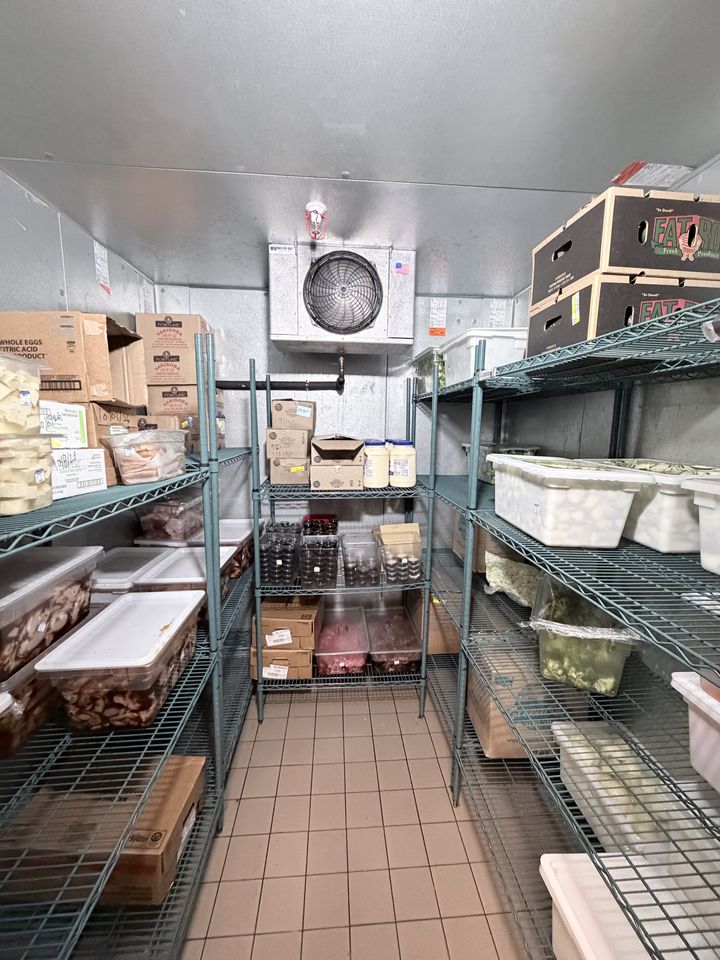
Planning a restaurant walk-in
- Size from deliveries, not square footage. Start with your largest delivery day, how many shelves it fills, and room to rotate stock first in, first out.
- Cooler, freezer or combination. A combination box shares a wall and, often, a floor. Each side still needs its own refrigeration system and controls.
- Shelving that lets air move. Product packed against the evaporator or the walls creates warm spots.
- Where the condensing unit goes. Indoors it adds heat to the kitchen. Outdoors or on the roof it needs a clear, reachable spot with airflow.
- Doors and traffic. Walk-ins must have automatic closers on standard-size doors and strip doors, spring-hinged doors or another method to limit warm air coming in (10 CFR 431.306). In a busy kitchen, a door kick plate and good strip curtains pay for themselves.
Minimum insulation is set federally: R-25 for cooler walls, ceilings and doors, R-32 for freezers, and R-28 for freezer floors (10 CFR 431.306). For the installation process, refrigerant choices and drains, see walk-in cooler installation and walk-in freezer installation.
What inspectors look at
- Food at 41°F or below in the cooler (HSC 113996), frozen food frozen in the freezer (HSC 114018).
- A readable thermometer in the warmest part of each box (HSC 114157).
- Drains to a floor sink through an air gap (HSC 114193), and no water or ice on the floor.
- Equipment kept clean and in good repair, including gaskets and door hardware.
The walk-in failures we see most in restaurants
| Symptom | Usual restaurant cause | Where to read more |
|---|---|---|
| Cooler creeping above 41°F at dinner rush | Door propped open during deliveries, dirty condenser, iced coil | Walk-in cooler not cooling |
| Ice on the freezer floor or door frame | Door left open, failed door heater, torn gasket | Walk-in freezer ice buildup |
| Water under the evaporator | Plugged drain or failed drain line heater | Refrigeration water leaks |
| Condensing unit running nonstop | Grease and lint on the condenser, low refrigerant | Compressor problems |
Norlake notes that doors left open for more than five minutes can form a film of ice or moisture on floors, ceilings and walls, and that vinyl strip curtains reduce the warm, moist air coming in (Norlake). Train staff to close the door between trips, and keep strip curtains whole.
For the warning signs that a box is near the end of its life, see signs your walk-in cooler is failing. For costs, see the cost to repair a walk-in cooler.
Repair service
We repair restaurant walk-ins 7 days a week: walk-in cooler repair and walk-in freezer repair. One recent example from a quick-service restaurant:
- Project photo coming soon
Taco Bell, downtown San Jose
Walk-in cooler repair after the cooler failed during peak hours, preventing food loss.
Business and hotel names are trademarks of their owners. They are used only to identify properties where Cool Aid has done refrigeration work, and do not imply endorsement.
Frequently asked questions
Should a restaurant walk-in cooler have strip curtains?
Walk-ins need some way to limit warm air getting in while the door is open: strip doors, spring-hinged doors or another method. Strip curtains are the most common in kitchens, and torn or tied-back strips are a frequent cause of icing and warm boxes.
Can I put the condensing unit on the roof?
Often, yes. It keeps heat out of the kitchen, but it needs a safe, reachable spot, proper line sets and room for airflow. We assess it on the site visit.
How often should a restaurant walk-in be serviced?
Walk-in maker Norlake recommends quarterly preventive maintenance by a certified technician. Busy, greasy kitchens benefit most from sticking to it.
More commercial refrigeration
Restaurant refrigeration
By industry
- Restaurant refrigeration
- Hotel refrigeration
- Liquor store refrigeration
- Convenience store refrigeration
By equipment
- Walk-in freezer repair
- Walk-in freezer installation
- Beer cave installation and repair
- Reach-in cooler and freezer repair
- Glass door merchandiser repair
- Prep table refrigerator repair
- Walk-in cooler repair
- Walk-in cooler installation
- Ice machine repair
- Condensing unit replacement
- Refrigeration maintenance
- Emergency refrigeration repair
Or start from commercial refrigeration by industry, or the Commercial Refrigeration Help Center if something is failing right now.
Guides
Start with the Walk-In Cooler & Freezer Guide.