Most Bay Area homeowners don’t think about their HVAC system until something goes wrong—and by then, they’re facing a costly repair bill and an uncomfortable house. The truth is, the benefits of HVAC maintenance go far beyond keeping your system running. Regular tune-ups can save you thousands of dollars, improve your family’s health, and add years to your equipment’s life.
Whether you live in a fog-cooled San Francisco flat or a sun-baked San Jose ranch home, your HVAC system works hard year-round to keep you comfortable. Here’s why investing in routine maintenance is one of the smartest moves you can make as a homeowner.
Benefits of HVAC Maintenance: At a Glance
| Benefit | Estimated Impact | DIY or Pro? |
| Lower energy bills | Lower heating and cooling costs | Pro tune-up recommended |
| Fewer breakdowns | Many common failures are preventable | Pro inspection |
| Longer system lifespan | 5–10 additional years | Pro + DIY filter changes |
| Better indoor air quality | Removes up to 99% of airborne particles | Pro cleaning + DIY filters |
| Consistent home comfort | Eliminates hot/cold spots | Pro calibration |
| Warranty protection | Maintains manufacturer coverage | Pro with documentation |
| Safety assurance | Prevents CO leaks and electrical hazards | Pro inspection only |
| Peace of mind | Year-round reliability | Pro maintenance plan |
1. Lower Energy Bills: Keep Your System Running Efficiently
How Maintenance Cuts Energy Costs
One of the most immediate and measurable benefits of HVAC maintenance is a lower utility bill. According to the U.S. Department of Energy, replacing a dirty, clogged air filter with a clean one can lower an air conditioner's energy use by 5 to 15 percent.
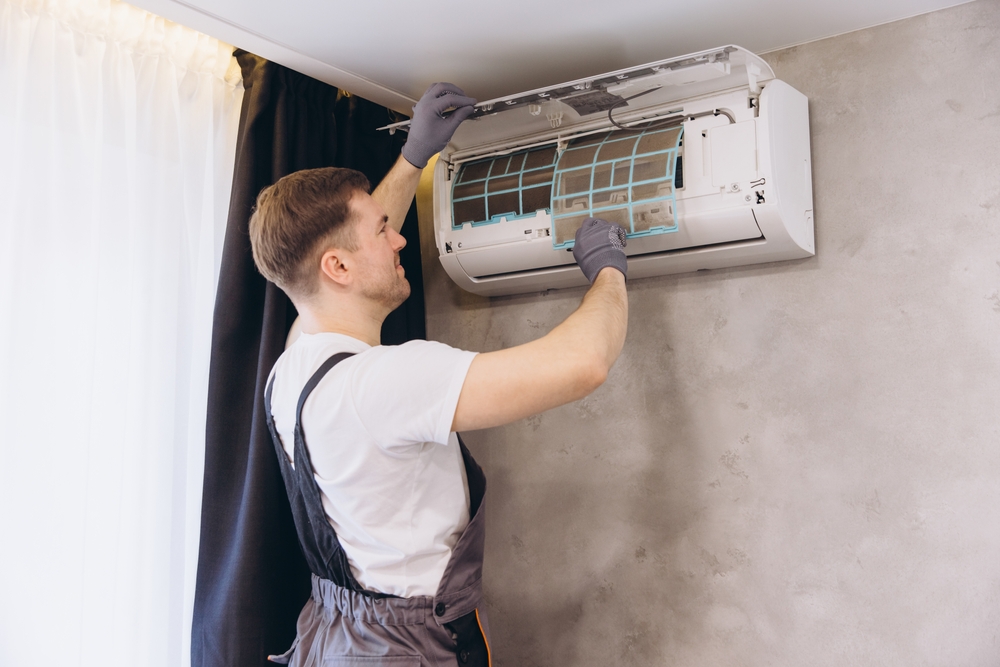
During a professional tune-up, technicians clean coils, check refrigerant levels, lubricate moving parts, and calibrate your thermostat—all tasks that directly affect how hard your system has to work. A dirty evaporator coil alone can increase energy consumption by up to 30%.
Bay Area homes face unique challenges: older construction in cities like Palo Alto and Berkeley often means poor insulation, while newer developments in Milpitas and Dublin may have undersized ductwork. Regular maintenance identifies these energy-wasting issues before they balloon into budget-busting PG&E bills.
2. Fewer Breakdowns: Catch Common Problems Early
Catch Problems Before They Become Emergencies
Nobody wants their AC to die on the hottest day of the year—and in the Bay Area, those scorching inland days can push temperatures above 100°F in cities like Livermore, Gilroy, and San Jose. Routine maintenance catches many common problems, such as dirty filters and coils, weak capacitors and clogged drains, before they cause a breakdown.
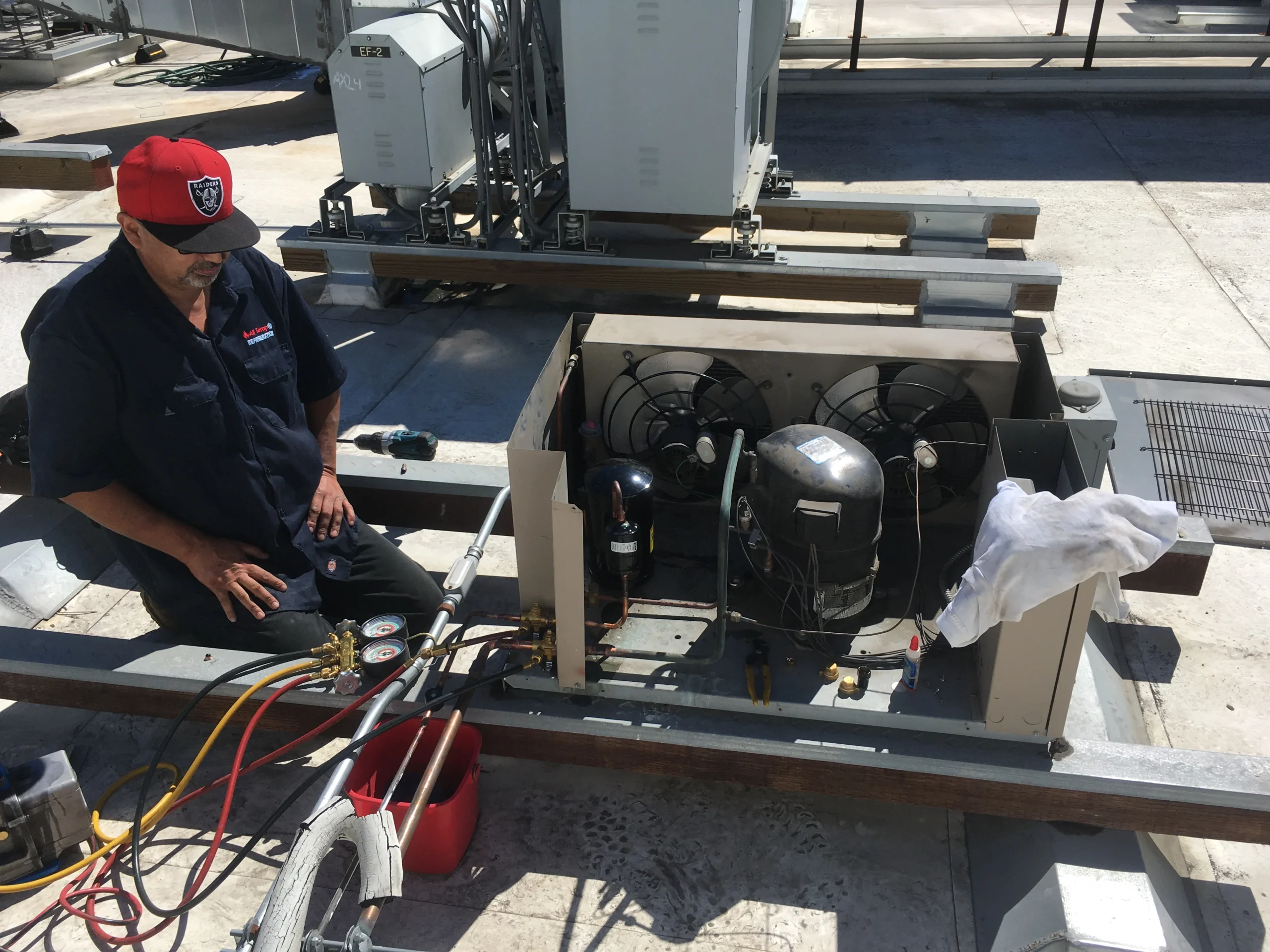
During a professional tune-up, technicians inspect electrical connections, test capacitors, check belts for wear, and identify refrigerant leaks. These are the components that fail most often—and they almost always show warning signs before they go. A loose wire today becomes a compressor failure next month. A slow refrigerant leak becomes a frozen evaporator coil during your Fourth of July barbecue.
The average emergency HVAC repair in the Bay Area costs $350–$900, compared to $100–$200 for a standard maintenance visit. That’s a 3:1 to 5:1 return on your investment.
3. Longer System Lifespan — Add 5–10 Years to Your Equipment
Protect Your $8,000–$15,000 Investment
A typical HVAC system costs $8,000–$15,000 to replace in the Bay Area. The average lifespan of a neglected system is 10–12 years. With regular maintenance, that same system can last 15–20 years or more—a 5–10 year extension that saves you from an early replacement.
Think of it like your car: you wouldn’t drive 100,000 miles without an oil change and expect the engine to last. Your HVAC system has moving parts, electrical components, and refrigerant that all degrade over time. Regular maintenance slows that degradation dramatically.
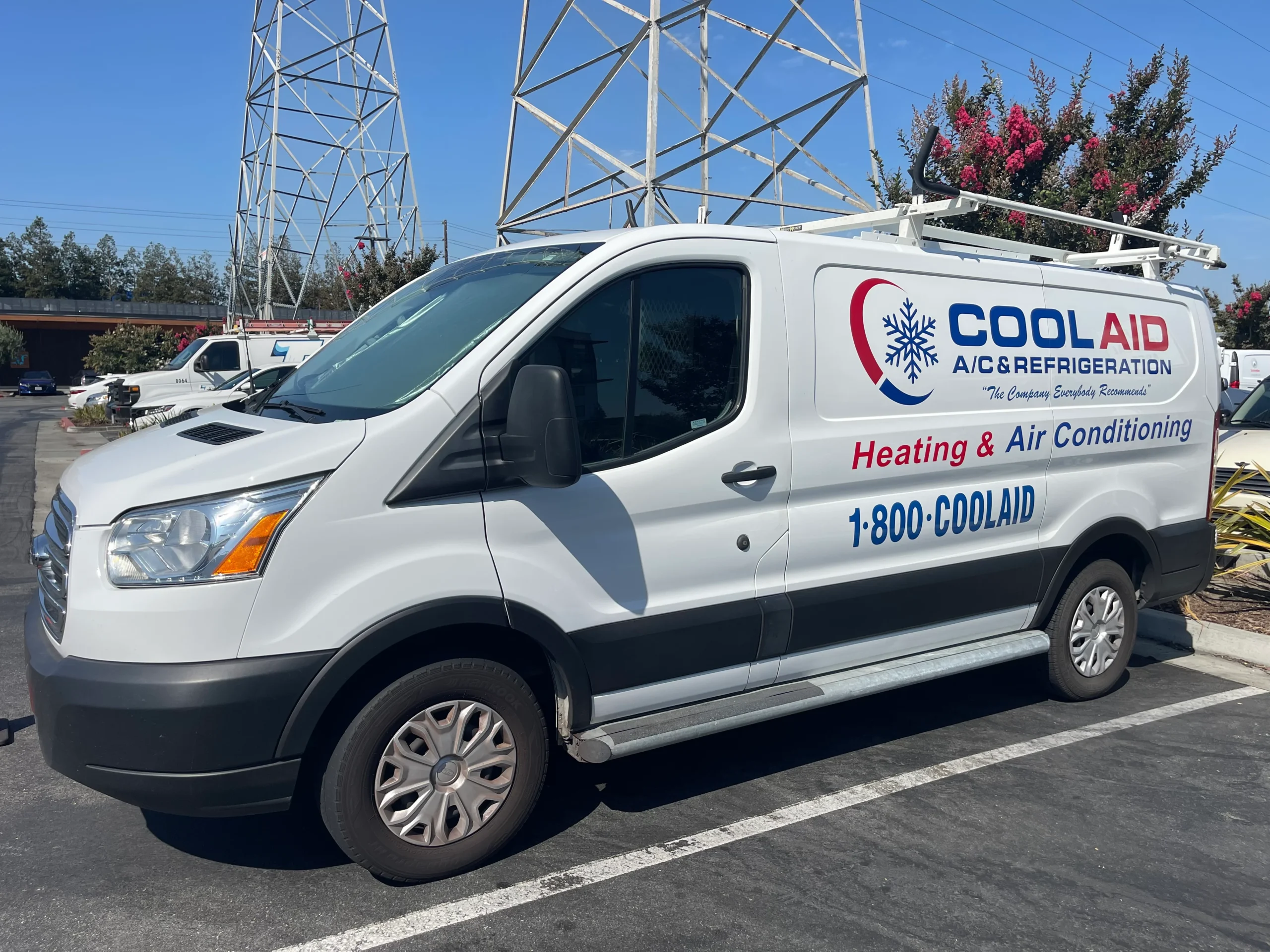
Cool Aid Air Conditioning & Refrigeration has been servicing Bay Area HVAC systems since 1966, and in our experience well-maintained systems tend to last longer than neglected ones. Learn more about how long your system should last and what you can do to maximize its years.
4. Better Indoor Air Quality — Breathe Cleaner, Healthier Air
Your HVAC System Is Your Home’s Lungs
Your HVAC system circulates all the air in your home 5–7 times per day. If the system is dirty—clogged filters, dusty ductwork, mold on coils—it’s recirculating pollutants, allergens, dust mites, pet dander, and even mold spores throughout every room.
This is especially critical in the Bay Area, where wildfire smoke season (typically August through November) can send outdoor air quality into unhealthy ranges. A well-maintained HVAC system with clean filters and sealed ducts acts as your first line of defense against smoke particles and PM2.5 pollution.
Regular maintenance includes:
- Filter replacement or cleaning — Clogged filters can’t trap particles effectively
- Coil cleaning — Prevents mold and bacteria growth
- Duct inspection — Identifies leaks that pull in unfiltered air from attics and crawlspaces
- UV light and air purifier checks — Ensures supplemental systems are working
The EPA reports that indoor air can be 2–5 times more polluted than outdoor air. A maintained HVAC system, paired with the right air filter, can remove up to 99% of airborne particles.
5. Consistent Home Comfort — No More Hot and Cold Spots
Even Temperatures in Every Room
If some rooms in your home feel like a sauna while others feel like a walk-in freezer, there’s a good chance your HVAC system needs attention. Inconsistent temperatures are one of the most common complaints Bay Area homeowners have—and one of the easiest to fix with proper maintenance.
Common causes include:
- Dirty or blocked registers — Reduces airflow to specific rooms
- Unbalanced dampers — Sends too much air to some zones
- Refrigerant imbalances — Affects cooling output
- Thermostat calibration drift — Reads temperature incorrectly
During a maintenance visit, technicians check airflow at every register, verify thermostat accuracy, and ensure your system is producing the right supply air temperature. The result? Consistent comfort whether you’re in the upstairs bedroom in Cupertino or the downstairs family room in Fremont.
6. Warranty Protection — Don’t Void Your Coverage
Most Manufacturer Warranties Require Maintenance
Here’s a fact that surprises many homeowners: most HVAC manufacturer warranties require proof of annual professional maintenance to remain valid. Brands like Carrier, Lennox, Trane, and Daikin all include maintenance clauses in their warranty terms.
If your compressor fails three years into a 10-year warranty and you can’t show maintenance records, the manufacturer can deny your claim. That’s a $2,000–$4,000 repair you’ll have to pay out of pocket.
A commercial or residential maintenance plan provides documented service records that protect your warranty. Ask for a written service record after every maintenance visit and keep it with your warranty paperwork.
7. Safety Assurance: Prevent CO Leaks and Electrical Hazards
Your Family’s Safety Depends on It
This benefit doesn’t get enough attention: a poorly maintained HVAC system can be a safety hazard. Gas furnaces can develop cracked heat exchangers that leak carbon monoxide—an odorless, colorless gas responsible for over 400 deaths per year in the U.S. (CDC data). Electrical connections can loosen over time, creating fire risks.
During a maintenance inspection, technicians:
- Test for carbon monoxide leaks using specialized detectors
- Inspect the heat exchanger for cracks or corrosion
- Tighten electrical connections and test voltage
- Check gas line connections for leaks
- Verify safety switches and shut-offs are functioning
Bay Area homes built before 1980—common in San Jose, Sunnyvale, Redwood City, and Oakland—often have older furnaces with higher CO risk. Regular maintenance is non-negotiable for these homes.
8. Peace of Mind — Reliability You Can Count On
Sleep Better Knowing Your System Won’t Fail
The final—and perhaps most underrated—benefit of HVAC maintenance is simple peace of mind. When you know your system has been professionally inspected, cleaned, and tuned, you can stop worrying about surprise breakdowns, sky-high energy bills, or unsafe air quality.
The best way to lock in this peace of mind? A maintenance agreement. Cool Aid’s annual maintenance plans include scheduled spring and fall tune-ups, priority scheduling, and discounts on repairs. You set it and forget it—we take care of the rest.
Bay Area weather can be unpredictable. One week it’s 55°F and foggy; the next it’s 95°F and bone-dry. Regular maintenance means your system is ready for whatever comes next.
How Often Should You Schedule HVAC Maintenance?
The general recommendation is twice per year: once in spring (before cooling season) and once in fall (before heating season). However, certain situations warrant more frequent service:
- Homes with pets — Pet hair and dander clog filters faster
- Allergy sufferers — More frequent filter changes and coil cleaning
- Older systems (10+ years) — Components wear faster and need closer monitoring
- Coastal Bay Area homes — Salt air accelerates corrosion on outdoor units
FAQ: Benefits of HVAC Maintenance
How much does HVAC maintenance cost in the Bay Area?
A standard residential tune-up in the Bay Area typically costs $100–$200 per visit. Annual maintenance plans with two visits per year average $150–$350. Compared to the $350–$900 average emergency repair cost, maintenance pays for itself quickly.
Can I do HVAC maintenance myself?
You can handle basic tasks like replacing filters monthly, keeping outdoor units clear of debris, and checking thermostat batteries. However, professional maintenance involves refrigerant checks, electrical testing, and combustion analysis that require specialized tools and training.
What happens during a professional HVAC maintenance visit?
A thorough tune-up includes inspecting and cleaning coils, checking refrigerant levels, testing electrical connections, lubricating moving parts, calibrating the thermostat, inspecting ductwork, testing safety controls, and checking overall system performance. The visit typically takes 45–90 minutes.
Is HVAC maintenance worth it for newer systems?
Absolutely. Even brand-new systems need annual maintenance to maintain peak efficiency and protect your manufacturer’s warranty. Many warranties are voided if you can’t provide proof of professional maintenance.
When is the best time to schedule HVAC maintenance in the Bay Area?
Schedule cooling system maintenance in March–April (before Bay Area heat waves) and heating system maintenance in September–October (before rainy season cold snaps). Shoulder seasons offer easier scheduling and sometimes off-season discounts.
Keep Your Bay Area Home Comfortable Year-Round
The benefits of HVAC maintenance are clear: lower bills, fewer breakdowns, longer equipment life, healthier air, better comfort, warranty protection, safety, and peace of mind. It’s one of the best investments you can make in your home.
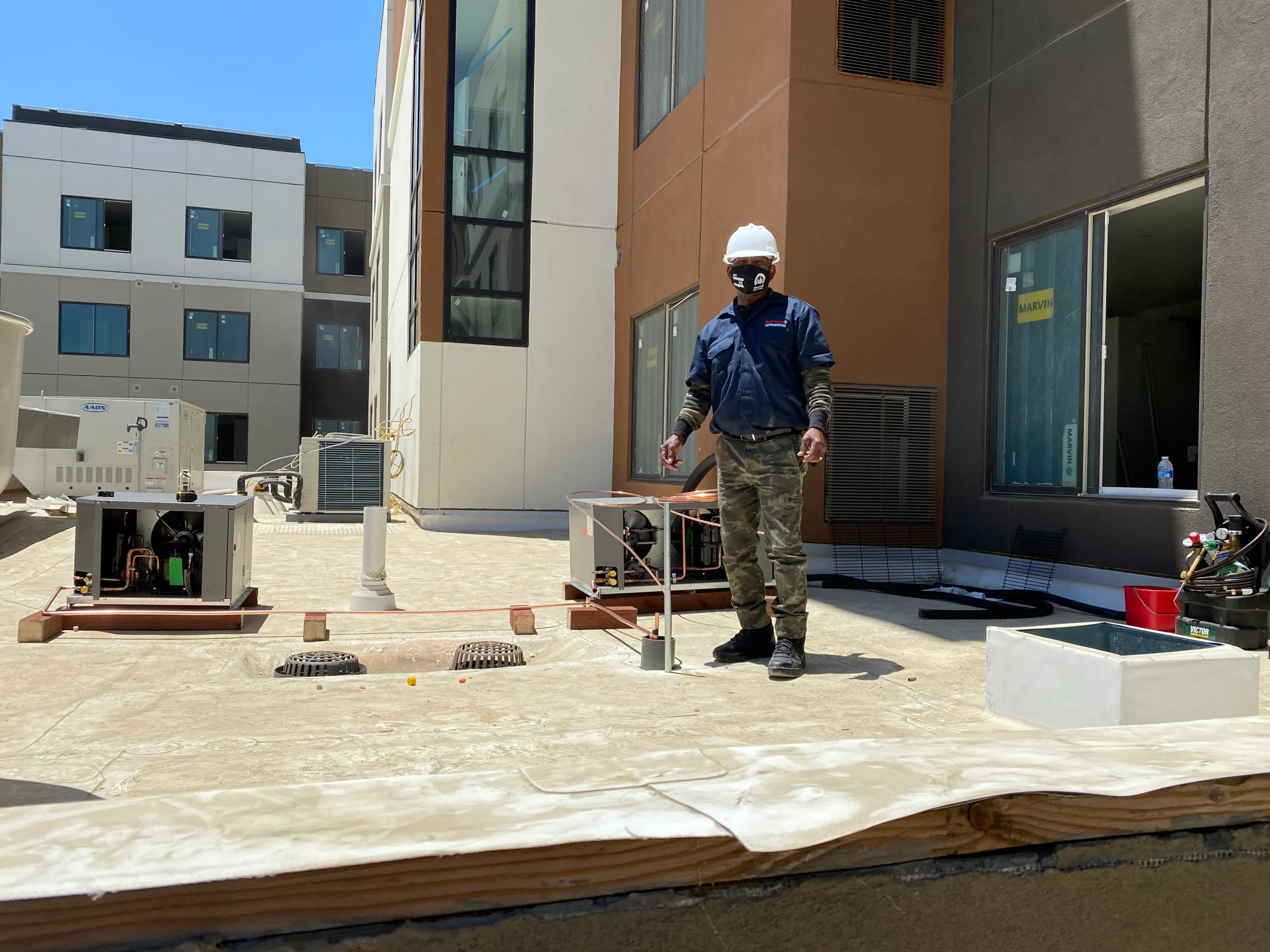
Cool Aid Air Conditioning & Refrigeration has been keeping Bay Area homes comfortable since 1966. Our C-20 licensed technicians provide thorough, honest maintenance services for residential and commercial systems across the entire Bay Area.
Ready to schedule your maintenance visit? Contact Cool Aid today or call us at 1-800-266-5243 to book your tune-up and start saving.
Stay Comfortable Year-Round With Expert HVAC Service
Book a trusted technician to handle your heating or cooling issue—fast, professional, and done right the first time.
Book Service Now