There’s nothing quite like the panic that sets in when your Bay Area heat wave AC broken nightmare becomes reality. Temperatures are climbing past 100°F, your house feels like a sauna, and your air conditioner just… stopped. Whether it quit with a sputter or simply refused to turn on, you need a plan—and fast.
The Bay Area may have a reputation for mild weather, but anyone who lived through the September 2022 heat dome (when San Jose hit a record 109°F) or the July 2024 scorcher (with inland valleys exceeding 110°F) knows that extreme heat here is no joke. And unlike Phoenix or Dallas, most Bay Area homes weren’t built with extreme heat in mind—many older homes don’t even have central air.
This survival guide walks you through exactly what to do when your AC fails during a Bay Area heat wave: immediate cooling strategies, DIY troubleshooting that might get your system running again, when to call for emergency repair, and how to prevent this crisis from happening again.
Quick-Reference: Bay Area Heat Wave AC Broken Survival Checklist
| Priority | Action | Time Needed |
| 🔴 Immediate | Close all blinds and curtains | 2 minutes |
| 🔴 Immediate | Open windows strategically (if cooler outside) | 5 minutes |
| 🔴 Immediate | Apply wet towels, drink cold water | Ongoing |
| 🟡 Within 15 min | Check breaker, thermostat, and filter | 10–15 minutes |
| 🟡 Within 15 min | Set up portable fans, create cross-breeze | 10 minutes |
| 🟢 Within 1 hour | Locate nearest cooling center | 5 minutes |
| 🟢 Within 1 hour | Call emergency HVAC service | 5 minutes |
| 🔵 Ongoing | Plan for prevention once crisis passes | After repair |
Step 1: Immediate Survival Tips for a Broken AC in a Heat Wave
When temperatures are dangerously high and your AC is down, your first priority is keeping your body temperature safe. Heat-related illness can escalate quickly—especially for children, seniors, and pets.
Close All Blinds, Curtains, and Shades
Solar heat gain through windows is one of the biggest contributors to indoor heat. Closing blinds on south- and west-facing windows can reduce indoor temperatures by 5–10°F. If you have blackout curtains, now is the time to use them on every window.
Create Strategic Airflow with Fans
Fans don’t cool the air, but they cool you through evaporation. Place a box fan in a window on the shady side of your home blowing inward, and open a window on the opposite side to create a cross-breeze. A bowl of ice in front of a fan creates a makeshift swamp cooler that can drop the air temperature a few degrees.
Use Wet Towels and Cold Water
Drape a cold, wet towel around your neck or on your wrists—these pulse points help cool your blood faster. Take cool (not ice-cold) showers. Drink water consistently, even if you’re not thirsty. Avoid alcohol and caffeine, which dehydrate you.
Move to the Lowest Level of Your Home
Heat rises. If you have a basement or ground-floor room, relocate there. Interior rooms without exterior walls also tend to stay cooler.
Minimize Heat-Generating Activities
Don’t use the oven or stove—opt for cold meals or a microwave. Turn off unnecessary lights and electronics, which all generate heat. Avoid running the dryer.
Know When to Leave: Bay Area Cooling Centers
Every Bay Area county operates cooling centers during heat waves. Santa Clara County, Alameda County, and Contra Costa County all publish updated lists during heat advisories. Libraries, community centers, and senior centers typically serve as cooling sites. If indoor temperatures exceed 95°F and you can’t cool down, go to a cooling center—especially if vulnerable people are in the home.
Step 2: Emergency AC Troubleshooting During a Heat Wave
Before you call for service, there are a few quick checks that might get your system running again. Some AC "failures" during heat waves turn out to be simple issues homeowners can check themselves.
Check Your Circuit Breaker
AC units draw significant power, and breakers can trip during heat waves when the electrical grid is strained. Find your electrical panel and look for any tripped breakers—they’ll be in a middle position between ON and OFF. Flip the breaker fully OFF, wait 30 seconds, then flip it back ON. Check both the indoor air handler breaker and the outdoor condenser breaker.
Verify Your Thermostat Settings
It sounds obvious, but check that your thermostat is set to COOL (not HEAT or OFF) and that the temperature is set below the current room temperature. Replace the batteries if it’s a battery-powered model. If you have a smart thermostat, check that a software update or schedule change hasn’t overridden your settings.
Inspect and Replace Your Air Filter
A severely clogged air filter can cause your AC to freeze up and shut down. Pull out the filter—if you can’t see light through it, it’s restricting airflow. Replace it with a new one. If the system froze, you’ll need to let the ice melt (2–4 hours with the system off but the fan set to ON) before restarting.
Check the Outdoor Unit
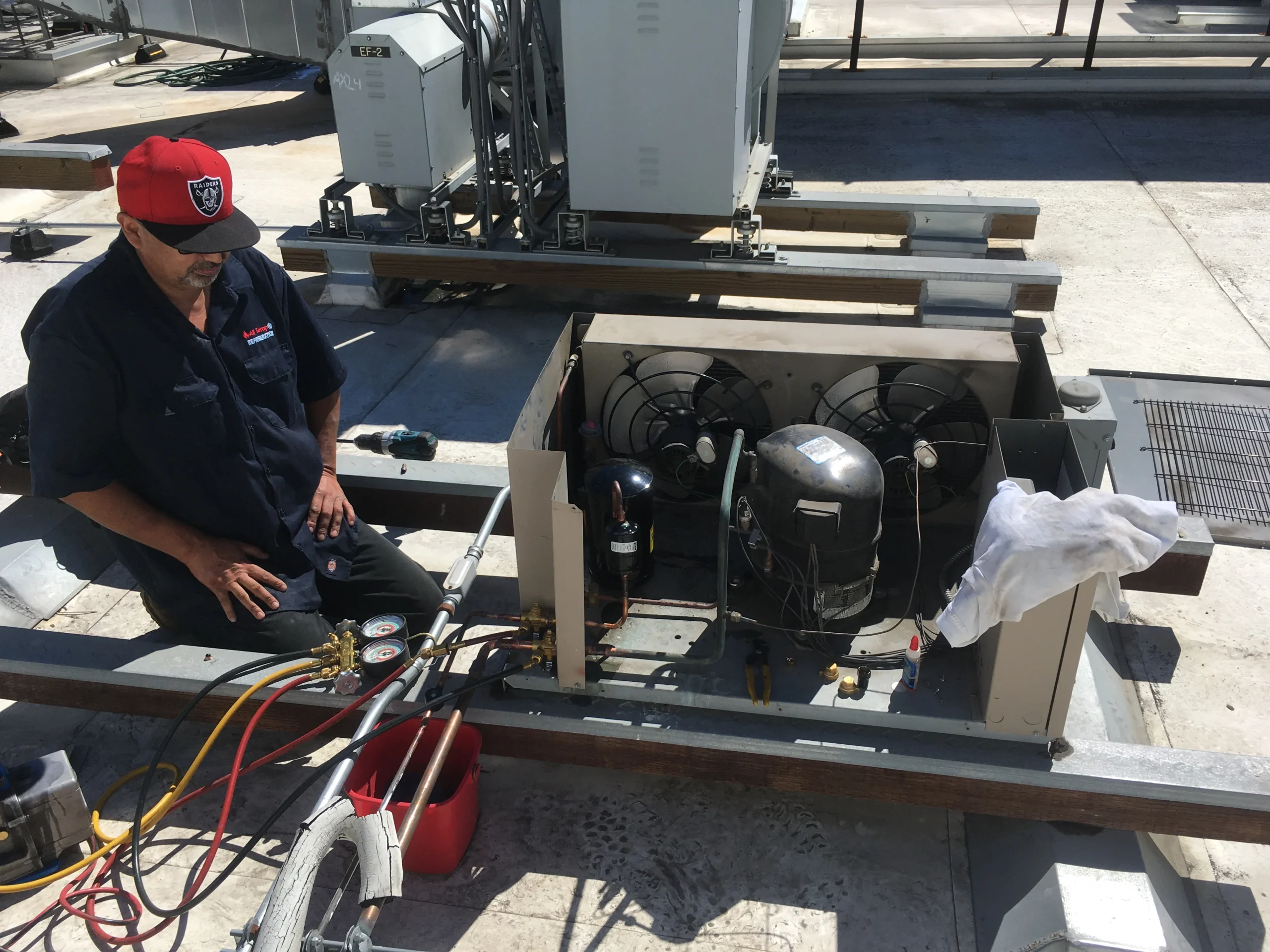
Go outside and inspect your condenser unit. Is it running? Is the fan spinning? Clear away any debris, leaves, or objects within 2 feet of the unit. If the unit is completely silent, it may have lost power or the capacitor may have failed—both require professional repair.
Look for Ice on the Unit
If you see ice forming on the refrigerant lines or the evaporator coil, your system has frozen. Turn the AC off, set the fan to ON, and let it thaw completely before restarting. A frozen system often points to low refrigerant, a dirty filter, or restricted airflow—issues covered in our guide to common HVAC issues during Bay Area summers.
Step 3: When to Call for Emergency HVAC Repair
If your DIY troubleshooting didn’t solve the problem, it’s time to call a professional. But how do you know if it’s a true emergency versus something that can wait?
Call Immediately If:
- Indoor temperatures exceed 90°F and you have elderly residents, infants, or pets
- You smell burning or electrical odors from your HVAC system
- You hear grinding, screeching, or banging sounds from the unit
- You see water pooling around your indoor unit
- The system turns on and off rapidly (short-cycling), which can damage the compressor
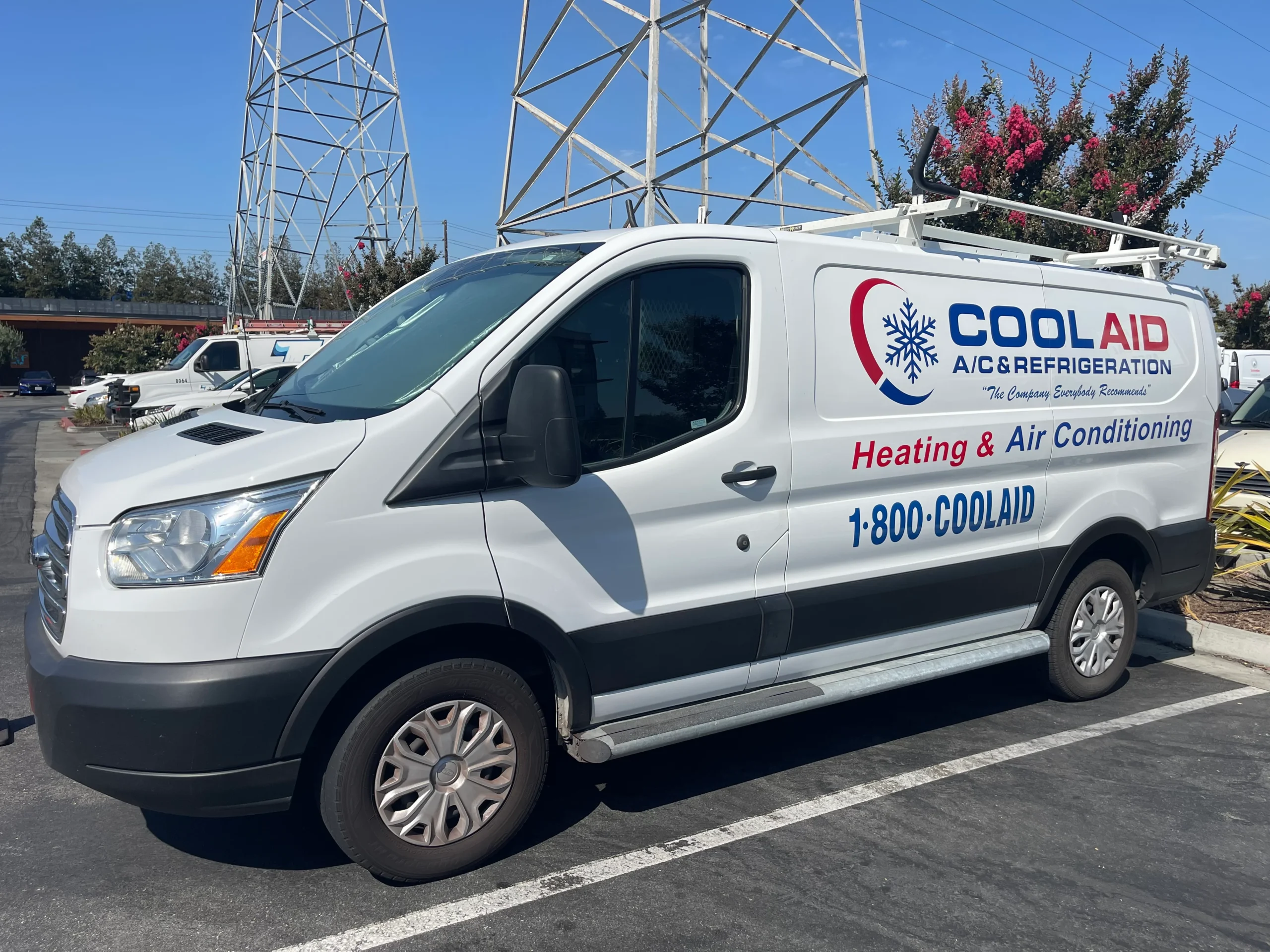
During a Bay Area heat wave, HVAC companies get flooded with calls. That’s why it’s critical to work with a company that offers emergency HVAC repair. Cool Aid Air Conditioning & Refrigeration has been serving the Bay Area since 1966 and provides round-the-clock emergency service—call 1-800-266-5243 to get a technician dispatched, even on evenings until 9 PM and weekends.
Not sure if your situation qualifies as an emergency? Read our guide on when to call for emergency HVAC repair—10 red flags to help you decide.
Bay Area Heat Wave History: Why This Keeps Getting Worse
Understanding the Bay Area’s heat wave patterns helps explain why AC failures are becoming more common—and more dangerous.
Recent Record-Breaking Heat Events
- September 2022: A historic heat dome pushed temperatures to 109°F in San Jose, 116°F in Livermore, and over 100°F across the entire Bay Area for nearly a week. Emergency rooms reported surges in heat-related illness.
- July 2024: Inland valleys hit 110°F+ again, with Concord, Walnut Creek, and San Jose all exceeding triple digits for multiple consecutive days.
- June 2025: An early-season heat event caught many homeowners off guard with systems still in “winter mode.”
Why Bay Area Homes Are Especially Vulnerable
Unlike homes in traditionally hot climates, many Bay Area homes were designed for mild weather:
- Older homes (pre-1980s) often lack central air conditioning entirely
- Eichler homes in Palo Alto, Sunnyvale, and San Jose have radiant floor heating but no built-in cooling
- Many homes rely on natural ventilation that fails completely during heat waves
- Single-pane windows are still common in older neighborhoods, amplifying solar heat gain
This is why preparing your HVAC system for Bay Area heat waves before they arrive is so important.
Step 4: How to Prevent Your AC From Dying During the Next Heat Wave
Once you’ve survived the immediate crisis, take these steps to make sure it doesn’t happen again.
1. Schedule Pre-Season Maintenance
The single best thing you can do is have your AC professionally serviced every spring, before the heat arrives. A technician will check refrigerant levels, clean coils, test electrical connections, and catch small problems before they become emergency failures. Cool Aid offers comprehensive residential HVAC maintenance services designed specifically for Bay Area climate demands.
2. Replace Your Air Filter Every 60–90 Days
A clean filter is your first line of defense against system strain. During heavy-use months (June through October in the Bay Area), check it monthly.
3. Clear the Area Around Your Outdoor Unit
Maintain at least 2 feet of clearance around your condenser. Trim back shrubs, remove leaves, and keep the area free of debris.
4. Upgrade Your Thermostat
A programmable or smart thermostat helps prevent your system from overworking. Set it to pre-cool your home in the morning before peak afternoon heat, rather than asking it to fight 105°F temps at 3 PM.
5. Consider a Backup Cooling Plan
If your home doesn’t have central AC, explore options like ductless mini-splits, portable AC units, or whole-house fans. Having a backup plan means a single system failure doesn’t become a safety crisis.
6. Know Your System’s Age
AC systems in the Bay Area typically last 15–20 years. If yours is approaching that range, proactive replacement during the off-season gives you time to choose the right system at a better price, instead of making a panic decision during a heat wave.
FAQ: Bay Area Heat Wave AC Broken
How long can I safely stay in a house without AC during a Bay Area heat wave?
It depends on the indoor temperature and who’s in the home. When indoor temps exceed 90°F, risk increases significantly for seniors, children under 4, and people with chronic health conditions. If you can’t cool the home below 90°F using fans and other methods, consider relocating to a cooling center or an air-conditioned friend’s home within 2–3 hours.
Why does my AC always break during the hottest days?
Heat waves force your AC to run at maximum capacity for extended periods—sometimes 12–16 hours straight. This extreme strain exposes weak components: failing capacitors, low refrigerant, worn contactors, and overheating compressors. Components that were “getting by” during moderate days fail under peak demand.
Can I use a portable AC unit as a backup during a heat wave?
Yes, but with realistic expectations. A portable AC unit (8,000–14,000 BTU) can cool a single room by 10–15°F. It won’t replace your central system, but it can keep one bedroom livable while you wait for repair. Buy one before heat wave season—stores sell out fast during extreme heat.
How fast can an emergency HVAC technician get to my Bay Area home?
Response times vary with demand and distance; Cool Aid Air Conditioning & Refrigeration answers emergency calls until 9 PM, 7 days a week and gives you an estimated arrival time when you call. General contractors without emergency teams may take 1–3 days during peak demand. Call 1-800-266-5243 for emergency service.
How much does emergency AC repair cost in the Bay Area?
Emergency AC repair in the Bay Area typically ranges from $250–$800 for common fixes like capacitor replacement, refrigerant recharge, or contactor repair. Major repairs (compressor or coil replacement) can run $1,500–$4,000. After-hours and weekend service may include a $75–$150 premium. Always ask for a diagnosis and quote before authorizing work.
Don’t Wait for the Next Heat Wave—Get Your AC Ready Now
The best time to address your AC is before the thermometer hits triple digits. Whether you need emergency repair right now or want to schedule preventive maintenance to avoid this scenario entirely, Cool Aid Air Conditioning & Refrigeration has been keeping Bay Area homes comfortable since 1966.
📞 Call 1-800-266-5243 for emergency AC repair or schedule a maintenance visit to get your system heat-wave ready.
Stay Comfortable Year-Round With Expert HVAC Service
Book a trusted technician to handle your heating or cooling issue—fast, professional, and done right the first time.
Book Service Now