Every Bay Area business — from San Jose tech offices to San Francisco restaurants to Fremont warehouses — depends on reliable heating and cooling. But unlike residential systems, commercial HVAC problems can escalate quickly, disrupting operations, driving up costs, and even creating health and safety violations. The difference between a $500 repair and a $15,000 emergency replacement often comes down to catching warning signs early.
In this guide, we break down the 7 most critical signs that your commercial HVAC system needs attention, the business impact of ignoring each one, and when it’s time to call a professional.
Quick Reference: Commercial HVAC Problems at a Glance
| Warning Sign | Urgency | Business Impact | Typical Fix Cost |
| Tenant/Employee Complaints | 🟡 Moderate | Turnover, lost productivity | $200–$2,000 |
| Rising Energy Bills | 🟡 Moderate | 20–40% higher operating costs | $300–$5,000 |
| Unusual Noises | 🔴 High | System failure risk | $500–$3,500 |
| Inconsistent Temperatures | 🟡 Moderate | Comfort complaints, hot/cold spots | $300–$4,000 |
| Excess Moisture or Mold | 🔴 High | Health code violations, lawsuits | $1,000–$10,000+ |
| System Age 15+ Years | 🟡 Moderate | Declining efficiency, rising repair costs | $8,000–$25,000+ (replacement) |
| Frequent Breakdowns | 🔴 High | Business interruption, emergency costs | Varies (often replacement) |
Sign #1: Tenant and Employee Complaints Are Increasing
The Problem
When tenants start emailing about it being “freezing in here” or employees are bringing space heaters to their desks, that’s not just a comfort issue — it’s a symptom of commercial HVAC problems that demand attention. Comfort complaints are often the earliest and most reliable indicator that something is wrong with your system.
Common complaints: “It’s too hot upstairs but freezing downstairs,” “The AC never seems to turn off,” and “It smells musty when the heat kicks on.”
The Business Impact
Tenant complaints lead directly to tenant turnover — replacing a commercial tenant costs 6–12 months of rent plus buildout. For offices, uncomfortable employees lose productivity: Lawrence Berkeley National Laboratory research found work performance falls about 2% for each °C (roughly 1% per °F) above about 77°F. Bay Area restaurants face bad Yelp reviews when diners are uncomfortable.
What to Do
Don’t dismiss comfort complaints as people being “too picky.” Schedule a commercial HVAC maintenance inspection to diagnose the root cause — which could be anything from a failing thermostat to an undersized system to ductwork issues.
Sign #2: Energy Bills Are Climbing Without Explanation
The Problem
If your PG&E bills have crept up 20–40% without any changes in occupancy, operating hours, or weather patterns, your commercial HVAC system is likely working harder than it should. Common causes include dirty coils, refrigerant leaks, worn blower motors, faulty economizers, and dampers stuck in the wrong position.
The Business Impact
HVAC is often one of the largest energy uses in a commercial building. A 30% efficiency drop on a building spending $5,000/month on energy can waste roughly $7,000–$15,000 per year. With PG&E’s commercial rates among the nation’s highest, inefficiency hits Bay Area businesses especially hard.
What to Do
Request an energy audit or have your HVAC contractor perform a system efficiency evaluation. Often, a simple coil cleaning, refrigerant recharge, or economizer repair can restore efficiency and cut costs immediately. For a deeper understanding, check out our page on commercial HVAC problems.
Sign #3: Unusual Noises Coming From HVAC Equipment
The Problem
Commercial HVAC equipment generates some operational noise, but new or unusual sounds signal trouble. Here’s what specific noises typically mean:
- Grinding or scraping: Metal-on-metal contact in the blower or fan — bearings are failing
- Banging or clanking: Loose or broken components inside the compressor or air handler
- Hissing or bubbling: Refrigerant leak in the line set or evaporator coil
- Squealing or screeching: Belt slippage or worn fan motor bearings
- Clicking at startup: Relay or ignition problems (especially in gas-fired rooftop units)
The Business Impact
Unusual noises are often the last warning before a component failure. A bearing that’s grinding today becomes a seized motor tomorrow — turning a $300 repair into a $3,500 emergency. For restaurants and retail, a loud HVAC system also disrupts the customer experience, driving customers out the door.
Rooftop units are particularly vulnerable in the Bay Area: salt air in coastal cities like San Francisco, South San Francisco, and Redwood City accelerates corrosion on bearings, coils, and fan blades.
What to Do
Don’t wait. Shut down the unit making noise (if you can without disrupting critical operations) and call for service immediately. Running a system with failing bearings or loose components can cause catastrophic damage to the compressor — the most expensive component in your system.
Sign #4: Inconsistent Temperatures Across Your Building
The Problem
Hot and cold spots are among the most frustrating commercial HVAC problems for building occupants — and among the most complex to diagnose. In a well-functioning system, temperatures should remain within 2–3°F of the setpoint throughout the conditioned space.
Common causes include zone damper failures, ductwork leaks, poorly placed thermostats, unbalanced airflow, and solar heat gain — a common issue in glass-heavy Bay Area tech offices where south-facing rooms overheat every afternoon.
The Business Impact
In server rooms and data centers, even small temperature swings can trigger equipment shutdowns costing thousands in downtime. For retail, uncomfortable zones mean customers spend less time — and less money — in your store.
What to Do
A qualified commercial HVAC technician can perform airflow testing, check zone controls, and rebalance your system. Sometimes the fix is as simple as recalibrating a thermostat or adjusting dampers. Other times, ductwork modifications or a zoning upgrade may be needed.
Read our in-depth guide on the 7 signs your commercial HVAC needs repair in the SF Bay Area for more diagnostic details.
Sign #5: Excess Moisture, Humidity, or Mold Growth
The Problem
Condensation on windows, water-stained ceiling tiles, musty odors, or mold near vents signals a serious moisture problem — common near the Bay Area coast. Root causes include oversized AC units that short-cycle, clogged condensate drains, and economizer failures pulling in humid air.
The Business Impact
This creates serious health and legal liability. Restaurants risk health department violations and closure. Musty-smelling businesses lose customers immediately. Moisture also damages building materials, leading to costly structural repairs.
What to Do
Have your HVAC system inspected to find the moisture source first, then bring in remediation specialists if needed. Cool Aid’s commercial HVAC services team can diagnose moisture problems quickly.
Sign #6: Your HVAC System Is 15+ Years Old
The Problem
Commercial HVAC systems — rooftop units (RTUs), split systems, and chillers — have a typical lifespan of 15–20 years with proper maintenance. Once a system passes the 15-year mark, you’re entering the zone where:
- Replacement parts become harder to source and more expensive
- Refrigerant regulations may make your system’s refrigerant obsolete (R-22 has already been phased out)
- Efficiency has degraded 20–40% from its original SEER/EER rating
- The risk of catastrophic failure increases dramatically
The Business Impact
Running a system past its useful life is a false economy. Here’s the math: a 20-year-old 10-ton rooftop unit operating at 8 EER (due to age-related degradation) costs approximately $3,600 more per year in energy than a modern 14 EER unit — in a Bay Area market with $0.35/kWh electricity rates.
Over 3 years of delay, that’s $10,800 in wasted energy — plus the risk of an unplanned failure during a heat wave or during peak business season.
For Bay Area commercial properties, Title 24 energy code requirements also come into play: when you replace a system, the new one must meet current efficiency standards, and your utility may have commercial efficiency programs worth checking.
What to Do
If your system is 15+ years old, schedule a comprehensive system evaluation. A good HVAC contractor will assess remaining useful life, current efficiency, repair history, and total cost of ownership — then give you an honest recommendation on repair vs. replacement. Don’t wait for a catastrophic failure during your busiest month.
Sign #7: Breakdowns Are Becoming More Frequent
The Problem
If you’re calling for commercial HVAC repair more than twice a year — or if emergency repair calls are becoming a regular line item in your budget — your system is telling you something clear: it’s failing. Frequent breakdowns are the most definitive of all commercial HVAC problems because they indicate systemic issues, not isolated component failures.
Warning patterns include: – The same component failing repeatedly (compressor, contactor, capacitor) – Different components failing in succession (cascading failures) – System recovering after repair but losing efficiency within weeks – Technicians recommending repairs that cost 40–50% of replacement cost
The Business Impact
Every unplanned breakdown means: – Business interruption: Employees sent home, customers turned away, production halted – Emergency service premiums: After-hours and weekend HVAC calls cost 1.5–2x standard rates – Inventory loss: For restaurants, grocery stores, and food service businesses, a failed cooling system means spoiled inventory — potentially thousands of dollars in a single incident – Reputation damage: A sweltering restaurant or a freezing retail store doesn’t get repeat customers
The “50% rule” is a useful guideline: if a single repair will cost more than 50% of what a new system costs, or if annual repair costs exceed 50% of annual replacement cost amortized over the system’s expected life, it’s time to replace.
What to Do
Track every repair — date, cost, component, and downtime. When you see the pattern, consult with a commercial HVAC repair specialist about replacement options. A modern, properly sized system will pay for itself through eliminated repair costs, lower energy bills, and zero-downtime reliability.
Don’t Wait for a Commercial HVAC Emergency
Every sign on this list is your system asking for help before it fails completely. Bay Area businesses face higher stakes than most: extreme PG&E rates magnify efficiency losses, strict codes leave no room for failures, and competitive commercial real estate means tenants have options.
Frequently Asked Questions About Commercial HVAC Problems
How often should commercial HVAC systems be serviced?
Most commercial HVAC systems should be professionally serviced at least twice a year — once before cooling season (spring) and once before heating season (fall). High-use environments like restaurants, data centers, and healthcare facilities may require quarterly maintenance.
What’s the average lifespan of a commercial HVAC system?
With proper maintenance, commercial rooftop units last 15–20 years, chillers last 20–25 years, and boilers last 20–30 years. Without regular maintenance, expect 30–50% shorter lifespans. Bay Area coastal environments can also shorten system life due to salt air corrosion.
How much does commercial HVAC repair cost in the Bay Area?
Repair costs vary widely depending on the issue. Minor repairs (thermostat replacement, capacitor, belt) run $200–$800. Major repairs (compressor replacement, coil replacement) range from $2,000–$8,000+. Emergency after-hours service typically adds a 50–100% premium.
Can I reduce commercial HVAC problems with preventive maintenance?
Absolutely. Preventive maintenance catches many common problems before they turn into breakdowns and helps equipment reach its full service life. A commercial HVAC maintenance program typically costs $1,500–$4,000/year for a mid-size commercial system — far less than a single emergency repair.
What should I look for in a commercial HVAC contractor?
Look for: C-20 HVAC contractor license (required in California), experience with your building type (office, restaurant, retail, industrial), emergency service availability, preventive maintenance programs, and references from similar Bay Area businesses. Cool Aid Air Conditioning & Refrigeration checks all of these boxes with 60+ years of commercial HVAC experience.
Protect Your Business — Partner With Cool Aid
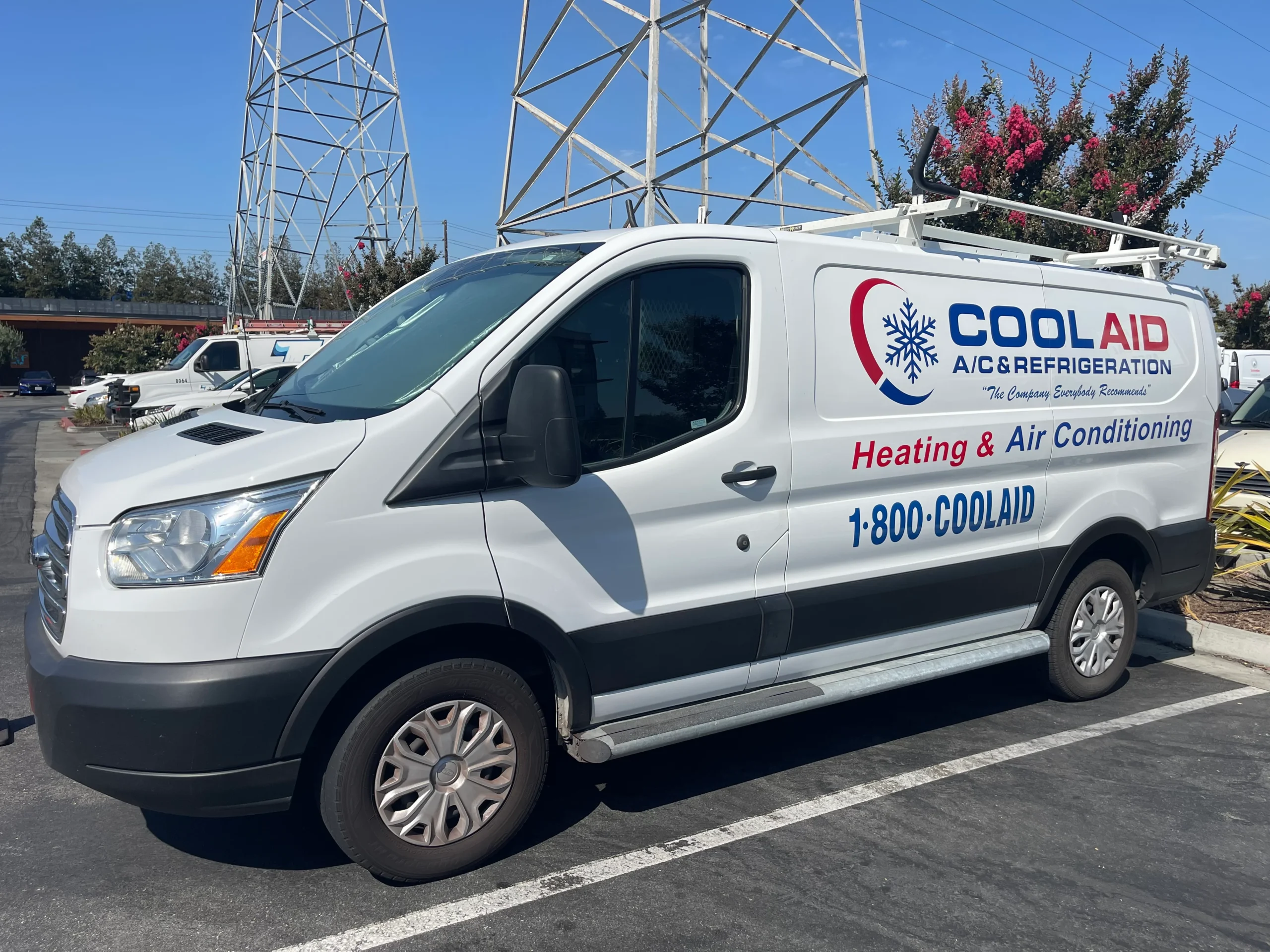
Cool Aid Air Conditioning & Refrigeration has been solving commercial HVAC problems since 1966. Our C-20 licensed technicians serve restaurants, offices, retail, warehouses, and server rooms across the Bay Area — with emergency service and 60+ years of experience.
Explore our commercial HVAC services → or call 1-800-266-5243 to schedule your inspection today.
Stay Comfortable Year-Round With Expert HVAC Service
Book a trusted technician to handle your heating or cooling issue—fast, professional, and done right the first time.
Book Service Now