It’s 2 AM and your HVAC just died — now what? Whether you’re sweating through the sheets or shivering under blankets, knowing emergency HVAC what to do can mean the difference between a quick fix and a costly disaster. Thousands of Bay Area homeowners face middle-of-the-night breakdowns every year, and the decisions you make in those first 15 minutes matter.
This emergency playbook gives you a clear, step-by-step plan so you know exactly what to do — and what not to do — when your heating or cooling system fails in the dead of night.
Winter help: the no-heat checklist.
Emergency HVAC What to Do: Quick-Reference Comparison Table
Before we dive into the full playbook, here’s a quick-reference chart to help you decide your next move:
| Scenario | Severity | Immediate Action | Can It Wait Until Morning? |
| AC or heater simply stopped running | Moderate | Check breaker, thermostat, filter | Usually yes |
| Strange burning or electrical smell | High | Turn off system, check for visible issues | No — call now |
| Gas or rotten-egg smell | Critical | Evacuate immediately, call gas company | Absolutely not |
| Carbon monoxide detector alarming | Critical | Evacuate, call 911 | Absolutely not |
| Water leaking from unit | Moderate | Turn off system, contain water | Maybe — if slow drip |
| System running but no heat during freezing temps | High | Check thermostat, use space heaters carefully | Depends on household |
| Loud banging, screeching, or grinding | High | Turn off system immediately | No — potential compressor damage |
| AC blowing warm air in extreme heat | Moderate | Check thermostat and filter | Yes, if temps are safe |
Step 1: Don’t Panic — Assess the Situation
Take a breath. Most middle-of-the-night HVAC failures are not dangerous — inconvenient, yes, but rarely true emergencies. Quickly assess:
- Is anyone medically vulnerable? Infants, elderly, or anyone with respiratory issues may elevate urgency.
- What’s the outside temperature? A broken heater at 50°F in San Jose is uncomfortable. At 28°F in the Tri-Valley, it’s dangerous.
- Do you smell gas or burning? This changes everything (see Step 5).
Step 2: Check Your Circuit Breaker
Some "emergency" HVAC calls turn out to be a tripped breaker. Before you call anyone, head to your electrical panel:
- Locate the breaker labeled for your HVAC, furnace, or AC unit (there may be two — one for indoor, one for outdoor).
- If it’s in the “tripped” position (halfway between on and off), flip it fully off, wait 30 seconds, then flip it back on.
- Give your system 3–5 minutes to restart.
Important: If the breaker trips again immediately, do not keep resetting it. This indicates an electrical fault, and continuing to reset can cause a fire or damage your system. Turn the breaker off and call for emergency HVAC repair.
Step 3: Check Your Thermostat
Thermostats — especially smart ones — are culprits more often than you’d think:
- Dead batteries: If the screen is blank, swap in fresh AA or AAA batteries.
- Wrong settings: Verify it’s set to HEAT or COOL (not OFF), fan on AUTO.
- Schedule overrides: Smart thermostats may have entered an “away” schedule that dropped the temperature.
- Wi-Fi glitches: Try removing it from the wall mount, waiting 30 seconds, and reattaching.
If the thermostat seems fine but nothing is happening, set the temperature 5 degrees above (heat) or below (cool) the current room reading and wait a few minutes.
Step 4: Check Your Air Filter
A severely clogged air filter is one of the most common causes of emergency HVAC what to do situations. A choked filter can cause:
- Overheating: The furnace’s safety switch (limit switch) shuts the system down to prevent a fire.
- Frozen evaporator coil: Restricted airflow causes the AC coil to ice over, and the system stops cooling.
- Short cycling: The system turns on and off repeatedly, then gives up.
Pull out your filter. If it’s gray, matted, or you can’t see light through it, it’s overdue for a change. If you have a spare, swap it now. If not, running the system temporarily without a filter (for a few hours) is better than running it with a completely blocked one — just replace it first thing in the morning.
For more on filter maintenance, check out what Bay Area homeowners should know about HVAC filters.
Step 5: If You Smell Gas — Evacuate Immediately
This is the one scenario that is a true, no-questions-asked emergency:
- Do NOT flip any light switches, use your phone near the leak, or light anything.
- Get everyone (including pets) out of the house immediately.
- Once safely outside, call PG&E’s gas emergency line: 1-800-743-5000.
- Call 911 if the smell is strong or you feel dizzy/nauseous.
- Do not re-enter the home until PG&E or the fire department clears it.
Natural gas leaks are rare, but they are life-threatening. The “rotten egg” smell is mercaptan — an additive specifically designed to alert you to leaks. Take it seriously every single time.
If your carbon monoxide detector is alarming, evacuate first and investigate later. Cracked heat exchangers in older furnaces are a common CO source in Bay Area homes built in the 1950s–1970s.
Emergency HVAC What to Do: True Emergency vs. Can Wait Until Morning
Not every 2 AM breakdown requires a 2 AM service call. Here’s how to tell the difference:
True Emergencies — Call Now
- Gas leak or rotten-egg smell
- Carbon monoxide alarm sounding
- Electrical burning smell from your HVAC system
- No heat and temperatures are below freezing (risk of pipe bursts)
- No cooling and someone in the home has a medical condition aggravated by heat
- Water flooding from the HVAC unit and you can’t stop it
- Loud popping or banging sounds accompanied by sparks or smoke
Uncomfortable but Can Wait — Call at 7 AM
- System won’t turn on but no unusual smells or sounds
- AC stopped cooling during a mild night (above 60°F)
- Heater stopped during a cool but not freezing night (above 45°F)
- Intermittent short cycling
- Thermostat displaying an error code
- Slightly unusual noise (humming, clicking) without worsening
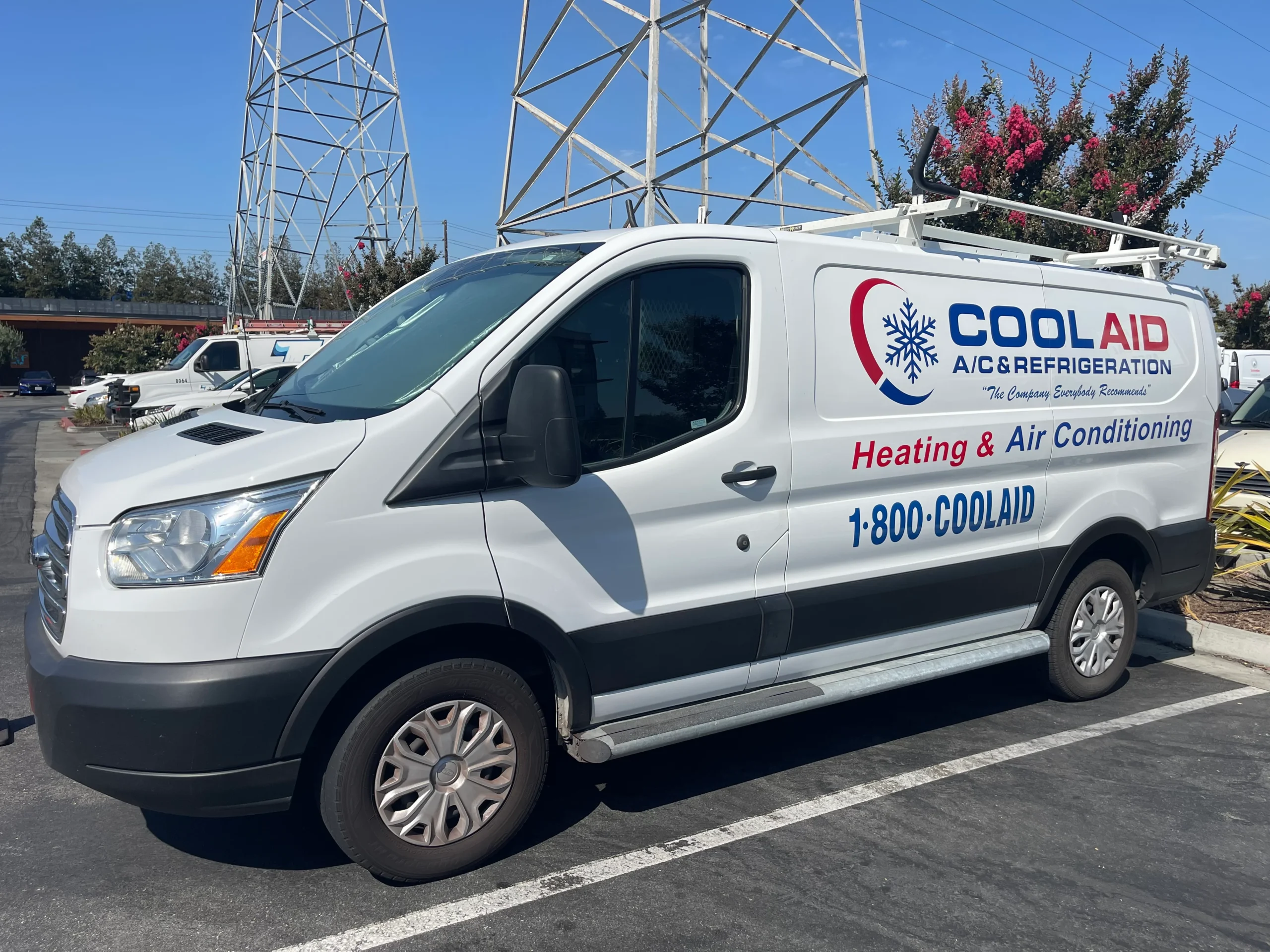
When in doubt, call. A reputable emergency service like Cool Aid’s emergency HVAC repair can help you triage over the phone and determine whether you truly need a middle-of-the-night visit.
Step 6: Call an emergency HVAC Service — Here’s What to Expect
If you’ve determined it’s a real emergency, here’s what happens when you call for emergency HVAC service at 2 AM in the Bay Area:
The Dispatch Process
- You’ll speak to a live dispatcher — not voicemail. Companies like Cool Aid answer phones until 9 PM, 7 days a week.
- A technician is contacted and dispatched to you.
- You'll get an estimated arrival time based on your location and how busy technicians are.
- The technician diagnoses and repairs on the spot — common fixes include capacitor replacements, igniter swaps, and refrigerant leak patches.
What Does a 2 AM Emergency HVAC Call Cost?
Emergency calls typically cost more than standard service calls. In the Bay Area, expect:
| Cost Component | Typical Range |
| After-hours service/dispatch fee | $125–$250 |
| Diagnostic fee | $75–$150 (often rolled into repair) |
| Common repair (capacitor, igniter, fuse) | $200–$500 |
| Major repair (compressor, blower motor) | $500–$1,500+ |
| Total for a typical emergency visit | $300–$800 |
Prices vary by company and the nature of the repair. Ask about pricing upfront before authorizing work. Learn more about how emergency HVAC service works so you know what to expect before you’re in crisis mode.
Response Times in the Bay Area
- Arrival times depend on your location, traffic and call volume, so we give you an estimate when you call.
Cool Aid Air Conditioning & Refrigeration, founded in 1966 with over 60 years of Bay Area service, offers emergency response across the entire region. As a C-20 licensed contractor handling both residential and commercial systems, their technicians are equipped to diagnose and repair virtually any system on the spot.
How to Stay Comfortable While Waiting
If Your Heater Broke:
- Layer up and gather the family in one room with the door closed
- Use a portable space heater carefully — keep it 3 feet from anything flammable
- If you have a gas fireplace, use it — but never use your oven or stove for heat
- Seal drafts under doors with rolled-up towels
If Your AC Broke:
- Open windows if outdoor temperature is lower than indoor
- Use fans to create cross-ventilation
- Drink cold water and apply cold washcloths to pulse points (wrists, neck)
- Move to the lowest level of your home (heat rises)
7 Ways to Prevent HVAC Emergencies Before They Happen
Most middle-of-the-night HVAC failures stem from deferred maintenance. Here’s how to protect yourself:
- Schedule biannual maintenance. A spring and fall tune-up ($80–$150) catches many problems before they become emergencies.
- Change your air filter every 1–3 months. Set a phone reminder — this is the single easiest way to prevent breakdowns.
- Listen for warning sounds. Clicking, banging, or rattling during normal operation are early warnings.
- Watch your energy bills. A sudden spike means your system is working harder than it should.
- Keep your outdoor unit clear. Maintain 2 feet of clearance around your condenser.
- Know the age of your system. Systems over 15 years old are more likely to fail without warning.
- Invest in a maintenance plan. Companies like Cool Aid offer annual agreements that include priority emergency service and discounted repairs.
For a comprehensive prevention strategy, read our guide on preventing HVAC emergencies.
Emergency HVAC What to Do: Frequently Asked Questions
How do I know if my HVAC problem is a true emergency?
True emergencies involve safety hazards (gas leaks, CO, electrical fires) or health threats (no heat in freezing temps, no cooling for medically vulnerable people). If your system stops on a mild night with no unusual smells or sounds, it can usually wait until morning.
How much does a 2 AM emergency HVAC call cost?
Expect $300–$800 for a typical after-hours visit including dispatch, diagnostic, and common repair. Major failures (compressor, blower motor) can exceed $1,000. Always ask for pricing before authorizing work.
Will a technician actually come at 2 AM?
Yes — if you call a true emergency service. Cool Aid Air Conditioning & Refrigeration, in business since 1966, offers emergency service and gives you an estimated arrival time when you call.
Can I fix my HVAC myself at night?
You can safely check the breaker, swap thermostat batteries, change the filter, and ensure vents aren’t blocked. Do not open your furnace, handle refrigerant, or work with electrical components — these require a licensed professional.
How can I prevent middle-of-the-night breakdowns?
Biannual professional maintenance (spring and fall), regular filter changes, prompt attention to unusual noises, and keeping your outdoor unit clean dramatically reduce the risk. Systems over 15 years old should be inspected more frequently.
Don’t Wait for an Emergency — Get Peace of Mind Now
The best time to plan for an HVAC emergency is before it happens. Schedule a maintenance check, replace that filter you’ve been ignoring, and save Cool Aid’s number in your phone so you’re not searching Google at 2 AM in a panic.
Cool Aid Air Conditioning & Refrigeration has been the Bay Area’s trusted HVAC partner since 1966. With emergency service, C-20 licensed technicians, and over 60 years of experience, we’re the call you can count on — 7 days a week.
📞 Call us 7 days a week: 1-800-COOL-AID (1-800-266-5243) 🌐 Schedule service: /emergency-hvac-repair-bay-area/
Stay Comfortable Year-Round With Expert HVAC Service
Book a trusted technician to handle your heating or cooling issue—fast, professional, and done right the first time.
Book Service Now