The central AC vs mini split debate hits different in the Bay Area. With home prices among the highest in the nation, a growing number of older homes without existing ductwork, and summer temperatures that can swing from 65°F on the coast to 100°F+ inland, choosing the right cooling system isn’t just about comfort — it’s about making a smart investment in your property.
This guide compares central air conditioning and ductless mini-split systems across 8 critical factors, with real Bay Area pricing data and specific recommendations based on your home type.
Central AC vs Mini Split: 8-Factor Comparison Table
| Factor | Central AC | Ductless Mini-Split |
| Upfront Cost | $5,500–$14,000 | $3,000–$8,000 (1–3 zones) |
| Installation Time | 2–5 days | 1–2 days |
| Ductwork Required | Yes | No |
| Energy Efficiency (SEER2) | 14–22 | 17–33 |
| Zoned Cooling | No (without add-ons) | Yes (standard) |
| Aesthetic Impact | Hidden (ducts in walls/ceiling) | Wall-mounted units visible |
| Whole-Home Cooling | Yes (even distribution) | Best for targeted zones |
| Average Monthly Cost | $80–$180 | $40–$120 |
How Central Air Conditioning Works
Central AC uses a single outdoor condenser unit connected to an indoor evaporator coil and air handler. Cooled air flows through a network of ducts to reach every room in your home through supply registers.
Pros for Bay Area homes: – Even, consistent cooling throughout the entire house – Hidden components — no wall-mounted units in living spaces – Works with your existing furnace and duct system – Single thermostat controls whole-home temperature – Proven technology with wide contractor support
Cons to consider: – Requires ductwork (expensive to install in older homes without it) – Duct losses can waste 20–30% of cooled air – No room-by-room temperature control without zoning add-ons – Higher electricity usage for whole-home operation
For a detailed breakdown of installation pricing, see our Bay Area AC installation cost guide.
How Ductless Mini-Split Systems Work
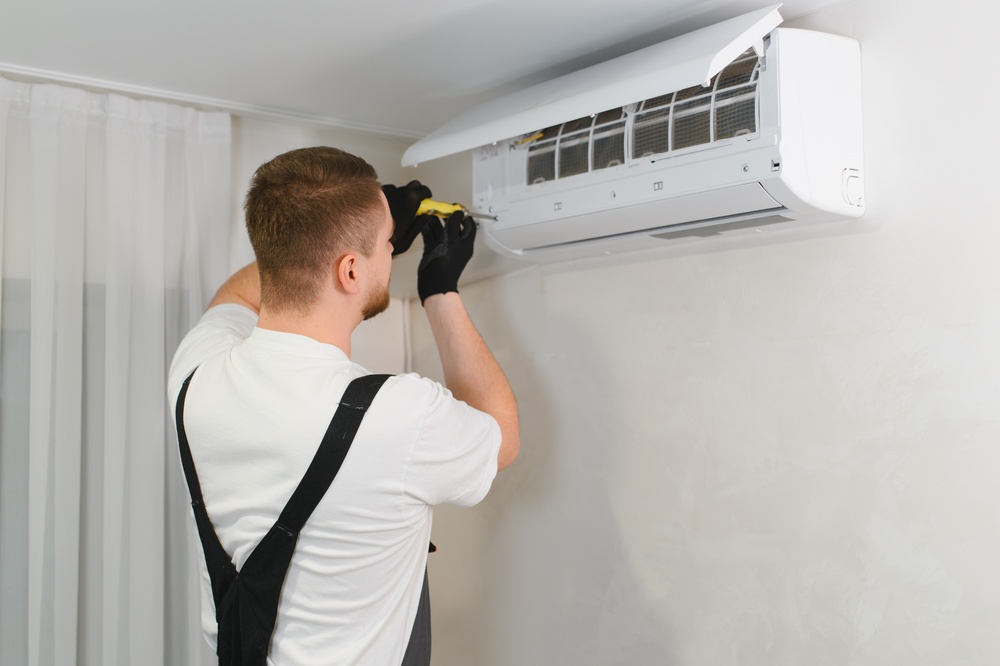
A ductless mini-split consists of a small outdoor compressor connected to one or more indoor air-handling units mounted on walls or ceilings. Refrigerant lines run through a small 3-inch conduit — no ductwork needed.
Pros for Bay Area homes: – No ductwork required — ideal for older Bay Area homes built before 1970 – Zone control lets you cool only occupied rooms – Higher SEER2 ratings mean lower electricity costs – Quiet operation (as low as 19 dB indoor) – Also provides heating — doubles as a heat pump – Quick installation with minimal construction
Cons to consider: – Indoor wall units are visible (some homeowners dislike the look) – Each zone needs its own indoor unit – Whole-home coverage (5+ zones) costs more than central AC – Requires regular filter cleaning on each indoor unit
Learn more about ductless options on our mini-split installation page.
Central AC vs Mini Split: Detailed Cost Comparison for the Bay Area
Installation Costs
| Configuration | Central AC | Mini-Split |
| Small home (1,000–1,400 sq ft) | $5,500–$8,000 | $3,000–$5,500 (1–2 zones) |
| Medium home (1,400–2,200 sq ft) | $7,000–$11,000 | $5,500–$10,000 (2–4 zones) |
| Large home (2,200–3,500 sq ft) | $10,000–$14,000 | $9,000–$16,000 (4–6 zones) |
| Add ductwork (if none exists) | +$5,000–$12,000 | Not needed |
Key Bay Area cost insight: If your home doesn’t have existing ductwork, a central AC installation can cost $10,000–$26,000 total once you add duct fabrication and installation. In that scenario, a ductless mini-split system saves $5,000–$15,000 in installation costs alone.
Monthly Operating Costs
Mini-splits typically cost 30–50% less to operate than central AC because:
- Higher efficiency: Mini-splits average SEER2 20–33 vs. central AC’s 14–22
- No duct losses: Central AC ducts leak 20–30% of conditioned air, especially in older Bay Area homes with aging ductwork in unconditioned attics
- Zone control: You cool only the rooms you’re using, not the entire house
For a 2,000 sq ft Bay Area home running AC from May through October, expect: – Central AC: $80–$180/month during peak summer – Mini-split (3 zones): $40–$120/month during peak summer
Central AC vs Mini Split: 8 Factors to Weigh
1. Does Your Home Have Existing Ductwork?
This is the single most important factor. If your Bay Area home already has ducts in good condition (common in homes built after 1975), central AC is straightforward and cost-effective. If you live in a pre-1970 Victorian, Craftsman, or Eichler without ducts, a mini-split avoids the massive expense and disruption of adding ductwork.
2. How Many Rooms Do You Need to Cool?
Central AC excels at cooling an entire home evenly. If you want consistent temperatures in every room, it’s hard to beat. Mini-splits shine when you want to cool specific zones — maybe the master bedroom, home office, and living room — without paying to condition unused guest rooms or hallways.
3. Energy Efficiency and PG&E Bills
Mini-splits win on efficiency. A top-rated mini-split achieves SEER2 ratings of 28–33, while even premium central AC systems max out around 20–22 SEER2. Combined with zero duct losses and zone control, mini-splits can cut your cooling bills by 30–50%.
The higher efficiency also means mini-splits qualify for more rebate programs. Visit our central AC vs ductless mini-split comparison for rebate details.
4. Home Aesthetics and Interior Design
Central AC is invisible — cooled air flows through discreet ceiling or floor registers. Mini-split indoor units are wall-mounted, typically 32–42 inches wide, and visible in every conditioned room. Some homeowners in design-conscious Bay Area neighborhoods find this a dealbreaker; others don’t mind the sleek modern look.
Newer mini-split options include ceiling cassettes (flush-mounted in the ceiling) and slim ducted units that are virtually invisible, though these cost more.
5. Heating Capability
Here’s where mini-splits pull ahead for Bay Area homes: every ductless mini-split is also a heat pump. It provides both cooling AND heating from a single system. Central AC only cools — you still need a separate furnace or heating system.
In the Bay Area’s mild climate, a mini-split heat pump operates at 300–400% efficiency for heating, making it an all-in-one solution that saves on both equipment and energy costs.
6. Installation Disruption
Central AC installation takes 2–5 days and involves significant work if ductwork modifications are needed. Adding new ductwork to an older home can mean cutting into walls, ceilings, and closets — a multi-week project.
Mini-split installation takes 1–2 days for most configurations. Each indoor unit requires only a small 3-inch hole through an exterior wall for the refrigerant line. Minimal construction, minimal mess.
7. Noise Levels
Mini-splits are whisper-quiet: 19–32 dB indoors (quieter than a library). Central AC produces 50–70 dB at the outdoor unit and moderate airflow noise through ducts. If noise sensitivity matters — think bedrooms and home offices — mini-splits have a clear advantage.
8. Resale Value and Home Appraisal
Both systems add value to a Bay Area home, but context matters. Central AC is perceived as a standard feature in mid-to-large homes, while mini-splits are increasingly valued for energy efficiency and modern appeal. Homes with mini-split systems in the Bay Area have shown strong appraisal values, especially when marketed as “energy-efficient” or “all-electric.”
Which Is Best for Your Bay Area Home? Ideal Home Profiles
Choose Central AC If You:
- Own a home built after 1975 with existing ductwork in good condition
- Want whole-home cooling with even temperatures in every room
- Prefer hidden equipment — no wall-mounted units in living spaces
- Already have a furnace connected to ductwork for heating
- Have a medium to large home (1,800+ sq ft) where whole-home coverage is cost-effective
Ideal Bay Area home: A 2,200 sq ft home in Sunnyvale, San Jose, or Fremont built in the 1980s–2000s with existing ducted furnace. Adding central AC ties into the existing system for $7,000–$11,000 installed.
Choose a Ductless Mini-Split If You:
- Own an older home without ductwork — Eichlers, Victorians, Craftsman bungalows
- Want zone control to cool only the rooms you use
- Need heating AND cooling in one efficient system
- Have a home addition, ADU, or garage conversion that needs conditioning
- Want maximum energy efficiency and the lowest monthly bills
- Live in a mild microclimate (coast, Peninsula) where you cool selectively
Ideal Bay Area home: A 1,400 sq ft Eichler in Palo Alto or a pre-1960s ranch in Mountain View without ducts. A 3-zone mini-split provides targeted comfort for $5,500–$9,000 installed, with no ductwork needed.
Consider a Hybrid Approach If You:
- Have partial ductwork but want to add cooling to rooms the ducts don’t reach
- Want central AC for the main house plus a mini-split for a home office, ADU, or addition
- Have uneven temperatures — some rooms are always hot or cold despite central AC
This “best of both worlds” approach is increasingly popular in Bay Area homes undergoing remodeling.
Our Recommendation: Central AC vs Mini Split for Bay Area Homes
For Bay Area homeowners choosing between central AC vs mini split, here’s our honest take:
- If you have ducts: Central AC is the most cost-effective and seamless choice. You’ll get reliable whole-home cooling that integrates with your existing heating system.
- If you don’t have ducts: A ductless mini-split is the clear winner. Avoiding $5,000–$12,000 in ductwork installation makes mini-splits the smart financial play, and you get heating included.
- If energy efficiency is your top priority: Mini-splits win across the board with SEER2 ratings up to 33, zone control, and zero duct losses.
Cool Aid Air Conditioning & Refrigeration installs and services both central AC and ductless mini-split systems throughout the Bay Area. Our HVAC installation experts can evaluate your home and recommend the system that delivers the best comfort and value for your specific situation.
Frequently Asked Questions
Is a mini-split cheaper than central AC in the Bay Area?
For 1–3 zones, yes — a mini-split costs $3,000–$8,000 installed versus $5,500–$14,000 for central AC. However, if you need 5+ zones for whole-home coverage, a mini-split system can exceed central AC costs. The biggest savings come when your home lacks ductwork, as you avoid $5,000–$12,000 in duct installation.
Do mini-splits also provide heating?
Yes. Every ductless mini-split is a heat pump that provides both heating and cooling. In the Bay Area’s mild climate, a mini-split operates at 300–400% heating efficiency, making it an excellent replacement for both your AC and furnace.
Which system qualifies for more rebates in the Bay Area?
Mini-split heat pumps qualify for significantly more rebates because they’re classified as heat pumps. Local electricity provider rebates may apply. The federal 25C tax credit ended for equipment placed in service after December 31, 2025, and TECH Clean California's single-family heat pump incentives have been fully reserved since November 2025. Standard central AC does not qualify for the local heat pump rebates.
Get Expert Advice: Central AC or Mini-Split for Your Home
Cool Aid Air Conditioning & Refrigeration has served the Bay Area since 1966 and installs and services both central AC and ductless mini-split systems. With 60+ years of experience, C-20 licensing, and deep knowledge of Bay Area home styles, we’ll help you choose the system that fits your home, budget, and comfort goals.
📞 Call 1-800-266-5243 today or visit our AC installation services page to schedule a free in-home assessment and get a no-obligation quote.
Stay Comfortable Year-Round With Expert HVAC Service
Book a trusted technician to handle your heating or cooling issue—fast, professional, and done right the first time.
Book Service Now