Hearing your air conditioner kick on brings a sense of relief during a sweltering summer afternoon. You expect the system to run for a steady period, cooling your home to a comfortable temperature before gracefully shutting down. However, when the system starts up, runs for only a few minutes, and immediately shuts off—only to repeat the process moments later—you have a serious problem on your hands.
This frustrating and damaging process is known as short cycling. It forces your system to work incredibly hard with very little payoff. If left ignored, this issue will drain your wallet, destroy your indoor comfort, and eventually ruin your cooling equipment.
Understanding why your air conditioner behaves this way is the first step toward finding a lasting solution. In this comprehensive guide, we will explore the mechanics behind short cycling. We will break down the most common causes, ranging from oversized equipment to hidden electrical faults. You will learn exactly how this rapid cycling damages your system and when it is time to seek professional residential HVAC repair services.
What Is Air Conditioner Short Cycling?
To understand the problem, you first need to understand how a healthy cooling system operates. Air conditioners are designed to run in distinct, measured cycles.
The Normal Cooling Cycle
When the temperature inside your home rises above the setting on your thermostat, the thermostat sends a signal to the air conditioner to begin a cooling cycle. The compressor turns on, the blower fan starts moving air, and the system begins extracting heat and humidity from your indoor spaces.
A normal cooling cycle typically lasts anywhere from 15 to 20 minutes. This provides the system enough time to circulate the air throughout your entire home, lower the ambient temperature, and remove excess moisture. Once the thermostat registers that the desired temperature has been reached, it signals the system to power down and rest.
The Short Cycle Problem
Short cycling disrupts this natural rhythm completely. Instead of completing a full 15-to-20-minute run, the air conditioner powers up and shuts down in rapid, abbreviated bursts. The system might run for just three to five minutes before turning off. Almost immediately, it turns right back on again.
This means the compressor never gets the chance to fully stabilize. The blower fan never circulates enough air to change the temperature of the room. The system is trapped in a relentless loop of starting and stopping.
The Hidden Dangers of Short Cycling
You might assume that a system running for shorter periods would use less energy. The reality is the exact opposite. Short cycling is highly destructive and costly for homeowners.
Skyrocketing Energy Bills
Your air conditioner consumes the most electricity during the startup phase. It takes a massive surge of power to get the heavy compressor motor spinning and the blower fan moving. Once the system is up and running, it settles into a more energy-efficient operating mode.
When an AC short cycles, it constantly repeats that high-energy startup phase. It never reaches the efficient cruising speed of a normal cycle. This constant surging draws immense amounts of electricity, which directly translates to a shocking increase in your monthly utility bills.
Increased Wear and Tear
Think about driving a car in stop-and-go city traffic versus cruising on an open highway. The constant stopping and starting put immense stress on the brakes, engine, and transmission. Your air conditioner functions the same way.
The compressor is the heart of your cooling system. It is designed to handle a specific number of startups per day. Short cycling forces the compressor to start and stop dozens of times an hour. This aggressive wear and tear drastically shortens the lifespan of the compressor, the capacitors, and the blower motor. A system that should last 15 years might fail in half that time.
Poor Indoor Comfort and Humidity Control
Air conditioners do more than just lower the air temperature. They also pull humidity out of the air. It takes a solid 10 to 15 minutes of continuous operation for the evaporator coil to get cold enough to start drawing moisture from the surrounding air effectively.
Because a short-cycling system shuts down after only a few minutes, it never removes the humidity from your home. Your rooms will feel clammy, sticky, and uncomfortable, even if the air blowing from the vents feels cold. You might even experience uneven cooling, with some rooms feeling like an icebox while others remain sweltering.
Common Causes of AC Short Cycling
Short cycling is not a disease itself; it is a symptom of an underlying issue. Many different components can cause your system to fall into this start-and-stop loop.
An Oversized Air Conditioning Unit
Bigger does not always mean better when it comes to HVAC equipment. In fact, an oversized air conditioner is one of the leading causes of chronic short cycling.
If a contractor installs a unit with a cooling capacity far greater than your home requires, the system will cool the space far too quickly. It blasts a massive volume of cold air, dropping the temperature rapidly and satisfying the thermostat in just a few minutes. The system then shuts off. However, because it did not run long enough to remove humidity or cool the walls and furniture, the air quickly warms back up. The thermostat triggers the system again, and the short cycle continues.
The only true fix for an oversized system is a complete replacement. If you suspect your system is too large for your square footage, our experts can help you explore residential HVAC installation services to find a perfectly sized unit for your home.
Thermostat Placement and Malfunctions
The thermostat acts as the command center for your entire HVAC setup. If it sends the wrong signals, the system will behave erratically.
Placement is crucial. If your thermostat sits directly beneath a supply vent, in direct sunlight, or near a heat-generating appliance like an oven, it will read false temperatures. A blast of cold air from a nearby vent will trick the thermostat into thinking the whole house is cool, causing it to shut the system down prematurely. Once the vent stops blowing, the thermostat registers the actual room temperature and turns the system back on.
Additionally, older thermostats can develop faulty wiring or failing sensors. If the internal thermometer breaks, it cannot accurately gauge the temperature, leading to chaotic cycling patterns.
Clogged Air Filters
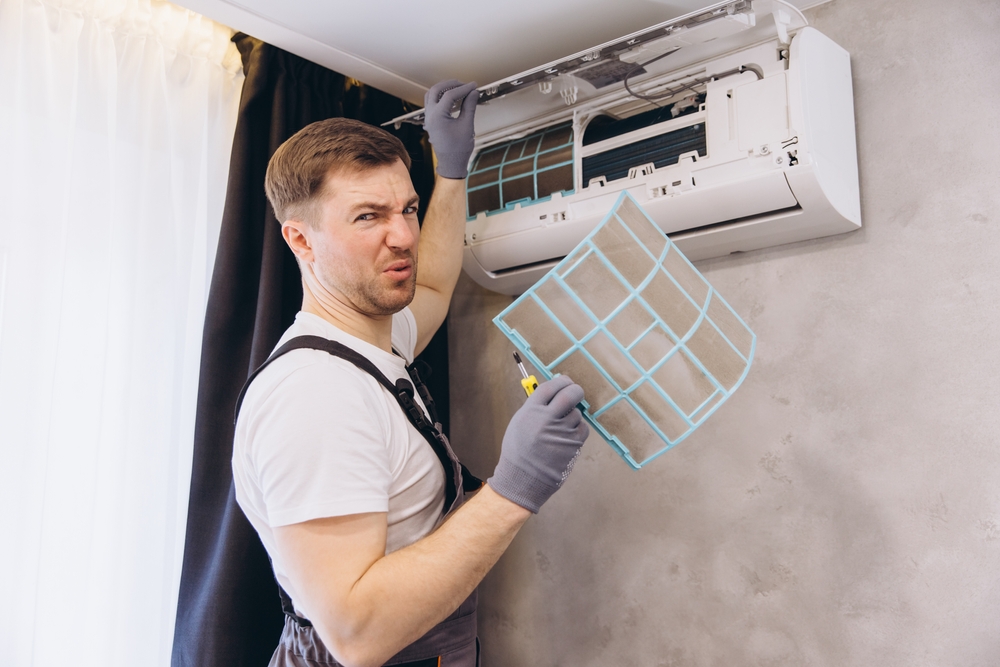
The humble air filter is responsible for a surprising number of major HVAC failures. Your system requires a steady, unobstructed volume of airflow to function correctly. The filter sits between your home’s intake vents and the sensitive internal machinery, catching dust, dirt, and pet dander.
Over time, the filter becomes completely saturated with debris. This creates a solid wall that chokes off the airflow. When the blower motor cannot pull enough air through the system, the internal components overheat or freeze. Many modern air conditioners feature built-in safety switches. If the system detects a lack of airflow or dangerous operating temperatures, it will automatically shut itself down to prevent a fire or permanent damage. After a brief rest, it tries to start again, resulting in a short cycle.
Low Refrigerant Levels
Refrigerant is the chemical compound that absorbs heat from your indoor air and releases it outside. Your system requires a very specific amount of refrigerant—known as the “charge”—to maintain the correct pressure levels.
Because an air conditioner operates on a closed loop, it does not consume refrigerant over time. If your levels are low, you have a leak. Low refrigerant drastically alters the pressure inside the system. The compressor features a low-pressure safety switch. When the system turns on and the pressure drops too low due to a leak, the switch instantly shuts the compressor down to protect it from burning out. The pressure slowly equalizes, the system tries to start again, and the switch shuts it down once more.
Frozen Evaporator Coils
The evaporator coil sits inside your indoor air handler. Its job is to get extremely cold and absorb heat from the air passing over it. If airflow is restricted by a dirty filter, or if refrigerant levels are low, the coil drops below freezing.
Condensation from the air quickly freezes on the surface of the coil, creating a thick block of ice. This ice acts as an insulator, preventing the system from absorbing heat. The system struggles, overheats, and shuts down on the high-limit safety switch. Ice on the coil is a serious warning sign that requires immediate attention before the compressor suffers fatal damage.
Electrical and Control Board Issues
Air conditioners rely on a complex network of wires, capacitors, contactors, and control boards. A failing run capacitor, for example, struggles to provide the necessary electrical boost to keep the compressor running. It might provide enough juice to start the motor, but the power drops off quickly, causing the compressor to stall and shut down.
Loose wiring connections can also cause the system to lose power intermittently. If the main control board develops a short circuit, it might send rapid, confusing signals to the blower motor and compressor, forcing them into a start-and-stop frenzy.
How to Diagnose and Fix the Issue
Dealing with a short-cycling AC can feel overwhelming, but a systematic approach helps isolate the problem. Some issues require immediate professional intervention, while you can solve others with a quick trip to the hardware store.
Simple Steps You Can Take
Before you pick up the phone, try these simple troubleshooting steps:
- Check the Air Filter: This is the easiest and most common fix. Locate your filter and pull it out. If it looks dark, dusty, and clogged, replace it with a fresh one immediately.
- Inspect the Thermostat: Make sure your thermostat is set to “Cool” and the fan is on “Auto.” Check the batteries and ensure the screen is responsive. Look around the thermostat to see if a lamp, television, or direct sunlight is throwing off its temperature reading.
- Check Your Air Vents: Walk through your home and ensure all supply and return vents are fully open. Do not block vents with heavy furniture, rugs, or curtains, as this restricts airflow and strains the system.
- Look for Ice: Check the indoor air handler and the copper pipes leading outside. If you see ice buildup, turn the system off completely to let it thaw. Do not run the AC again until a professional inspects it.
When to Call the Professionals
If you change the filter and check the thermostat but the system continues to short cycle, you need expert help. Diagnosing refrigerant leaks, replacing electrical capacitors, and measuring system pressure require specialized training and tools.
Attempting to fix complex electrical or mechanical issues yourself is highly dangerous and can easily void your equipment warranty. If your system refuses to run properly, simply contact our experts for a prompt, accurate diagnosis. We will pinpoint the exact cause of the short cycling and implement a permanent repair.
The Importance of Routine Maintenance
The best way to handle an HVAC breakdown is to prevent it entirely. Proactive care is the secret to a highly efficient, reliable cooling system.
Preventing Future Breakdowns
Almost all the causes of short cycling—dirty filters, clogged coils, minor refrigerant leaks, and failing electrical parts—are preventable. During a professional tune-up, a technician inspects every inch of your system. They clean the coils, tighten the electrical connections, test the safety switches, and verify the exact refrigerant charge.
Catching a weak capacitor or a tiny pinhole leak during a routine visit costs significantly less than replacing a burnt-out compressor later in the summer. We strongly recommend scheduling residential HVAC maintenance services every spring to prepare your system for the heavy workload ahead.
Extending System Lifespan
Consistent maintenance does more than prevent short cycling; it adds years to the life of your equipment. A clean, well-calibrated system operates smoothly and uses far less electricity. Protecting your investment through regular care ensures you stay comfortable while keeping your monthly utility bills as low as possible.
Choosing the Right HVAC Partner
Your home is your sanctuary, and maintaining a comfortable indoor climate is essential. When things go wrong, you need an HVAC partner you can trust to provide honest answers and quality craftsmanship.
Our Commitment to Your Comfort
At 1-800-Cool-Aid, we pride ourselves on delivering top-tier service to our local community. We do not believe in quick fixes or high-pressure sales tactics. Our technicians take the time to thoroughly evaluate your system, explain the underlying issues clearly, and present you with the most cost-effective solutions. If you want to know more about our background and our dedication to customer satisfaction, learn more about our team.
Educating Homeowners
We believe that an informed homeowner is an empowered homeowner. Understanding the basics of how your system works helps you recognize warning signs early, saving you money and stress. We constantly publish new tips, troubleshooting guides, and energy-saving strategies. Feel free to explore our blog for more valuable insights on keeping your home in peak condition year-round.
Conclusion
A short-cycling air conditioner is a serious issue that demands your attention. Ignoring the constant starting and stopping will lead to massive energy bills, poor indoor air quality, and the premature death of your expensive cooling equipment.
By understanding the root causes—whether it is a simple clogged filter, a poorly placed thermostat, or a complex refrigerant leak—you can take the right steps to protect your home. Always start with basic troubleshooting, like changing your air filter and checking your vents.
If the problem persists, do not wait for a complete system breakdown. Rely on professional expertise to restore your system’s natural rhythm. Protect your investment, restore your comfort, and enjoy a cool, relaxing home environment all summer long.
Stay Comfortable Year-Round With Expert HVAC Service
Book a trusted technician to handle your heating or cooling issue—fast, professional, and done right the first time.
Book Service Now