Living on the California coast offers breathtaking views, mild temperatures, and a unique lifestyle. For homeowners in cities like San Francisco and Pacifica, the Pacific Ocean is a constant, beautiful presence. However, that same beautiful ocean brings a hidden threat to one of your home’s most important systems: your air conditioner. The salty, moist air that rolls in with the fog is incredibly corrosive, and it is the number one reason we see premature AC unit failure in these coastal communities.
Many residents are surprised when their relatively new air conditioner starts showing signs of rust and decay, leading to breakdowns and costly repairs. This isn’t a manufacturing defect; it’s a relentless environmental attack. The salt-laden air aggressively eats away at the sensitive metal components of an outdoor AC unit, including its fins, coils, and electrical connections. Understanding this process, known as coastal corrosion, is the first step toward protecting your investment and ensuring your home remains comfortable.
This guide will explain exactly what coastal corrosion is and how it damages your HVAC system. We will explore the specific components that are most vulnerable and the signs of damage you should look for. Most importantly, we will provide actionable strategies for preventing and mitigating corrosion, from routine maintenance to choosing the right equipment for our unique Bay Area climate.
What is Coastal Corrosion and Why is it so Destructive?
Coastal corrosion is an accelerated form of rust and decay caused by the combination of salt and moisture in the air. When the wind blows across the ocean, it picks up tiny droplets of saltwater, creating a fine saline mist. This salt-laden fog, a hallmark of life in San Francisco and Pacifica, blankets everything it touches, including the outdoor condenser unit of your air conditioner.
The process is a simple but aggressive chemical reaction. Salt (sodium chloride) acts as a powerful electrolyte, which speeds up the electrochemical process of rusting when it comes in contact with metal surfaces and moisture. Essentially, the salt air creates a perfect environment for metal to break down at a rapid pace. An AC unit that might last 15-20 years in a dry, inland climate could fail in as little as 5-7 years in a coastal area without proper protection.
The Key AC Components Targeted by Salt Air
The outdoor unit of your air conditioner is a complex piece of machinery with several critical components made of metal. These are the primary targets of coastal corrosion.
1. Condenser Coils
The condenser coils are arguably the most important and vulnerable part of your outdoor unit. These coils, typically made of copper tubing and covered in thin aluminum fins, are responsible for releasing heat from the refrigerant into the outside air. The salt attacks both metals:
- Aluminum Fins: The salt corrodes the delicate aluminum fins, causing them to crumble and disintegrate. As the fins disappear, the coil’s surface area for heat exchange is drastically reduced. The system can no longer cool effectively, forcing it to run longer and harder.
- Copper Tubing: While more resistant than aluminum, copper is not immune. Pitting corrosion can create microscopic holes in the copper tubing, leading to refrigerant leaks. A loss of refrigerant is a critical failure that prevents the system from cooling and requires professional AC repair in the Bay Area.
2. The Outdoor Cabinet and Frame
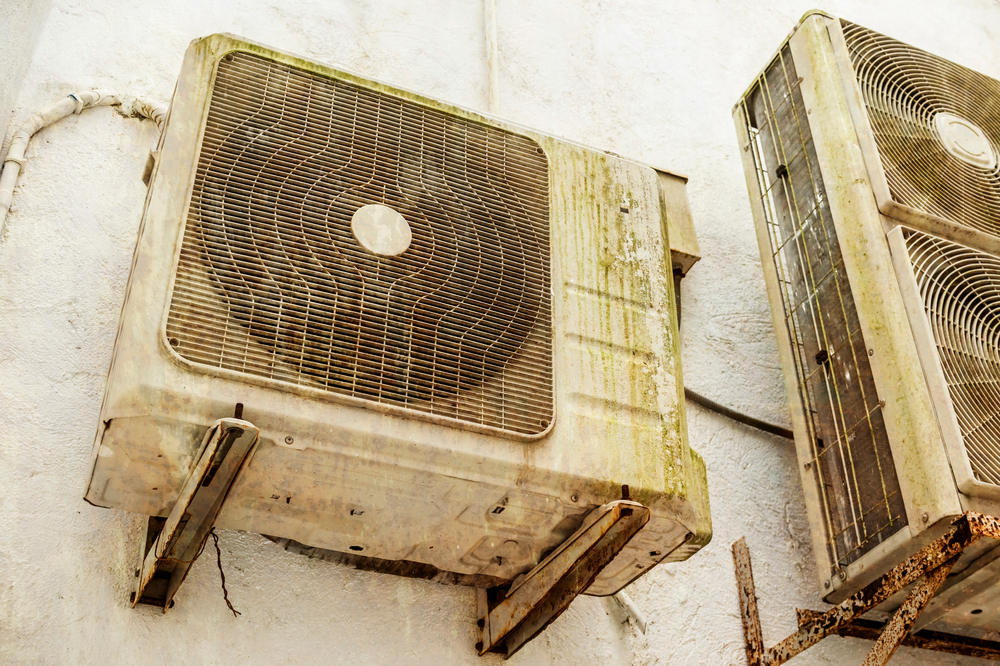
The metal cabinet that houses and protects the internal components is the first line of defense. However, constant exposure to salt spray will break down its protective paint and coating. Once rust takes hold on the steel frame and panels, it can spread, compromising the structural integrity of the entire unit.
3. Fan Motor and Blades
The fan is crucial for pulling air across the condenser coils. The fan blades, motor housing, and mounting brackets are all susceptible to rust. Corrosion can cause the fan to become unbalanced, leading to noisy operation and excessive wear on the motor bearings. A seized fan motor is a common failure point that will shut down your entire AC system.
4. Electrical Connections and Control Board
Moisture and salt are a disastrous combination for electrical components. Salt residue is conductive and can cause short circuits on the control board. It also corrodes electrical terminals, wires, and connectors, leading to intermittent failures or a complete loss of power to the unit. These electrical issues can be difficult to diagnose and dangerous if not handled by a professional technician.
Failing to address this corrosion can turn a minor issue into a major system failure, often at the most inconvenient time. If you suspect corrosion is affecting your system, it may be time for an expert diagnosis or even an emergency HVAC repair in the Bay Area.
Recognizing the Warning Signs of Corrosion Damage
Catching corrosion early is key to extending the life of your air conditioner. As a homeowner, you can perform regular visual inspections of your outdoor unit. Here are the telltale signs to look for:
- Visible Rust: This is the most obvious sign. Look for orange, brown, or white powdery residue on the cabinet, grilles, and especially on the base pan where moisture can collect. White, chalky corrosion is common on aluminum components like the fins.
- Crumbling Fins: Gently examine the thin metal fins that make up the coil. If they are flaking, crumbling to the touch, or have large sections missing, you have significant corrosion damage.
- Refrigerant Leaks: Oily or greasy residue around the coil or its connections is a sign of a refrigerant leak, which may have been caused by pitting corrosion.
- Reduced Cooling Performance: If your AC runs constantly but struggles to cool your home, it could be because corroded fins are preventing proper heat exchange.
- Increased Energy Bills: A system working harder due to corrosion damage will consume more electricity, leading to a noticeable spike in your utility costs.
- Unusual Noises: Squealing or grinding sounds could indicate that the fan motor bearings are failing due to rust and decay.
If you notice any of these signs, it is crucial to act quickly. A minor rust spot can be treated, but widespread coil corrosion often means the unit is beyond economical repair and may require a full AC replacement in the Bay Area.
Proactive Strategies for Fighting Coastal Corrosion
While you can’t stop the ocean fog, you can take proactive steps to protect your air conditioner from its corrosive effects. A combination of smart equipment choices, professional maintenance, and homeowner care can add years to the life of your system.
H2: The Importance of Professional HVAC Maintenance for Coastal Homes
For homeowners in San Francisco and Pacifica, routine professional maintenance is not just a recommendation—it’s a necessity. An HVAC technician has the tools and expertise to combat corrosion in ways a homeowner cannot. A comprehensive residential HVAC maintenance service should include specific anti-corrosion measures:
1. Professional Coil Cleaning
A technician will use specialized, pH-neutral coil cleaners to gently wash away accumulated salt and dirt from the condenser coils without damaging the delicate fins. This should be done at least annually, and sometimes semi-annually for homes right on the coast. This single step is the most effective way to slow down corrosion.
2. Application of Protective Coatings
After cleaning, a technician can apply a sacrificial corrosion-resistant coating to the coils and other metal components. These coatings create a barrier between the metal and the salt air. The coating corrodes over time instead of the metal itself and can be reapplied during future maintenance visits.
3. Waxing the Cabinet
To protect the exterior of the unit, a technician can apply a coat of high-quality carnauba wax to the metal cabinet. Just like waxing a car, this creates a hydrophobic barrier that causes salty moisture to bead up and roll off rather than sit on the surface and cause rust.
4. Checking and Sealing Electrical Components
A technician will inspect all electrical connections for signs of corrosion. They can clean terminals and apply a dielectric grease to protect them from moisture and prevent conductivity issues.
Regular, professional tune-ups are the best defense you can mount against the constant assault of salt air. It’s a small investment that protects the much larger investment you’ve made in your home’s comfort system.
Choosing Corrosion-Resistant AC Units for a New Installation
If you are installing a new air conditioner, you have the opportunity to choose a system designed to withstand our harsh coastal environment. When discussing an AC installation in the Bay Area with your contractor, ask specifically about models with coastal-ready features.
Key Features to Look For:
- Composite Base Pan: Traditional units use a steel base pan, which is highly susceptible to rusting as moisture collects. Modern units with a composite (plastic) base pan will never rust, eliminating a major failure point.
- Coated Coils: Many manufacturers now offer “coastal” or “seacoast” models that come with factory-applied corrosion-resistant coatings on the condenser coils. These are far more durable than post-installation spray-on coatings.
- All-Aluminum Coils: Some high-end systems are being built with all-aluminum coils. While still susceptible to corrosion, they avoid “galvanic corrosion,” a particularly aggressive form that occurs when two different metals (like copper and aluminum) are in contact in a saline environment.
- Weather-Shield Screws and Hardware: Look for units that use ceramic-coated or stainless steel screws and fasteners. Standard zinc-plated screws will rust almost immediately, leading to ugly rust streaks and compromised structural integrity.
Investing in a coastal-rated unit may have a higher upfront cost, but it will pay for itself over time through increased longevity and fewer repair needs. A knowledgeable HVAC installation professional can guide you to the brands and models best suited for life by the sea.
Homeowner Maintenance Tips for Coastal AC Units
In between professional service calls, there are simple steps you can take to help protect your unit.
1. Regular Rinsing
On a calm, fog-free day, you can gently rinse your outdoor unit with a garden hose. Use a low-pressure stream of fresh water to wash the salt deposits off the cabinet and coils. Important: Never use a high-pressure nozzle, as this will bend the delicate aluminum fins and cause significant damage. Do this every month or two during periods of heavy fog.
2. Keep the Area Clear
Ensure there is at least two feet of clear space around your entire outdoor unit. Trim back any bushes, weeds, or overhanging branches. Good airflow helps the unit dry out faster after exposure to fog or rain, reducing the amount of time moisture sits on the metal components. Piles of leaves or debris trapped against the unit will hold moisture and accelerate rust.
3. Consider a Windbreak or Cover
If your unit is in a location that gets hit directly by salty winds, planting a hedge or installing a slatted fence as a windbreak can help reduce the amount of salt spray that reaches it. Be sure to leave adequate space for airflow.
Specialized “AC covers” are also available. These are typically designed to cover only the top of the unit to protect it from debris, while leaving the sides open for ventilation. Do not use a full, non-breathable tarp, as this will trap moisture inside and make corrosion even worse.
When Is It Time for a Repair or Replacement?
Despite your best efforts, corrosion will eventually take its toll. The key is to know when a simple repair will suffice and when it’s time to consider a full system replacement.
Scenarios for AC and Heater Repair in the Bay Area
If the corrosion is localized and has not compromised the core components, a repair may be a viable option.
- Minor Electrical Issues: A technician can often clean or replace a corroded wire or terminal.
- Fan Motor Failure: If the rest of the unit is in good shape, replacing a seized fan motor is a common and cost-effective HVAC repair in the Bay Area.
- Small Refrigerant Leaks: If a single, accessible point in the copper coil has a leak, a technician may be able to repair it. However, if the coil is suffering from widespread pitting, a repair is not practical.
Knowing When to Choose AC Replacement
Unfortunately, with corrosion, replacement is often the more sensible long-term solution. You should strongly consider a full AC replacement if:
- The Coils are Heavily Corroded: If the aluminum fins are crumbling and large sections are missing, the unit can never operate efficiently again. The coil is the heart of the system, and once it is gone, the unit is effectively totaled.
- There are Multiple or Widespread Refrigerant Leaks: Patching one leak in a system with widespread pitting corrosion is a temporary fix at best. More leaks will inevitably appear soon after.
- The Structural Integrity is Compromised: If the base pan has rusted through or the frame is weak, the unit is unsafe and must be replaced.
- The Unit is Over 10 Years Old: The cost of a major repair on an older, corrosion-damaged unit is often not worth it. The money would be better invested in a new, efficient, corrosion-resistant model that comes with a full warranty.
Trust the Experts to Protect Your Coastal HVAC System
Living in San Francisco or Pacifica means accepting the salty air as part of life. But you don’t have to accept it as a death sentence for your air conditioner. By understanding the threat, choosing the right equipment, and committing to a proactive maintenance plan, you can ensure your home stays cool and comfortable for many years.
At Cool Aid, we specialize in the unique challenges of Bay Area HVAC systems. Our technicians are experts in identifying, mitigating, and preventing coastal corrosion. Whether you need a comprehensive maintenance plan to protect your current system, a fast and reliable repair, or guidance on selecting the perfect corrosion-resistant unit for a new installation, we have the local knowledge and experience to get the job right.
Don’t let the salt win. Contact us today to schedule a maintenance visit or to discuss your options. We’re here to help you enjoy all the benefits of coastal living, without the corrosive downsides.
Stay Comfortable Year-Round With Expert HVAC Service
Book a trusted technician to handle your heating or cooling issue—fast, professional, and done right the first time.
Book Service Now