I Want

    Residential HVACCommercial HVACRefrigerationEmergency HVAC


    Fast | No obligation

    Rooftop HVAC Units and Energy Star Ratings Explained

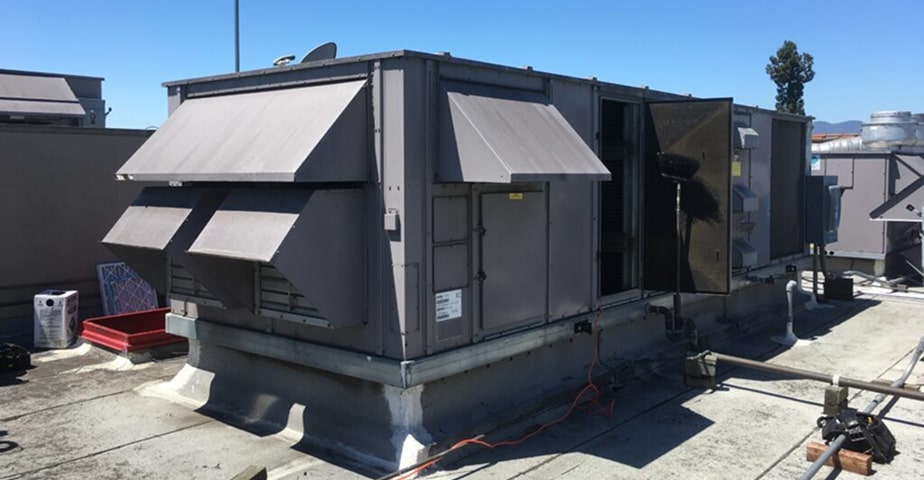
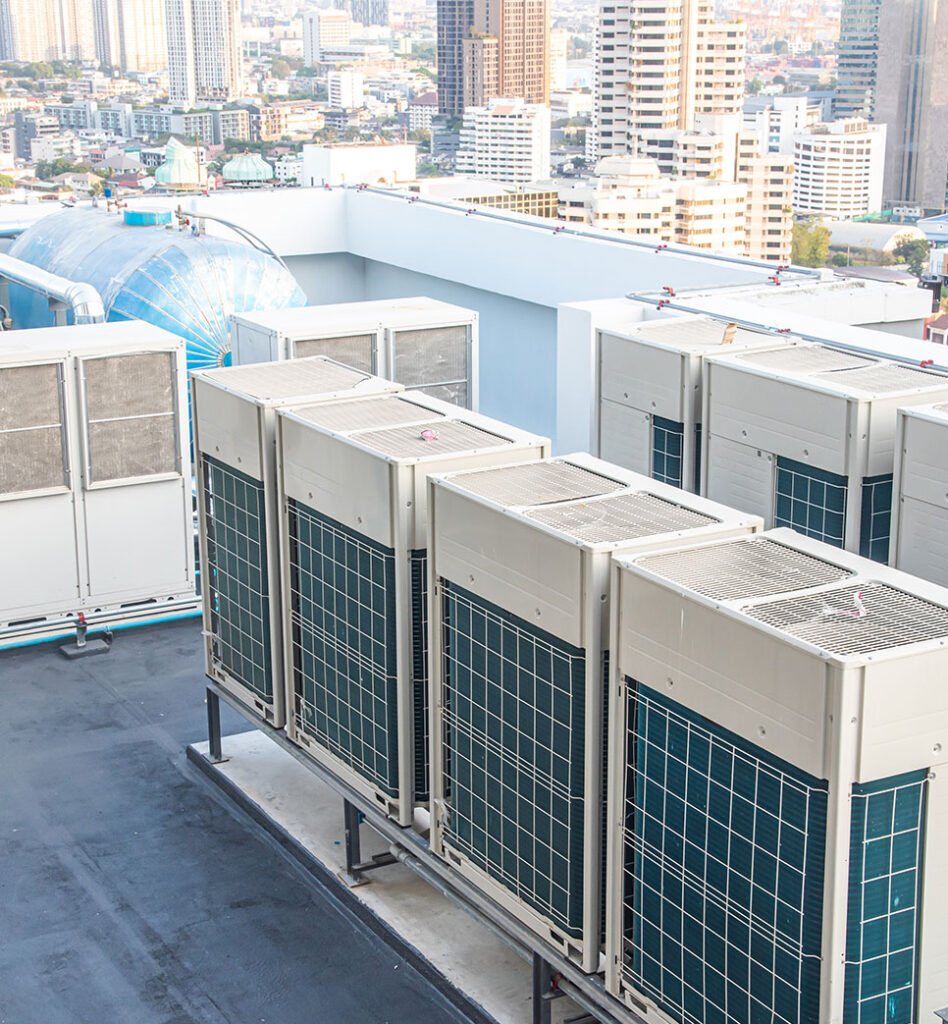
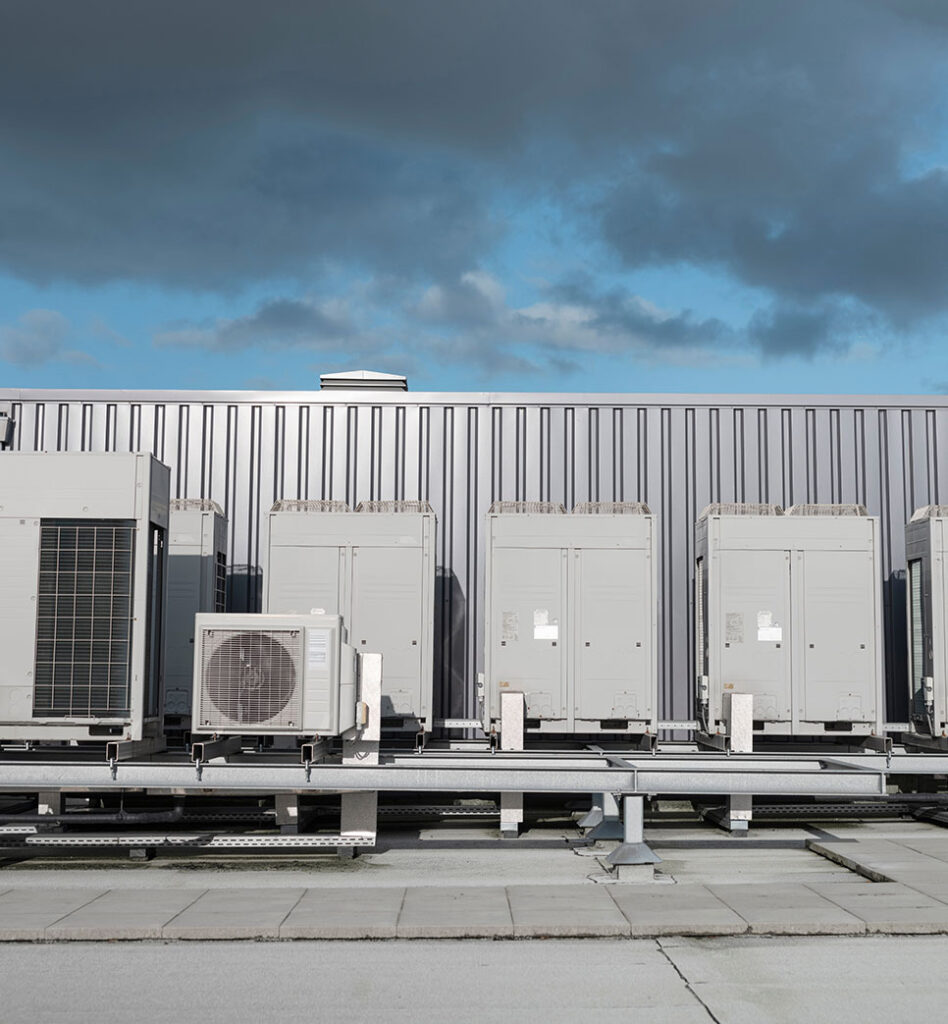
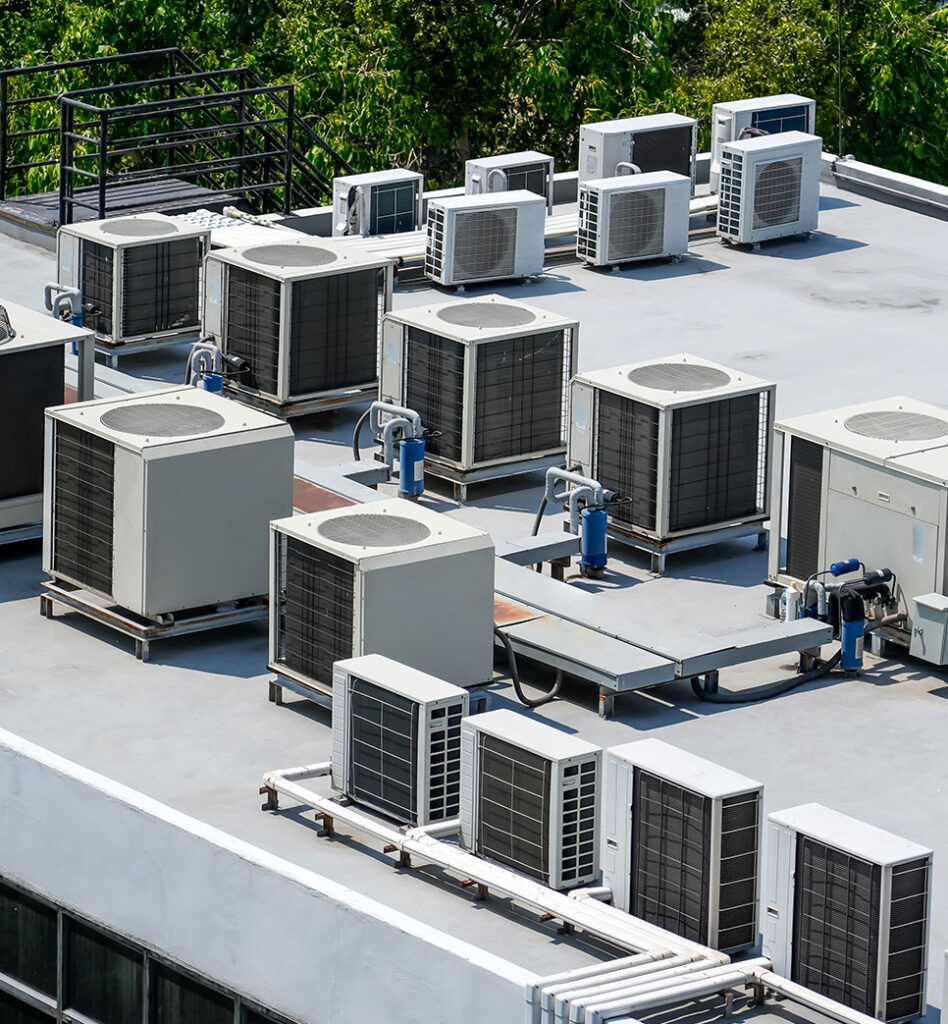
    In the competitive landscape of commercial business management, every percentage point of overhead matters. For facility managers and business owners, utility bills often represent one of the largest controllable expenses. At the heart of this expense lies the HVAC system—specifically, the rooftop units (RTUs) that sit atop shopping malls, office parks, and warehouses, quietly humming away while consuming vast amounts of electricity.

    When it comes time to replace or upgrade these systems, you are likely bombarded with technical jargon: SEER, EER, IEER, tonnage, and airflow. But one label stands out as a universally recognized beacon of efficiency: the blue Energy Star logo.

    But what does that little blue square actually mean for a massive commercial machine? Is it just a marketing gimmick, or does it translate to real-world dollars saved?

    This comprehensive guide will demystify the relationship between rooftop HVAC units and Energy Star ratings. We will explore the rigorous standards a unit must meet to earn the label, the specific efficiency metrics that matter for commercial applications, and why investing in Energy Star-certified equipment is one of the smartest financial moves a business can make.

    What is Energy Star?

    Before diving into the machinery, let’s establish what Energy Star represents. Established in 1992 by the U.S. Environmental Protection Agency (EPA), Energy Star is a voluntary program designed to help businesses and individuals save money and protect the climate through superior energy efficiency.

    While you might be familiar with the label on your home refrigerator or laptop, the commercial sector is a massive component of the program. For commercial heating and cooling equipment, the standards are incredibly high. The EPA works closely with manufacturers and industry experts to set performance criteria that only the top tier of products can meet.

    For a rooftop HVAC unit to earn the Energy Star certification, it isn’t enough to just “work well.” It must demonstrate—through independent, third-party testing—that it uses significantly less energy than standard models without compromising performance or features.

    The Unique Metrics of Commercial Efficiency

    To understand why an Energy Star rooftop unit is better, you have to speak the language of efficiency. Residential units rely heavily on SEER (Seasonal Energy Efficiency Ratio). While SEER is relevant, commercial units operate differently, and thus, different metrics take center stage in the Energy Star certification process.

    SEER vs. EER vs. IEER

    This alphabet soup of acronyms is where many buyers get lost. Let’s break them down:

    • SEER (Seasonal Energy Efficiency Ratio): This measures the cooling efficiency of a system over a typical cooling season. It’s like calculating the “highway miles per gallon” for your car over a long road trip. It’s useful, but it doesn’t tell the whole story for commercial buildings.
    • EER (Energy Efficiency Ratio): This measures efficiency at a specific peak operating condition—usually an outdoor temperature of 95°F. This is crucial because commercial buildings often generate a lot of internal heat and need to run hard when it’s hot outside.
    • IEER (Integrated Energy Efficiency Ratio): This is the gold standard for commercial rooftop units and a primary focus for Energy Star. IEER measures efficiency at part-load conditions.

    Why IEER Matters Most

    Think about how a commercial building operates. It is rarely 100°F outside every single day. Most of the time, the weather is mild (60°F–80°F), or the building is only partially occupied. This means the HVAC system is running at “part load”—maybe 50% or 75% capacity—for the vast majority of its life.

    IEER calculates efficiency based on how the unit performs during these everyday, part-load scenarios. An Energy Star-certified rooftop unit will typically have a superior IEER rating, meaning it is engineered to be efficient all the time, not just on the hottest day of the year.

    If your current system is aging and you are unsure about its efficiency metrics, our team can help evaluate your setup. Check out our commercial HVAC services for an assessment.

    What Makes an Energy Star Rooftop Unit Different?

    You can’t just slap a sticker on a standard unit and call it Energy Star. Certified units contain specific technologies and design choices that set them apart.

    1. Variable Frequency Drives (VFDs)

    Standard fans run at one speed: fast. Whether you need a little airflow or a hurricane, they use the same amount of power. Energy Star units often incorporate VFDs on the blower fans. This allows the fan to spin slower when demand is low, using exponentially less electricity.

    2. Multi-Stage or Variable Speed Compressors

    The compressor is the heart of the unit and the biggest energy consumer. Standard units have single-stage compressors that are either 100% on or off. Energy Star units often feature multi-stage compressors (e.g., low/high) or inverter-driven compressors that can ramp up and down. This prevents the energy-wasting cycle of constantly starting and stopping.

    3. Advanced Economizer Controls

    We’ve mentioned economizers in other contexts, but they are critical here. An economizer acts like an automated window, bringing in cool outdoor air to cool the building without running the compressor. Energy Star standards often require highly reliable, low-leakage dampers and advanced sensors that ensure the economizer is actually working correctly. (Faulty economizers are a notorious source of energy waste in non-certified units).

    4. Better Insulation and Sealing

    Energy Star units are built tighter. They feature higher-quality insulation within the cabinet to prevent thermal loss. If the air you just cooled warms up before it even leaves the box because of poor insulation, you are wasting money.

    The Financial Case for Energy Star

    The initial price tag of an Energy Star-certified rooftop unit is typically higher than a standard model. This “sticker shock” can deter some business owners. However, when you look at the Total Cost of Ownership (TCO), the picture changes dramatically.

    Lower Utility Bills

    Because these units are significantly more efficient—often 15% to 25% more efficient than standard code-compliant models—your monthly electricity bill drops immediately. For a large commercial building with multiple 10- or 20-ton units, this savings can amount to thousands of dollars annually.

    Rebates and Incentives

    This is the hidden bonus. Utility companies are desperate to reduce the load on the power grid. To encourage businesses to install efficient equipment, they offer substantial rebates. In many cases, these rebates can offset a significant portion of the price difference between a standard unit and an Energy Star unit.

    Reduced Maintenance Costs

    Higher efficiency often correlates with better build quality. Components that ramp up and down gently (like variable speed fans) experience less mechanical stress than components that slam on and off. This can lead to longer equipment life and fewer emergency breakdowns. However, even the best equipment needs care. Regular commercial HVAC maintenance services are vital to keeping that Energy Star rating valid in practice, not just on paper.

    Light Commercial vs. Heavy Commercial Criteria

    Energy Star divides rooftop units into categories based on size and phase type.

    Light Commercial HVAC (Small Business)

    These are typically units under 65,000 BTU/h (roughly 5 tons and under). They are common in small retail shops, restaurants, and small office suites. For these units, Energy Star certification focuses heavily on SEER and EER ratings, much like residential systems, because they are often single-phase electric.

    Commercial Rooftop Units (Large Business)

    These are the heavy hitters—units generally between 65,000 and 240,000 BTU/h (roughly 5 to 20 tons) and larger. These are almost always three-phase electric systems.

    For this category, the EPA’s criteria shift toward IEER. The certification process is more rigorous, requiring testing at various load capacities (25%, 50%, 75%, and 100%). This ensures that a 20-ton unit sitting on a Walmart roof is saving energy efficiently throughout the entire operational day, not just at noon.

    Energy Star and “Smart” Features

    The latest evolution in Energy Star requirements involves connectivity. We are moving toward an era of “Connected Thermostats” and “Smart HVAC.”

    Modern Energy Star-certified rooftop units are often “smart-ready.” This means they can communicate easily with Building Automation Systems (BAS) or advanced thermostats.

    Why does this matter for efficiency?

    • Fault Detection: A smart unit can tell you if its performance is degrading before it breaks. For example, it can alert you if refrigerant pressure is slightly off, allowing for a fix before efficiency plummets.
    • Remote Scheduling: You can adjust schedules remotely to ensure you aren’t cooling an empty building during a holiday.
    • Grid Interactivity: In some advanced markets, smart units can communicate with the utility grid to slightly reduce power consumption during peak blackout-risk hours, earning the business credits on their bill.

    Common Misconceptions About Energy Star Ratings

    Despite the program’s popularity, misconceptions persist in the commercial sector.

    Myth 1: “It’s all the same hardware inside.”

    Fact: False. While the metal box might look the same, the internals are different. The heat exchangers often have more surface area, the motors are higher grade (ECM motors vs. PSC motors), and the control boards are more sophisticated.

    Myth 2: “Energy Star units are too complicated to fix.”

    Fact: While they do have more advanced controls, trained technicians are well-versed in these systems. In fact, the onboard diagnostics on high-end units often make troubleshooting faster because the unit tells the technician exactly what is wrong. If you need support for a high-tech unit, our commercial HVAC repair services are equipped with the diagnostic tools required for modern systems.

    Myth 3: “Efficiency ratings are just for cooling.”

    Fact: Rooftop units often provide heating as well (gas or electric). Energy Star ratings also encompass heating efficiency (AFUE for gas, HSPF for heat pumps). A unit that cools efficiently but wastes gas in the winter is not a truly efficient solution.

    Environmental Stewardship and Brand Image

    Beyond the balance sheet, Energy Star certification plays a crucial role in corporate social responsibility (CSR).

    Buildings are responsible for a massive chunk of global carbon emissions. By choosing Energy Star equipment, your business is directly reducing its carbon footprint. According to the EPA, if all commercial rooftop units sold in the U.S. met Energy Star criteria, the energy cost savings would grow to billions of dollars annually and prevent greenhouse gas emissions equivalent to the emissions from hundreds of thousands of vehicles.

    For businesses that market themselves as eco-friendly or sustainable, having certified green infrastructure is a powerful proof point. It shows customers and stakeholders that you practice what you preach.

    How to Verify Your Rating

    When shopping for a new rooftop unit, verification is key. Don’t just take a salesperson’s word for it.

    1. Look for the Label: The blue Energy Star label should be clearly displayed on the unit’s literature or the unit itself.
    2. Check the CEE Directory: The Consortium for Energy Efficiency (CEE) maintains a directory of high-efficiency equipment that often overlaps with Energy Star.
    3. AHRI Certification: The Air-Conditioning, Heating, and Refrigeration Institute (AHRI) provides the independent testing data. You can look up a specific model number in the AHRI directory to see its official certified SEER, EER, and IEER ratings.

    Retrofitting vs. Buying New

    Can you make an old unit an Energy Star unit? Technically, no. The certification applies to the manufactured product as sold.

    However, you can apply “Energy Star-style” upgrades to existing equipment to improve performance. Adding a new economizer, upgrading the thermostat, or installing a VFD on the supply fan can bring an older unit closer to modern efficiency standards.

    That said, there comes a point of diminishing returns. If your unit is 15+ years old, no amount of retrofitting will match the efficiency of a new Energy Star model designed from the ground up for performance.

    Specialized Cooling: Server Rooms

    One important note regarding ratings: General comfort cooling ratings (SEER/IEER) don’t always apply perfectly to mission-critical environments like server rooms.

    Server rooms have a constant, year-round heat load that is very different from an office space occupied by people. While high efficiency is still crucial, reliability and precision humidity control take precedence. Sometimes, the most “efficient” unit on paper isn’t the best for servers if it cycles too frequently. For these applications, specialized precision cooling is required. Learn more about our solutions for this niche at our commercial server room cooling services page.

    The Installation Factor: The “Lost” Efficiency

    Here is the most critical takeaway of this entire guide: An Energy Star unit is only as efficient as its installation.

    You can buy the highest-rated unit on the market—a 20 SEER, high-IEER marvel of engineering. But if it is installed poorly, it will perform like a standard, inefficient unit.

    Common installation killers include:

    • Improper Sizing: Oversizing the unit leads to short-cycling, which destroys efficiency.
    • Leaky Ductwork: If the ducts aren’t sealed, you lose the conditioned air.
    • Incorrect Refrigerant Charge: If the charge is off by even 10%, efficiency drops measurably.
    • Airflow Restrictions: If the transition from the unit to the ductwork is choked, the fans work overtime.

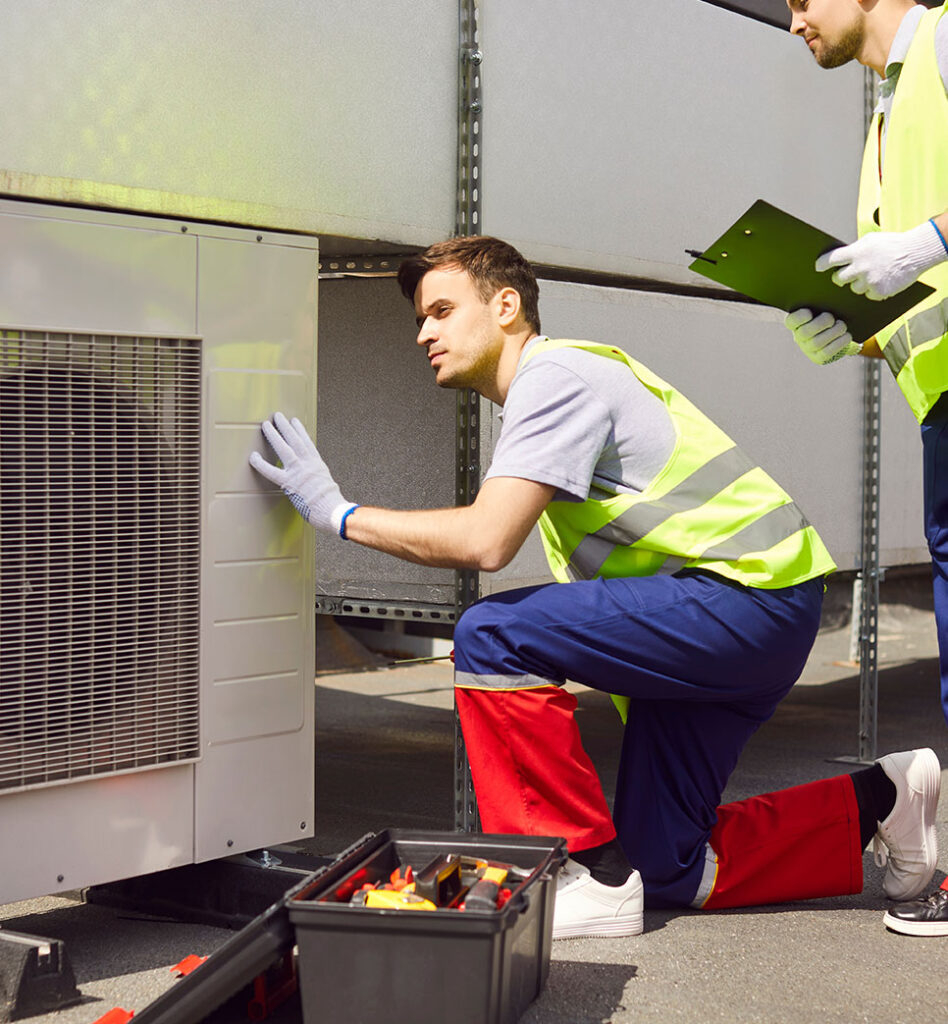
    This is why choosing the right contractor is just as important as choosing the right equipment. The Energy Star label certifies the potential of the machine. The contractor ensures that potential is realized.

    Conclusion: Making the Smart Choice

    Rooftop HVAC units and Energy Star ratings are inextricably linked in the modern commercial landscape. The rating provides a trusted, objective benchmark that cuts through the marketing noise, helping you identify equipment that will save you money and headaches in the long run.

    Investing in Energy Star-certified rooftop units is a strategic decision. It hedges against rising energy prices, lowers operational costs, and positions your business as a leader in sustainability.

    However, navigating the technical specs of IEER, EER, and tonnage can be overwhelming. You don’t have to do it alone.

    At 1-800-CoolAid, we specialize in high-efficiency commercial climate control. Whether you need to verify the efficiency of your current fleet, repair a high-tech system, or plan a comprehensive replacement strategy with Energy Star equipment, we are here to help.

    Don’t let inefficiency drain your profits. Contact us today to discuss how we can upgrade your building’s performance. Visit our commercial HVAC replacement services page to get started on a greener, more cost-effective path.


    Stay Comfortable Year-Round With Expert HVAC Service

    Book a trusted technician to handle your heating or cooling issue—fast, professional, and done right the first time.

    Book Service Now
    Blog post Image
    Blog post Image
    Blog post Image

    Frequently Asked Questions

    How do I know when condensing unit replacement is better than repair?

    Consider replacement when repair costs exceed 50% of replacement cost, when units are over 12-15 years old, or when efficiency losses significantly increase energy bills. We provide cost-benefit analysis to help you make the right decision for your specific situation.

    What energy savings can I expect from a new high-efficiency condensing unit?

    Modern units typically achieve 20-40% energy savings compared to units installed before 2010. For a business spending $500 monthly on refrigeration energy, this represents $100-200 monthly savings that often pays for replacement within 3-5 years.

    How long does condensing unit replacement take?

    Most replacements take 1-3 days depending on unit size and installation complexity. We coordinate work around your business schedule to minimize disruption and can often provide temporary cooling during installation when necessary.

      Schedule Your Service

      Stay Comfortable Year-Round With Expert HVAC Service

      Book a trusted technician to handle your heating or cooling issue—fast, professional, and done right the first time.

      Schedule a FREE Discovery Call
      Close

      Schedule Your Service