It’s the Law of Murphy applied to home comfort: your HVAC system is most likely to break down exactly when it is most inconvenient. It happens on Friday night just as guests are arriving, on Sunday afternoon in the middle of a heat wave, or at 2:00 AM on the coldest night of the year.
When the house goes silent or the temperature starts climbing rapidly, panic sets in. You wonder if you can wait until Monday morning or if you need to make that dreaded emergency call. At Cool Aid A/C & Refrigeration, we understand that stress. We’ve answered thousands of after-hours calls across the Bay Area, and we’ve seen the same patterns emerge time and again.
While every home is different, the reasons systems fail outside of business hours are surprisingly consistent. Understanding these common emergencies—and how a professional handles them—can help you stay calm, make the right decision, and know exactly what to expect when the technician arrives at your door.
Why HVAC Problems Love Nights, Weekends, and Holidays
It often feels like HVAC systems have a malicious sense of timing, but there is usually a mechanical reason why breakdowns happen when they do. Nights, weekends, and holidays are typically when your home is fully occupied. The lights are on, the oven might be running, and the family is gathered. This increases the heat load inside the home.
What changes when systems fail outside normal business hours
More importantly, these are the times when extreme weather often peaks. On a scorching summer afternoon, your AC unit has been running marathon cycles since noon. By 6:00 PM or 7:00 PM—right when most repair shops close—the components are at their hottest and most stressed. That’s when a weak capacitor finally gives up or an overheating motor seizes.
Similarly, on a freezing winter night, your furnace works hardest in the dead of night when outdoor temperatures bottom out. The system is pushing against its maximum capacity, revealing weak points that might go unnoticed during a mild afternoon. The timing isn’t bad luck; it’s physics pushing your equipment to its breaking point.
After-Hours Emergency #1: AC Failure During a Heat Wave
This is the number one reason our phones ring on summer evenings. The scenario is almost always the same: it’s been over 90 degrees all day, the AC has been struggling to keep up, and suddenly, it just stops. The fans stop spinning, the hum dies, and the house starts to bake.
Why high outdoor temperatures accelerate failures
Heat is the enemy of electrical components. Inside your outdoor condenser unit, capacitors, contactors, and compressor motors generate their own heat while operating. When you add high ambient temperatures (sometimes 100+ degrees on a rooftop or in a side yard), these parts can’t cool down.
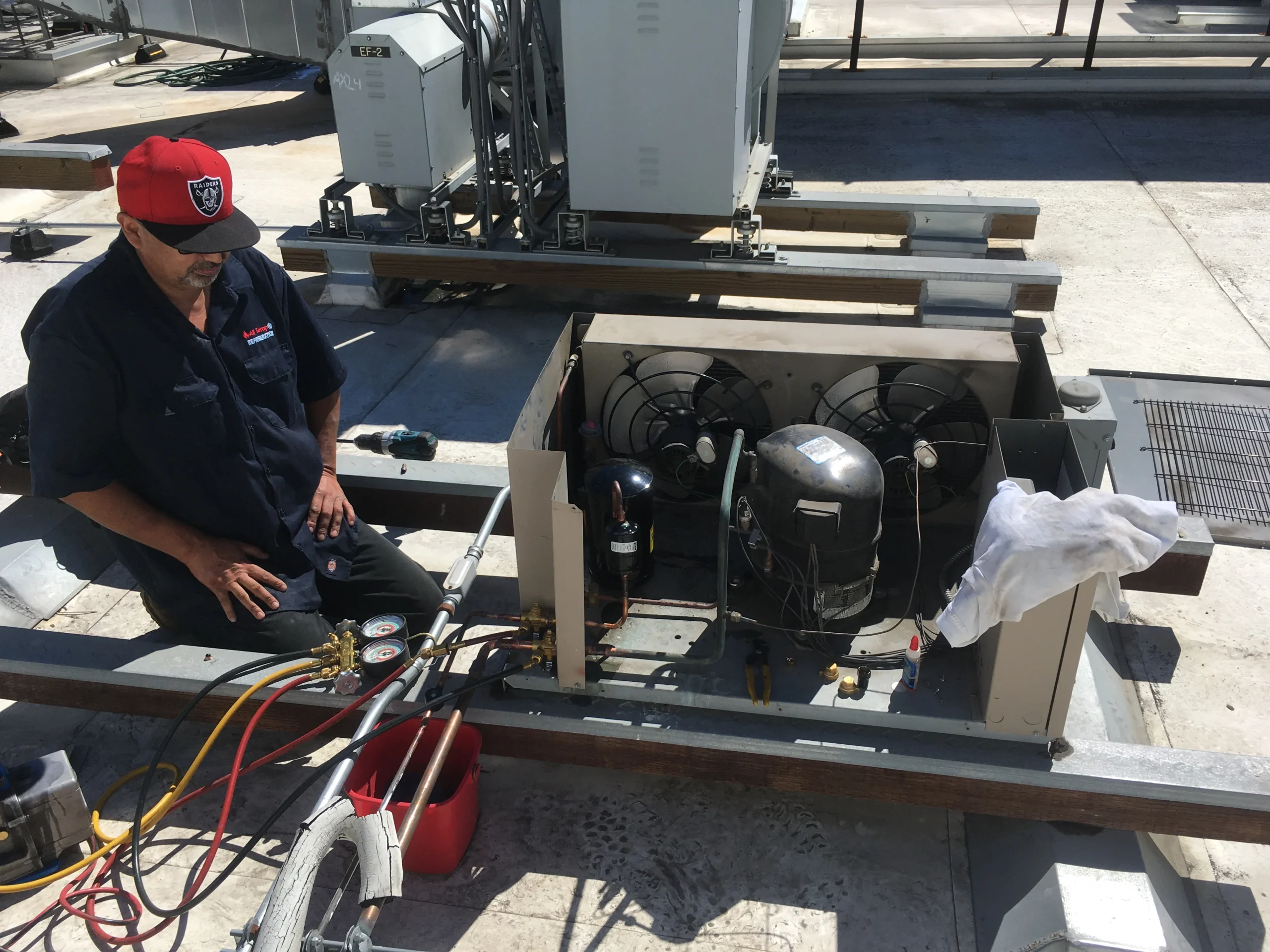
When we arrive at these calls, we often find a capacitor that has swollen like a balloon or a compressor that has gone out on “thermal overload”—a safety mode where the motor shuts itself off to prevent melting. The fix usually involves diagnosing which electrical component failed under the stress. We carry high-quality, high-temperature rated capacitors and contactors on our trucks specifically for this reason. Once the failed part is swapped and the compressor cools down, we can often get the cool air flowing again within the hour.
After-Hours Emergency #2: Furnace Shutdown on Cold Nights
Waking up to a freezing house is more than just uncomfortable; it can be dangerous. A furnace that quits in the middle of the night is often reacting to a safety concern rather than a simple broken part. Modern furnaces are equipped with a series of sensors designed to shut the unit down if unsafe conditions are detected.
How safety switches shut heat down without warning
One of the most common late-night furnace failures is a “limit switch” trip. This happens when the furnace gets too hot because airflow is restricted—often due to a dirty filter that has been neglected. The system overheats, the safety switch kills the burners, and the blower runs continuously to cool it down.
Another common culprit is the flame sensor. If this small metal rod gets dirty (which happens naturally over time), it can’t detect the fire when the burners ignite. The computer assumes there is no flame, even if there is, and shuts the gas valve to prevent a leak. Our after-hours fix often involves cleaning the flame sensor, replacing the limit switch if it’s stuck open, and ensuring there is proper airflow so the system can run safely through the night.
After-Hours Emergency #3: Electrical Failures and Tripped Breakers
Few things are as confusing as an HVAC system that simply has no power. You check the thermostat, and the screen is blank. You check the breaker panel, and the switch for the AC or furnace is in the “middle” or “off” position. You reset it, the system runs for ten seconds, and click—it trips again.
Why power issues escalate quickly after hours
A tripping breaker is a serious red flag. It means the system is trying to pull more electricity than the wires can safely handle. This is often caused by a “direct short to ground”—where a wire has rubbed against copper tubing or the metal cabinet until the insulation wore through.
It can also be a seized compressor. If the compressor tries to start but is mechanically locked up, it will pull massive amperage (Locked Rotor Amps) until the breaker trips to prevent a fire. During an emergency call, we never force the breaker. We use a multimeter to trace the short. If it’s a wire rub, we can repair it and secure it. If it’s a dead compressor, the focus shifts to making the system safe and discussing replacement or major repair options for the next day.
After-Hours Emergency #4: Loud Mechanical Noises That Start Suddenly
Sometimes the system is still running, but you wish it wasn’t. A loud, metal-on-metal grinding, screeching, or banging noise at 11:00 PM is terrifying. It sounds like the unit is tearing itself apart—and often, it is.
What grinding, banging, and screeching usually mean at night
These noises usually point to a moving part that has failed.
- Screeching: Often a seized fan motor bearing. The metal is heating up and screaming as it spins.
- Banging: Often a blower wheel that has come loose from the motor shaft or a fan blade hitting debris.
- Grinding: Often a sign that the compressor internals are failing.
When we respond to these noise complaints, the first step is to shut it down immediately to prevent collateral damage. A loose fan blade can slice through a radiator coil in seconds, turning a $300 repair into a $3,000 one. We isolate the noise, tighten or replace the moving part, and verify that the vibration didn’t loosen electrical connections.
After-Hours Emergency #5: Frozen Coils and Ice Buildup
You might think finding a block of ice on your AC unit is impossible in the middle of summer, but it happens constantly. You’ll see ice forming on the copper lines outside or even dripping water from the furnace cabinet inside. The air coming out of the vents will be weak and barely cool.
Why icing problems often show up late
Ice forms when the system can’t absorb heat. This is almost always caused by low airflow (a dirty filter again!) or low refrigerant levels due to a leak. As the evening cools down, the pressures in the system drop naturally. If the system was already borderline low on charge, the cooler night air might push it over the edge, causing the coil to drop below freezing. Moisture in the air freezes onto the coil, building a solid block of ice that chokes off all airflow.
For an after-hours fix, we cannot just chip the ice away—that destroys the coil. We have to shut the compressor off and run the fan to melt the ice. Only then can we test the refrigerant pressures to see if there is a leak.
After-Hours Emergency #6: Water Leaks From HVAC Equipment
Water damage is a homeowner’s nightmare. You might walk into the hallway and squish into a wet carpet, or see a stain spreading across the ceiling below the attic. HVAC systems produce gallons of water (condensate) on hot days, and that water has to go somewhere.
Condensate backups that turn into property damage
Normally, this water drains out through a PVC pipe. But over time, algae and sludge (“slime”) build up in the dark, wet drain line. Eventually, a clog forms. The water backs up into the drain pan, overflows, and starts leaking into your home.
This is a true emergency because water destroys drywall, flooring, and insulation quickly. Our immediate goal is to stop the water production (turn off the AC) and clear the blockage. We use high-pressure nitrogen or specialized vacuums to blast the sludge out of the line. We also check the safety float switch—a device that should have turned the unit off before it overflowed—and replace it if it failed.
After-Hours Emergency #7: Short Cycling That Won’t Stop
If your AC turns on, runs for three minutes, shuts off, and then turns back on two minutes later, it is short cycling. This rapid-fire operation is incredibly stressful for the equipment and annoying for anyone trying to sleep.
Why rapid cycling becomes urgent after hours
Short cycling usually means a safety control is detecting a problem, shutting the unit down, resetting, and trying again. It could be a high-pressure switch tripping because the outdoor coil is dirty, or a low-pressure switch tripping because of a refrigerant leak.
Leaving a system to short cycle all night is a recipe for a burnt-out compressor. When we arrive, we use gauges to watch the system pressures in real-time. We identify which switch is tripping and why. Often, it’s a dirty condenser coil that needs to be chemically cleaned to lower the head pressure, allowing the system to run steadily again.
After-Hours Emergency #8: Thermostat Failures That Disable the System
Sometimes the expensive equipment in the attic and backyard is perfectly fine, but the $100 plastic box on the wall has died. Thermostats can fail due to dead batteries, loose wiring, or internal electronic faults.
When a control issue creates an emergency
If the thermostat screen is blank or unresponsive, you have no way to tell the system to run. We also see “ghost” calls, where a failing thermostat sends erratic signals, causing the heat and AC to fight each other or the fan to chatter on and off.
Diagnosing this involves bypassing the thermostat to manually jump the wires. If the system starts up perfectly when we touch the Red and Yellow wires together, we know the thermostat is the culprit. We carry universal programmable thermostats on our trucks so we can get your system back under control immediately without waiting for parts.
How Professional After-Hours HVAC Repairs Are Handled Differently
Calling for emergency service is different from scheduling routine maintenance. The priority shifts from “optimization” to “stabilization.” When you call Cool Aid A/C & Refrigeration at 10:00 PM, our goal is to make your home safe and livable as quickly as possible.
Stabilizing the system before permanent repairs
Sometimes, a full repair requires a specific part—like a proprietary blower motor or a unique circuit board—that no supply house has available at midnight. In these cases, we focus on stabilization. Can we get the AC running on a temporary “universal” capacitor to get you through the weekend? Can we bypass a faulty accessory to get the heat working safely? We will always explain the difference between a temporary patch and a permanent fix, so you know exactly what the plan is.
Why diagnostics still matter during emergency calls
Even in an emergency, we don’t guess. We don’t just start swapping parts hoping the noise stops. We still perform a proper diagnostic sequence—checking voltage, amperage, pressures, and temperature differentials. Doing it right the first time is faster than guessing, and it ensures that when we leave, the system stays running.
What Homeowners Should Do Before Calling for After-Hours HVAC Repair
Before you pick up the phone, there are a few safe, simple checks you can do. These might save you the cost of an emergency dispatch fee, or at least give us valuable information before we arrive.
Safe steps that can prevent further damage
- Check the Filter: A completely clogged filter is the cause of a surprising number of emergency calls. If it’s dirty, pull it out. If the system starts working again, you just saved yourself a repair bill.
- Check the Breaker: If the system has no power, check your electrical panel. If a breaker is tripped, reset it once. If it trips again immediately, do not reset it a second time—call us.
- Check the Thermostat Batteries: If the screen is blank, pop it off the wall and replace the AA or AAA batteries.
- Shut It Down: If the system is making loud noises, smells like burning, or is leaking water, turn it off at the thermostat immediately. Do not “push through” the problem.
If Your HVAC Problem Can’t Wait Until Morning
HVAC emergencies are stressful, but they are also solvable. You don’t have to suffer through a sleepless night in a freezing or sweltering house. The key is to recognize the problem, shut down the system to prevent further damage, and call a professional who treats your home with respect and urgency.
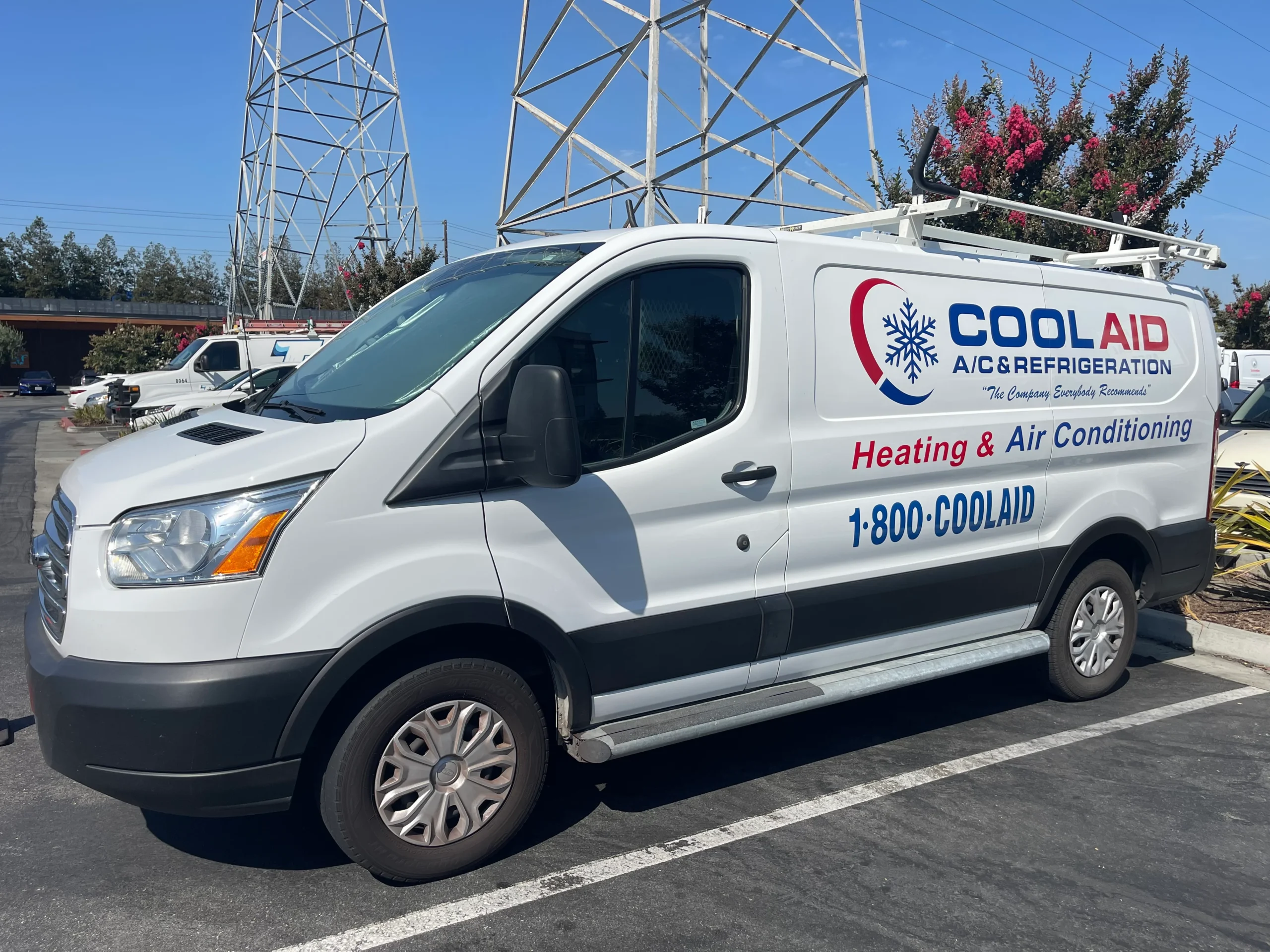
At Cool Aid A/C & Refrigeration, our trucks are stocked and our technicians are trained to handle the specific failures that happen after the sun goes down. We provide honest answers, clear pricing, and steady hands when you need them most.
If your system has failed and you need help now, don’t hesitate. Contact us for emergency service, and let’s get your comfort back on track.
If the problem can’t wait until morning, our Bay Area emergency HVAC repair team can respond to urgent after-hours service calls across the region.
Stay Comfortable Year-Round With Expert HVAC Service
Book a trusted technician to handle your heating or cooling issue—fast, professional, and done right the first time.
Book Service Now