Running a commercial facility is a constant balancing act between maintaining operations and managing overhead costs. Among the most significant line items on any business’s expense report is energy consumption. For many commercial buildings, heating, ventilation, and air conditioning (HVAC) can account for nearly 40% to 50% of total electricity usage. This staggering statistic leads many facility managers and business owners to ask a critical question: How can we lower these costs without sacrificing comfort?
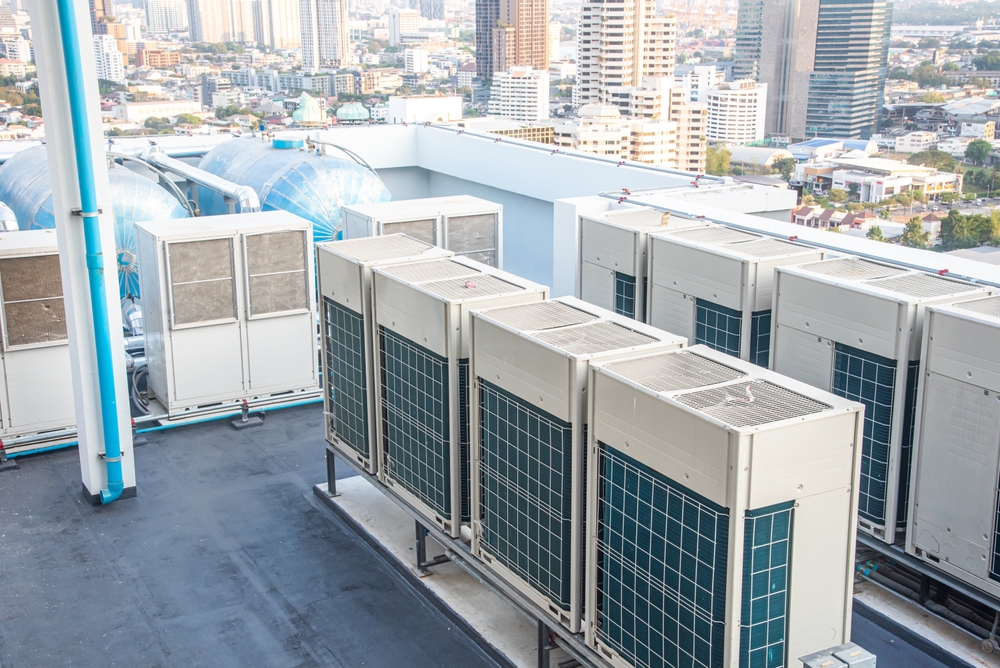
The answer often lies on the roof. Rooftop HVAC systems, also known as packaged units or RTUs, are the standard for commercial climate control for good reason. When properly selected, installed, and maintained, they are powerful tools for driving down energy expenses.
This guide explores exactly how rooftop HVAC systems reduce energy bills. We will break down the mechanics of efficiency, the hidden features that save money, and the practical steps you can take to turn your HVAC system into a cost-saving asset rather than a liability.
The Financial Impact of HVAC Efficiency
Before diving into the nuts and bolts of rooftop units, it is essential to understand the financial stakes. An inefficient HVAC system is like a hole in your pocket. It bleeds money silently, month after month.
Consider a medium-sized office building. If the HVAC system is outdated or poorly maintained, it might be running 20% longer than necessary to reach the set temperature. That 20% wasted runtime translates directly into higher electricity demand charges and consumption rates. Over a year, this can amount to thousands, sometimes tens of thousands, of dollars in wasted capital—money that could have been reinvested into the business.
Modern rooftop units are designed to stop this bleeding. They leverage advanced engineering to deliver the same amount of cooling (or heating) using significantly less power. Upgrading to a high-efficiency system is not just an operational expense; it is a strategic financial investment with a measurable return on investment (ROI).
Why Rooftop Design Inherently Saves Money
Rooftop units are distinct from the split systems commonly found in residential settings. In a split system, components are separated: the condenser sits outside, and the air handler sits inside, connected by long refrigerant lines. Rooftop units are “packaged,” meaning all components—compressor, evaporator, condenser, and fan—are housed in a single cabinet.
This design choice offers several inherent energy-saving advantages:
1. Factory-Sealed Refrigerant Loops
Because the entire refrigerant cycle is contained within the unit at the factory, the chances of installation errors are minimized. Field-installed refrigerant lines on split systems can sometimes be too long, kinked, or poorly soldered, leading to pressure drops and leaks. A factory-sealed system ensures the refrigerant charge is precise, allowing the compressor to operate at peak efficiency from day one.
2. Optimal Airflow Management
Rooftop units are designed to discharge conditioned air directly into the building’s ductwork system. This direct connection minimizes the distance air has to travel before entering the distribution network. Less resistance means the blower fan uses less energy to move the air, contributing to lower monthly bills.
3. Ease of Access for Maintenance
While this might seem like a convenience feature, it has direct financial implications. Because all components are in one place, technicians can perform maintenance more quickly and comprehensively. Regular maintenance is the key to sustained efficiency. If a technician has to run between a basement and a roof to service a split system, labor costs go up, and critical checks might be rushed. The accessibility of RTUs encourages better upkeep, which keeps energy efficiency high.
If you are considering installing a new system to capitalize on these design benefits, exploring professional commercial HVAC services is the first step toward a more efficient building.
The Secret Weapon: Economizers
If there is one feature that defines the energy-saving potential of a rooftop unit, it is the economizer. This component is a game-changer for commercial buildings, yet many business owners don’t fully understand how it works.
Free Cooling from Mother Nature
Commercial buildings have a unique thermal profile. Even when it is cool outside—say, 55°F or 60°F—the interior of the building can still be hot. This is due to “internal heat gains” generated by people, computers, servers, lighting, and machinery.
In a residential home, you might just open a window. In a sealed commercial building, you can’t do that. Without an economizer, the HVAC unit would have to turn on its energy-hungry compressor to mechanically cool the air, even though the air outside is already cold.
An economizer solves this problem. It uses sensors to monitor the outdoor air temperature and humidity. When conditions are right, it opens a damper to bring in cool, fresh outdoor air, filtering it and distributing it throughout the building. The compressor stays off.
Drastic Reductions in Compressor Use
The compressor is the engine of your HVAC system and consumes the vast majority of its electricity. By using an economizer, you can bypass the compressor entirely for significant portions of the year, especially in climates with cool mornings or mild transition seasons (spring and fall).
Studies show that economizers can reduce cooling energy consumption by 15% to 50%, depending on the climate zone. In the Bay Area, where we enjoy mild temperatures for much of the year, the savings potential is massive.
Variable Speed Technology: Precision vs. Brute Force
Older rooftop units operated on a simple principle: on or off. When the thermostat called for cooling, the unit would roar to life at 100% capacity. Once the temperature dropped, it would shut down completely. This “all-or-nothing” approach is inefficient for two reasons:
- Startup Surge: Electric motors require a massive spike of energy to start spinning from a dead stop. Frequent starting and stopping (short-cycling) drives up peak demand charges.
- Overcooling: Often, you only need a little bit of cooling to maintain comfort. Running at full blast is overkill, like using a firehose to fill a water glass.
The Inverter Revolution
Modern energy-efficient rooftop systems use variable frequency drives (VFDs) and inverter-driven compressors. These smart components can adjust their speed to match the building’s load.
If the building only needs 40% cooling capacity, the unit runs at 40%. This “low and slow” operation is far more efficient. It maintains a steady temperature without the energy spikes associated with frequent startups. Furthermore, fans running at partial speed consume exponentially less energy than fans running at full speed. This technology alone can shave a significant percentage off your monthly utility bill.
If your current system lacks these capabilities, it might be time to calculate the ROI of a replacement. Our commercial HVAC replacement services can help you transition to variable-speed technology.
Smart Controls and Building Automation
Hardware is only half the battle. How you control that hardware determines your ultimate savings. In the past, a simple programmable thermostat was the height of technology. Today, rooftop HVAC systems are integrated into sophisticated Building Automation Systems (BAS).
Demand Control Ventilation (DCV)
Most building codes require a certain amount of fresh air to be brought in for every occupant. Traditional systems bring in a fixed amount of air based on the building’s maximum occupancy design.
But what happens if the conference room designed for 50 people only has 5 people in it? The system is still bringing in enough hot outdoor air for 50 people, which the AC then has to cool down. This is a massive waste of energy.
Demand Control Ventilation uses CO2 sensors to detect how many people are actually in the space. If occupancy is low, it reduces the intake of outdoor air. This means the HVAC unit has less work to do, reducing energy consumption significantly without compromising air quality.
Scheduling and Remote Management
Smart thermostats allow facility managers to set precise schedules. You can ensure the system isn’t cooling an empty office at 8 PM on a Friday. More importantly, remote access allows you to catch problems early. If a unit is running continuously when it shouldn’t be, an alert can be sent to your phone, allowing you to address the energy waste immediately rather than discovering it a month later on the utility bill.
The Role of SEER and IEER Ratings
When evaluating how a rooftop unit will impact your bills, you need to speak the language of efficiency ratings.
- SEER (Seasonal Energy Efficiency Ratio): This measures efficiency over a typical cooling season. A higher number is better. While residential units focus heavily on SEER, commercial units often look at EER and IEER.
- IEER (Integrated Energy Efficiency Ratio): This is arguably the most critical metric for commercial rooftop units. Unlike EER, which measures efficiency at peak load (the hottest day of the year), IEER measures efficiency at part-load conditions.
Since commercial units run at part-load capacity (not 100% full blast) for the vast majority of their operating hours, a high IEER rating is a much better predictor of actual energy savings. Modern units with high IEER ratings are engineered specifically to excel in the everyday conditions that comprise 90% of the cooling season.
Maintenance: The Efficiency Preserver
You can buy the most expensive, high-tech rooftop unit on the market, but if you neglect it, it will become an energy hog within a few years. Maintenance is not just about preventing breakdowns; it is about preserving efficiency.
The Cost of Dirty Coils
The condenser coils on your rooftop unit are responsible for releasing the heat pulled from your building. Since they sit outside, they are exposed to pollen, dust, leaves, and pollution.
When these coils get dirty, they can’t transfer heat effectively. The compressor has to work harder and run at higher pressures to compensate. This not only shortens the life of the compressor but causes amp draw to skyrocket. A dirty coil can increase energy consumption by 30% or more. Regular cleaning pays for itself in energy savings alone.
Belt Tension and Filters
Loose fan belts slip, meaning the motor spins but the fan doesn’t move as much air. The motor wastes energy spinning without doing useful work. Similarly, clogged air filters act as a gag on your system. The fans have to push harder against the resistance of the dirt, consuming more watts to move the same amount of air.
Routine checks ensure these simple components aren’t silently inflating your energy bills. For comprehensive care, consider our commercial refrigeration maintenance services which apply the same rigorous standards to your HVAC equipment.
Reducing Heat Load Before It Enters
While the rooftop unit does the heavy lifting, you can help it reduce energy bills by reducing the workload it faces. This is often called “reducing the cooling load.”
Reflective Roofing
Since your HVAC unit sits on the roof, the temperature of the roof surface matters. A black tar roof can reach temperatures of 150°F or more in the summer. This creates a microclimate of superheated air right where your HVAC unit is trying to breathe.
Painting the roof white or installing a “cool roof” reflects sunlight and lowers the ambient temperature around your units. This allows the condenser to operate more efficiently because it is rejecting heat into cooler air.
Duct Insulation
Ideally, ductwork is inside the building envelope. However, in many commercial setups, some ductwork runs across the roof. If these ducts are not heavily insulated, the sun heats the metal, and your expensive conditioned air warms up before it even reaches the vents. Ensuring all exterior ductwork is properly sealed and insulated is a low-cost fix with immediate payback.
When to Retrofit vs. Replace
This is a common financial dilemma. Should you spend money to upgrade components on an old unit, or replace it entirely?
The Case for Retrofitting
If your unit is relatively young (under 10 years) but lacks efficiency features, retrofitting can be a smart move. You can often add:
- Economizers: Keep in mind that aftermarket installation can be complex, but feasible.
- Smart Thermostats: Replacing an old bimetal thermostat with a Wi-Fi-enabled smart controller is an easy win.
- VFDs on Fans: Adding a variable frequency drive to the blower motor can provide some of the benefits of variable speed technology without replacing the whole unit.
The Case for Replacement
If your unit is over 15 years old, it likely uses R-22 refrigerant (which is phased out) and has a low efficiency rating (perhaps 10 SEER or lower). A new unit today might be 18 SEER or higher.
The math is often compelling. A new unit can be 20-40% more efficient than a 15-year-old model. The energy savings can often cover the monthly payment of financing the new equipment. Additionally, utility companies often offer substantial rebates for upgrading to high-efficiency commercial equipment, further reducing the upfront cost.
If you are unsure which path is right for you, our team can perform an energy audit and discuss commercial HVAC replacement services tailored to your budget.
Specialized Zoning for Maximum Control
In a large commercial building, not every room needs the same amount of cooling. A server room might need to be 68°F, while the warehouse is fine at 78°F, and the office needs to be 72°F.
Trying to cool the entire building to the lowest common denominator (68°F) wastes a tremendous amount of energy. Rooftop units are excellent for zoning applications. Using a VAV (Variable Air Volume) system, a single rooftop unit can serve multiple zones. Dampers in the ductwork open and close to control flow to specific areas.
This means you stop overcooling the warehouse just to keep the server room safe. However, for critical infrastructure like server rooms, it is often more efficient to install a dedicated cooling solution rather than forcing the main building HVAC to work overtime. Learn more about this at our commercial server room cooling services page.
The Human Factor: Employee Behavior
Finally, technology cannot solve everything if human behavior undermines it. A rooftop unit can only save so much money if employees leave windows open or block vents with file cabinets.
Educating your staff can lead to surprising savings. Simple policies like keeping doors closed, using blinds to block afternoon sun, and not tampering with thermostat settings can help your rooftop system do its job efficiently.
Conclusion: A Strategic Approach to Savings
So, how do rooftop HVAC systems reduce energy bills? They do it through a combination of smart engineering, integrated design, and advanced control strategies. From the “free cooling” of economizers to the precision of variable-speed motors, every component of a modern RTU is built to minimize waste.
However, realizing these savings requires a partnership. The best equipment in the world needs professional installation, regular maintenance, and intelligent management. It is not a “set it and forget it” appliance; it is a dynamic system that requires care.
By investing in high-efficiency rooftop units and maintaining them properly, you are essentially insulating your business against rising energy costs. You are turning a mandatory operational cost into a manageable, predictable expense.
Don’t let your profits fly out the window—or through the roof. Take control of your energy consumption today.
If you are ready to explore how a modern rooftop HVAC system can transform your energy bills, or if you need to optimize your current setup, 1-800-CoolAid is here to help. We specialize in helping Bay Area businesses achieve maximum efficiency and comfort.
Contact us today to schedule an assessment or visit our commercial HVAC services page to learn more about our comprehensive solutions. Your bottom line will thank you.
Stay Comfortable Year-Round With Expert HVAC Service
Book a trusted technician to handle your heating or cooling issue—fast, professional, and done right the first time.
Book Service Now