Running a successful restaurant requires orchestrating a chaotic environment into a seamless, enjoyable experience for your guests. While you focus on perfecting the menu, managing staff, and delivering excellent customer service, an unseen force works tirelessly in the background to keep your operation viable: your heating, ventilation, and air conditioning (HVAC) system. When this system fails, the impact is immediate and devastating.
Restaurants present one of the most demanding environments for commercial HVAC equipment. The extreme heat generated by commercial ovens, the constant emission of airborne grease, and the need to maintain a perfectly comfortable dining room create a unique set of challenges. An HVAC failure does not just mean a slightly warm room; it means uncomfortable guests, exhausted kitchen staff, skyrocketing utility bills, and potentially lost revenue.
This comprehensive guide explores the most common HVAC problems in restaurants. We will dive deep into the unique climate of commercial kitchens, the destructive nature of grease buildup, and mechanical failures like pilot light issues and refrigerant leaks. By understanding these challenges, you can take proactive steps to protect your investment, optimize your energy efficiency, and ensure your doors stay open for business.
The Unique Climate of a Commercial Restaurant
Standard commercial office buildings have relatively stable internal environments. A restaurant, however, operates with drastic temperature zones and massive fluctuations in air pressure. Understanding this dynamic is crucial for diagnosing and preventing HVAC issues.
Extreme Kitchen Heat
A commercial kitchen is an absolute powerhouse of heat generation. Grills, deep fryers, broilers, and industrial ovens operate continuously for hours on end. This equipment radiates an immense amount of thermal energy into a confined space. If this heat is not properly managed and exhausted, kitchen temperatures can easily soar past 100 degrees Fahrenheit.
This extreme heat puts an incredible burden on your cooling system. Your air conditioning unit must work continuously to counteract the thermal load of the kitchen while simultaneously trying to keep the dining area cool. When the cooling system struggles to keep up, kitchen staff suffer from heat exhaustion, which plummets productivity and increases the risk of workplace accidents. Furthermore, excessive ambient heat can force your commercial refrigeration units to work harder, putting them at risk of failure.
The Challenge of Dining Room Comfort
While the kitchen feels like a furnace, your guests expect the dining room to feel like an oasis. Balancing these two completely different microclimates under one roof is a monumental task. The HVAC system must perfectly distribute conditioned air to keep patrons comfortable without creating freezing drafts or allowing kitchen heat to spill over into the dining area.
This balance relies heavily on proper air pressure. Restaurants require a carefully calibrated makeup air system. When exhaust hoods pull hot, smoke-filled air out of the kitchen, replacement air must be brought in from the outside. If the system is unbalanced, you may create a negative pressure environment. Negative pressure causes front doors to become heavy and difficult to open, pulls unconditioned outdoor air through window seals, and drags dining room air into the kitchen, creating uncomfortable drafts for your guests.
The Threat of Grease, Smoke, and Airborne Particulates
Food preparation naturally produces byproducts that are highly detrimental to mechanical equipment. Smoke, steam, flour dust, and vaporized grease are constant fixtures in a busy commercial kitchen. These particulates are the number one enemy of restaurant HVAC systems.
Grease Buildup on Coils and Filters
When grease vaporizes over a hot grill, it travels through the air and eventually cools and solidifies. Unfortunately, it often solidifies on the internal components of your HVAC and ventilation systems. Grease is incredibly sticky, and once it coats a surface, it acts as a magnet for dust, dirt, and other airborne debris.
When grease builds up on your air conditioner’s evaporator coils, it creates a thick, insulating layer. The coils require direct contact with the air to absorb heat and cool the building. The grease barrier prevents this heat transfer, forcing the compressor to run nonstop in a futile attempt to reach the target temperature. This not only destroys your energy efficiency but also leads to frozen coils and catastrophic compressor failure. Regular cleaning is mandatory, but standard air filters are rarely enough to stop vaporized grease.
Exhaust Hood and Ventilation Failures
Your commercial exhaust hoods are the first line of defense against grease and smoke. They are designed to capture contaminated air directly above the cooking surface and expel it outside. However, the exhaust fans and ductwork are highly susceptible to grease accumulation.
If the exhaust fan motor becomes coated in grease, it can overheat and burn out. If the ductwork becomes heavily lined with flammable grease, you face a severe fire hazard. A failing exhaust system means smoke and grease have nowhere to go but out into the kitchen and eventually into the dining room. Customers will immediately notice a smoky atmosphere and lingering food odors, which can permanently damage your restaurant’s reputation.
Frequent HVAC Issues Plaguing Restaurant Owners
Beyond the environmental challenges of a commercial kitchen, restaurant HVAC systems are complex mechanical workhorses. They run constantly and are prone to specific mechanical failures that require immediate professional attention.
Clogged and Dirty Air Filters
It sounds simple, but clogged air filters are the root cause of an astonishing number of commercial HVAC failures. In a restaurant environment, standard filters clog much faster than they do in a retail store or office building due to the high volume of airborne particulates.
A clogged filter chokes the system. It restricts airflow, which means the blower motor has to strain to pull air through the dirt. This strain leads to motor burnout, increased energy consumption, and poor indoor air quality. In the summer, restricted airflow causes the evaporator coils to freeze solid. In the winter, it can cause the furnace heat exchanger to overheat and crack, posing a deadly carbon monoxide threat. Restaurant owners must implement a strict, frequent schedule for inspecting and replacing HVAC filters.
Refrigerant Leaks and Low Charges
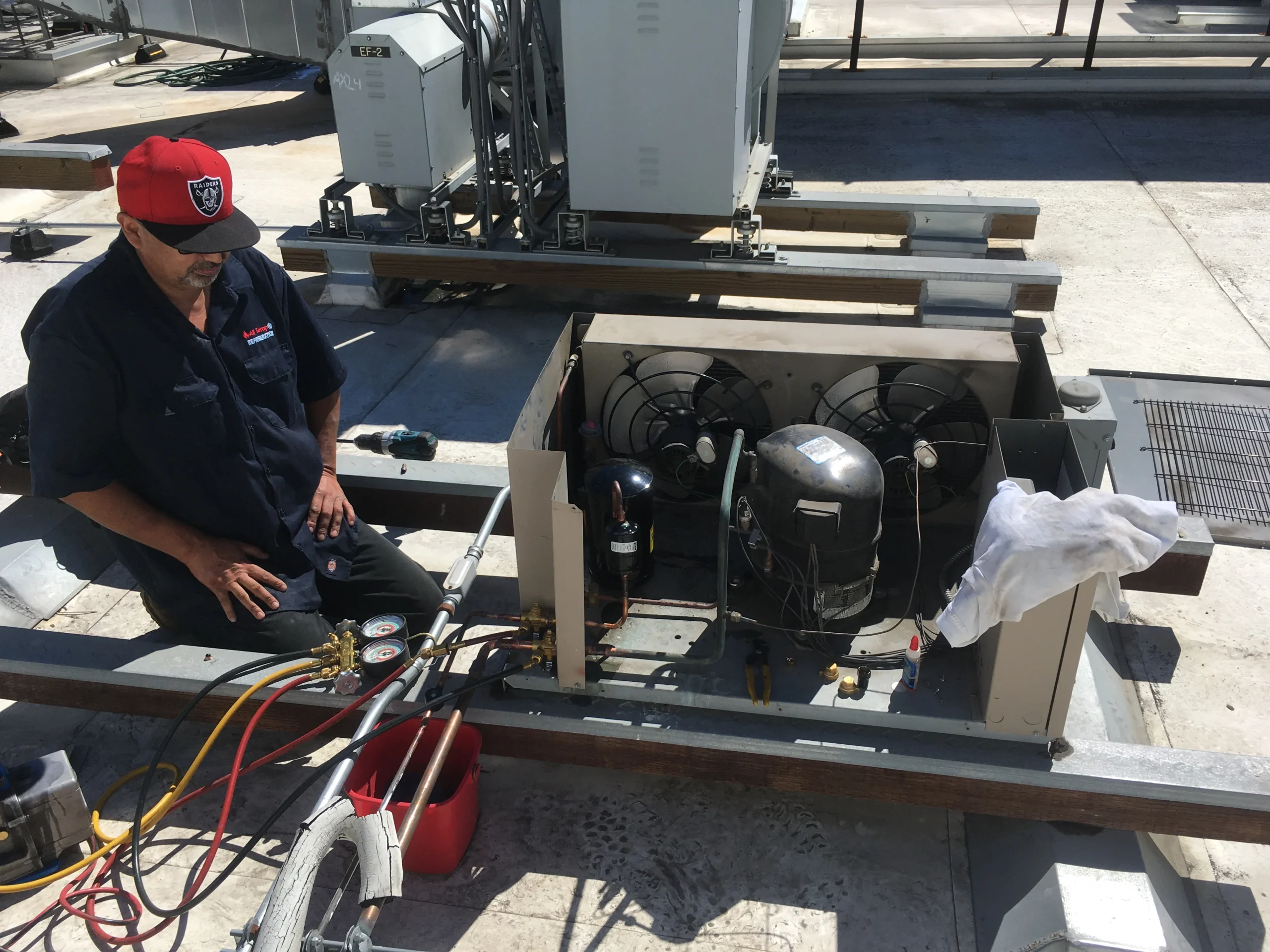
Commercial air conditioners rely on a precise volume of chemical refrigerant to absorb and release heat. The refrigerant loops through a closed system of copper coils. Over time, the vibrations of the heavy commercial equipment, combined with acidic corrosion from environmental factors, can cause microscopic pinhole leaks in these copper lines.
When an air conditioner loses refrigerant, its cooling capacity plummets. You might notice that the air blowing from the dining room vents feels lukewarm, or that the system runs all day but the temperature never drops. Low refrigerant also causes the evaporator coil to freeze and puts immense stress on the compressor. Recharging the system is not enough; a qualified technician must locate and permanently seal the leak. If you are experiencing sudden drops in cooling capacity, it is time to contact experts in commercial HVAC repair services to resolve the issue before the compressor fails entirely.
Pilot Light and Ignition Failures
During the colder months, a functioning heating system is vital for customer comfort. Many commercial rooftop units and heavy-duty furnaces rely on gas burners. A common issue in restaurant heating systems is a failing pilot light or electronic ignition module.
In a restaurant, the rooftop unit is exposed to the elements, and the internal components are exposed to the same greasy, dusty air drawn from the building. Dirt and debris can easily clog the pilot orifice or coat the flame sensor. When the flame sensor gets dirty, it cannot detect whether the burners are lit, and as a safety precaution, it will shut the entire gas valve down. This leaves your restaurant freezing cold. Attempting to clean delicate sensors or adjust gas valves without proper training is dangerous and should always be handled by a licensed professional.
Thermostat Malfunctions and Placement Issues
The thermostat acts as the brain of your HVAC system. If it receives inaccurate information, the system will heat or cool the building improperly. In restaurants, thermostat placement is a frequent and frustrating problem.
If a thermostat is installed too close to the kitchen doors, it will constantly register the extreme heat from the cooking area. As a result, it will command the air conditioning to blast continuously, turning the dining room into an icebox and driving away customers. Conversely, if placed near a drafty entrance, it may trigger the heat to run unnecessarily. Upgrading to a commercial-grade smart thermostat system with multiple remote temperature sensors allows you to monitor and balance the climate across different zones of your restaurant accurately.
Drainage System Blockages
Air conditioners remove a massive amount of humidity from the air as they cool it. This moisture condensates on the cold coils and drips into a drain pan, where it is supposed to flow safely through a condensate line and out of the building.
In a restaurant, these drain lines frequently become clogged with a mixture of dust, grease, and biological growth like algae. When the line clogs, the drain pan overflows. If your HVAC unit is located on the roof, this water can leak through the ceiling directly into your dining room or kitchen, causing severe water damage, destroying ceiling tiles, and creating slip-and-fall hazards. Routine clearing of the condensate drain lines is a critical maintenance task.
The Ripple Effect of Poor HVAC Performance
When a restaurant’s HVAC system struggles, the consequences extend far beyond a slight change in room temperature. The ripple effects impact every aspect of your business operations, from customer retention to health code compliance.
Negative Customer Experiences
The restaurant industry is fiercely competitive. Diners choose your establishment for the food, the service, and the atmosphere. If the atmosphere is physically uncomfortable, they will not return.
If your dining room is sweltering in July because the AC is failing, guests will rush through their meals and leave agitated. If the dining room smells like stale grease and smoke due to poor ventilation, customers will lose their appetites. Online reviews frequently mention extreme temperatures and bad odors. A malfunctioning HVAC system can actively destroy your brand’s reputation and drive your loyal customer base to your competitors.
Compromised Food Safety and Refrigeration Stress
Your HVAC system and your commercial refrigeration units are deeply interconnected. Walk-in coolers, reach-in freezers, and prep tables reject heat into the ambient air of the kitchen. If the kitchen HVAC fails and the ambient temperature skyrockets, your refrigeration equipment has to work exceptionally hard to maintain safe, FDA-compliant food storage temperatures.
This excessive strain can lead to premature failure of your coolers and freezers. If a walk-in cooler fails during a busy weekend, you risk losing thousands of dollars in spoiled inventory, not to mention the potential for foodborne illness. Maintaining proper ambient temperatures is essential for food safety. If you are struggling with failing coolers due to extreme kitchen heat, rely on professional commercial refrigeration services to ensure your inventory remains protected while you address the broader climate issues.
Exorbitant Energy Bills
Restaurants already consume massive amounts of electricity and natural gas. An inefficient, struggling HVAC system will cause your utility bills to absolutely skyrocket.
When coils are coated in grease, filters are choked with dust, and ductwork is leaking air, the system must run longer and consume more power to achieve the same level of cooling or heating. The gradual increase in operating costs silently eats away at your profit margins. Investing in proper care and immediate repairs is almost always less expensive than paying for the wasted energy of a neglected system over time.
Proactive Solutions for Restaurant HVAC Systems
Hope is not a strategy when it comes to commercial HVAC management. Restaurant owners must take a proactive, aggressive approach to system maintenance to prevent the common problems discussed above.
The Importance of Routine Commercial Maintenance
You cannot treat commercial HVAC equipment like a residential window unit. It requires frequent, specialized attention. Enrolling in a comprehensive preventive maintenance program is the single best investment a restaurant owner can make.
During a professional maintenance visit, a licensed technician will deeply clean the evaporator and condenser coils using commercial-grade degreasers. They will calibrate thermostats, check refrigerant levels, inspect electrical connections, and lubricate moving parts like blower motors. This level of thorough, preventative care stops minor issues from developing into catastrophic failures. To keep your system running efficiently and reliably, explore our dedicated commercial HVAC maintenance services tailored specifically for demanding restaurant environments.
Upgrading Your Filtration Strategy
Because standard fiberglass filters cannot handle restaurant air, you need to upgrade your filtration strategy. Ask your HVAC technician about installing high-efficiency pleated filters or even secondary electrostatic air cleaners. These heavy-duty filtration systems capture a much higher percentage of grease vapor, smoke, and flour dust before it reaches the delicate internal components of your HVAC unit.
Additionally, you must train your kitchen staff to properly clean the exhaust hood baffle filters every single night. If the hood filters are clogged with grease, the exhaust fan cannot pull the smoke out, and it all ends up in your HVAC return ducts.
Knowing When to Repair vs. Replace
Commercial HVAC units have a finite lifespan, typically ranging from 15 to 20 years depending on the workload and maintenance history. In a restaurant, that lifespan can be much shorter if the equipment is subjected to severe grease and heat without proper care.
Eventually, you will face a scenario where repairing an old, failing unit no longer makes financial sense. If you are constantly paying for emergency service calls, replacing expensive components like compressors, or dealing with frequent refrigerant leaks, it is time to consider replacement. Modern commercial systems are vastly more energy-efficient and offer superior climate control capabilities. When it is time to upgrade, trust experts in commercial HVAC installation services to properly size and install a system that perfectly matches the unique demands of your restaurant.
Keep Your Restaurant Comfortable and Profitable
Managing a restaurant is demanding enough without the added stress of a failing air conditioner or a freezing dining room. By understanding the unique climate challenges of your kitchen, the dangers of grease buildup, and the importance of proactive care, you can maintain a comfortable, safe, and highly efficient establishment.
Do not wait for a catastrophic failure on a Friday night to pay attention to your HVAC system. Take control of your building’s climate today. For more insights on facility management and equipment care, be sure to read the resources available on our blog.
If you are currently experiencing temperature inconsistencies, strange odors, or rising energy bills, prompt action is required. Please contact us to schedule a comprehensive evaluation of your restaurant’s HVAC and ventilation systems, and ensure your guests always enjoy their dining experience in perfect comfort.
Stay Comfortable Year-Round With Expert HVAC Service
Book a trusted technician to handle your heating or cooling issue—fast, professional, and done right the first time.
Book Service Now