For California residents and business owners, wildfire season brings a familiar and unsettling reality. The skies turn hazy, the air smells like a campfire, and health advisories warn against spending time outdoors. While most people know to stay inside and keep the windows shut, many overlook the massive burden this environmental crisis places on the very equipment keeping their indoor air safe: the HVAC system.
When heavy smoke blankets your neighborhood, your heating, ventilation, and air conditioning system works overtime. It acts as the primary barrier between your lungs and the hazardous particulate matter floating outside. However, this heavy lifting comes at a cost. Wildfire smoke can severely impact the performance, efficiency, and lifespan of your climate control equipment.
In this comprehensive guide, we will explore exactly how wildfire smoke affects your HVAC system. We will break down the science of particulate matter, explain what happens to your air filters and coils, and provide actionable steps to protect your indoor air quality. Whether you manage a large facility or just want to keep your family safe, understanding these dynamics is critical for protecting both your health and your investment.
The Growing Threat of Wildfire Smoke in California
California faces some of the most intense and prolonged wildfire seasons in the country. Driven by dry conditions, high winds, and dense vegetation, these fires produce massive plumes of smoke that can travel hundreds of miles. Even if a fire is burning hours away, the resulting smoke can settle over your city for days or weeks at a time.
To understand why this is so damaging to your property, you first need to understand what wildfire smoke actually contains.
Understanding Particulate Matter (PM2.5)
Wildfire smoke is not just harmless vapor. It is a complex mixture of gases and fine particles produced when wood and other organic materials burn. The most dangerous component of this smoke is microscopic particulate matter, specifically PM2.5.
These particles are 2.5 micrometers in diameter or smaller. To put that into perspective, a single strand of human hair is roughly 70 micrometers across, making PM2.5 about 30 times smaller. Because they are so tiny, these particles behave almost like a gas. They can easily bypass standard defense mechanisms in the human body, traveling deep into the lungs and even entering the bloodstream.
For your HVAC system, PM2.5 presents a unique challenge. Standard air filters are designed to catch large dust bunnies, pet dander, and lint. They are not engineered to trap microscopic smoke particles. As a result, PM2.5 can circulate freely through your ductwork, coating internal components and continuously degrading your indoor air quality.
How Smoke Infiltrates Your Property
You might assume that keeping doors and windows closed is enough to keep smoke out. Unfortunately, homes and commercial buildings are rarely airtight. Smoke infiltrates your indoor spaces through several pathways:
- Natural Ventilation: Tiny cracks around windows, doors, and foundations allow outdoor air to seep inside.
- Mechanical Ventilation: Many modern HVAC systems, especially in commercial buildings, actively pull in outdoor air to maintain fresh oxygen levels.
- Exhaust Systems: Bathroom fans, kitchen hoods, and dryer vents push indoor air out, creating negative pressure that actively sucks outdoor smoke inside through any available gaps.
Once inside, this smoke gets pulled into your HVAC system’s return vents, beginning a cycle of circulation that can wreak havoc on your equipment.
The Direct Impact of Smoke on Your HVAC Equipment
Your climate control system relies on precise airflow and clean components to operate efficiently. When you introduce heavy concentrations of ash, soot, and smoke into the equation, every part of the system suffers.
Clogged Air Filters and Reduced Airflow
The most immediate casualty of a wildfire smoke event is your air filter. As the system runs, it continuously pulls indoor air through the filter to catch debris before the air reaches the blower motor and coils.
During a fire, the concentration of airborne particles skyrockets. A filter that normally lasts three months can become completely compacted with thick, black soot in a matter of days. Once the filter is clogged, several major problems occur:
- Airflow Restriction: The blower motor struggles to pull air through the solid wall of soot, drastically reducing the amount of conditioned air coming out of your vents.
- Increased Energy Consumption: Because the system cannot move air effectively, it runs longer cycles to try and reach the target temperature on your thermostat. This wastes electricity and drives up your utility bills.
- System Overheating: Without adequate airflow to dissipate heat, the blower motor can overheat and trigger a safety shutdown.
Strain on Blower Motors and Components
The blower motor is the heart of your HVAC system’s air circulation. When a clogged filter restricts airflow, the motor works much harder to overcome the resistance. This continuous strain accelerates wear and tear on the motor’s bearings, belts, and electrical components.
Furthermore, if the filter fails or if the smoke particles are small enough to pass through, soot will accumulate directly on the fan blades. This buildup throws the blower wheel off balance, causing vibrations that can loosen mechanical connections and lead to premature motor failure.
Dirty Evaporator and Condenser Coils
Your air conditioner cools your property using two main components: the indoor evaporator coil and the outdoor condenser coil. Both rely on clean surfaces to transfer heat effectively. Wildfire smoke poses a significant threat to both.
The Evaporator Coil: Located inside your ductwork, this coil absorbs heat from the air. Because it operates at cold temperatures, it naturally generates condensation. When microscopic smoke particles bypass your filter, they stick to this wet, sticky coil. Over time, the soot forms an insulating blanket over the metal fins, preventing the refrigerant inside from absorbing heat. This leads to longer cooling cycles and can even cause the coil to freeze into a solid block of ice.
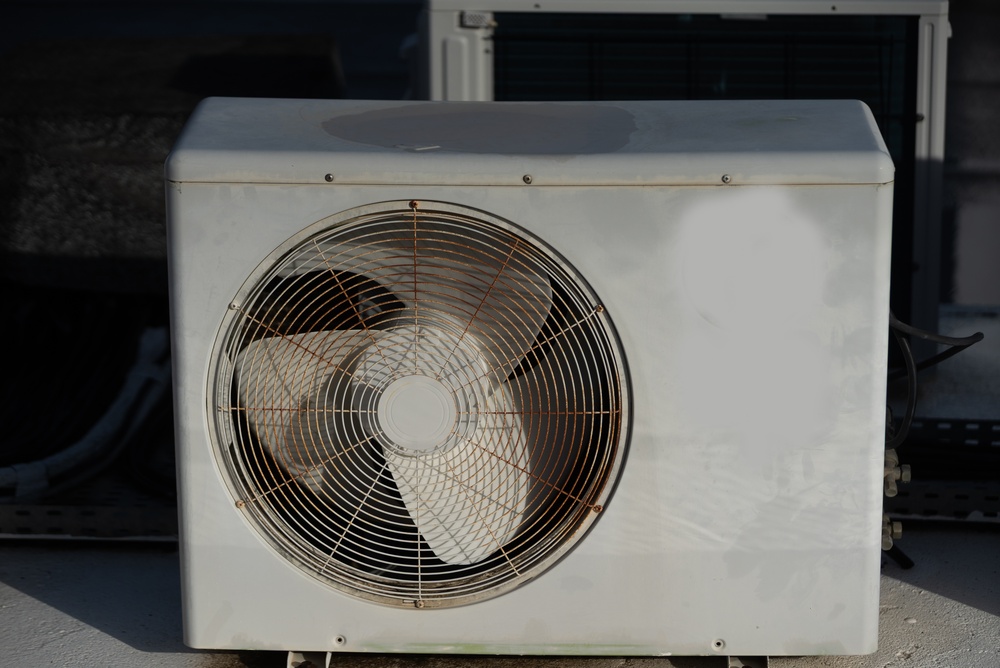
The Condenser Coil: The outdoor unit sits fully exposed to the elements. During a wildfire, falling ash and heavy smoke can coat the exterior condenser fins. If the outdoor unit cannot release heat into the surrounding air because of this ash buildup, the compressor has to work dangerously hard. This specific issue frequently results in expensive breakdowns.
Indoor Air Quality: The Silent Health Risk
While equipment damage is costly, the most severe consequence of wildfire smoke is its impact on human health. Your HVAC system plays the leading role in determining your indoor air quality (IAQ).
Health Implications of Poor IAQ
When smoke infiltrates your building and your HVAC system fails to filter it out, the indoor environment becomes a hazard. Short-term exposure to PM2.5 and smoke-related volatile organic compounds (VOCs) causes immediate discomfort. Symptoms include burning eyes, runny noses, scratching throats, and persistent coughing.
For vulnerable populations—such as children, the elderly, and those with pre-existing conditions like asthma or COPD—the risks are much higher. Poor IAQ during a smoke event can trigger severe respiratory distress, requiring immediate medical intervention. Ensuring your HVAC system is equipped to handle these pollutants is a matter of basic safety.
Why Standard Filters Aren’t Enough
Most homes come equipped with standard fiberglass filters, usually rated between MERV 1 and MERV 4. These are essentially “rock catchers” designed only to protect the blower motor from large debris. They do absolutely nothing to stop PM2.5.
To capture wildfire smoke, you need a filter with a much higher Minimum Efficiency Reporting Value (MERV). Filters rated MERV 11 to MERV 13 are highly effective at trapping fine particles, including smoke and smog. However, you cannot simply shove a MERV 13 filter into any HVAC system. These high-efficiency filters are dense and can severely restrict airflow if your blower motor is not designed to handle them.
Consulting with a professional ensures you strike the right balance between superior filtration and healthy system airflow.
Protecting Residential Systems During Wildfire Season
Homeowners have unique advantages when it comes to managing indoor air quality. Because residential spaces are smaller and generally allow for more manual control over ventilation, you can take highly targeted steps to protect your family and your equipment.
Upgrading Your Filtration Strategy
The first line of defense is upgrading your primary air filter. As mentioned, aim for the highest MERV rating your system can safely accommodate. During a severe smoke event, you should check this filter weekly. You will be shocked by how quickly it turns black.
In addition to the central system filter, consider investing in standalone High-Efficiency Particulate Air (HEPA) purifiers for heavily used rooms, like bedrooms and the living room. HEPA filters capture 99.97% of particles down to 0.3 microns, providing a localized safe haven for your family.
The Role of Residential HVAC Maintenance
The best time to prepare for wildfire season is before the smoke arrives. A system that is already struggling with a dirty motor or low refrigerant will fail entirely under the added stress of a smoke event.
Scheduling routine residential HVAC maintenance services ensures your equipment is running at peak capacity. A professional technician will thoroughly clean the blower wheel, clear the condensate drain line, and inspect the evaporator coil. They will also clean the outdoor condenser, removing dust and debris so it has maximum airflow when the summer heat and smoke hit simultaneously.
Setting the Thermostat Properly During Smoke Events
How you operate your thermostat dictates how much smoke moves through your home. Most thermostats have a fan setting with two options: “Auto” and “On.”
Normally, leaving the fan on “Auto” is recommended to save energy. However, during a wildfire, switching the fan to “On” can actually improve your indoor air quality. This forces the system to continuously circulate air through your upgraded MERV filter, constantly scrubbing the air of PM2.5 even when the cooling cycle is not running.
Caution: Only do this if you have a high-quality filter installed, your home is well-sealed, and your ductwork does not run through unconditioned, leaky spaces like a dusty attic or crawlspace.
Safeguarding Commercial HVAC Systems
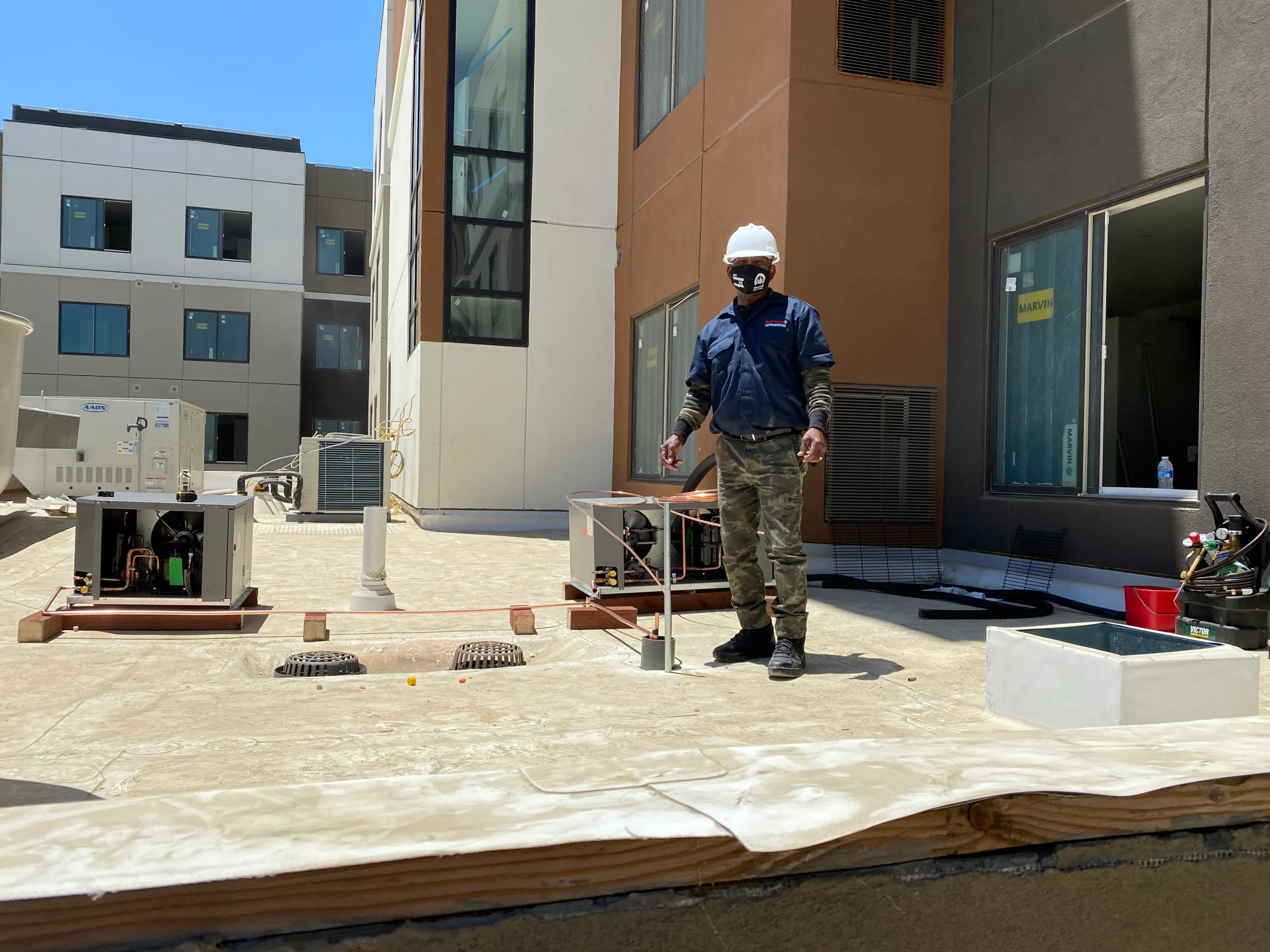
Commercial buildings face an entirely different set of challenges during a wildfire. Facilities like offices, retail spaces, restaurants, and warehouses rely on massive, complex rooftop units to manage air for hundreds of people simultaneously.
Challenges Unique to Commercial Buildings
Unlike a home, where you can easily close a window, commercial HVAC systems are legally required to provide specific amounts of fresh outside air to building occupants. This is managed through an economizer—a mechanical damper that opens to let outside air in.
When a wildfire strikes, an economizer operating normally will pull massive volumes of toxic smoke directly into the building’s supply air. To prevent this, facility managers must temporarily override these settings, closing the outdoor air dampers to a minimum safe position or shutting them entirely if local codes permit during hazardous air emergencies.
Furthermore, commercial buildings experience high foot traffic. Every time an automatic sliding door opens, a gust of smoke-filled air enters the lobby, forcing the HVAC system to work continuously to re-condition the environment.
Implementing Advanced Air Purification
Because commercial systems handle massive volumes of air, standard filtration upgrades are only the beginning. Many commercial property owners choose to integrate advanced air purification technologies directly into their centralized ductwork.
- UV-C Light Systems: While primarily used for neutralizing biological contaminants like mold and bacteria, they keep the evaporator coil impeccably clean, ensuring the system doesn’t lose efficiency when particulate matter is high.
- Bipolar Ionization: This technology releases charged ions into the airflow. These ions attach to microscopic smoke particles, causing them to clump together. Once the particles are larger, they are easily caught by standard commercial filters.
- Commercial HEPA Upgrades: High-end commercial air handlers can be retrofitted with heavy-duty HEPA filtration banks, drastically reducing the PM2.5 count inside the building.
When to Call for Commercial HVAC Repair
Given the extreme stress smoke places on heavy machinery, breakdowns are common. If your facility experiences a sudden drop in airflow, unusual smells coming from the vents, or a complete failure to cool the building, you need immediate intervention.
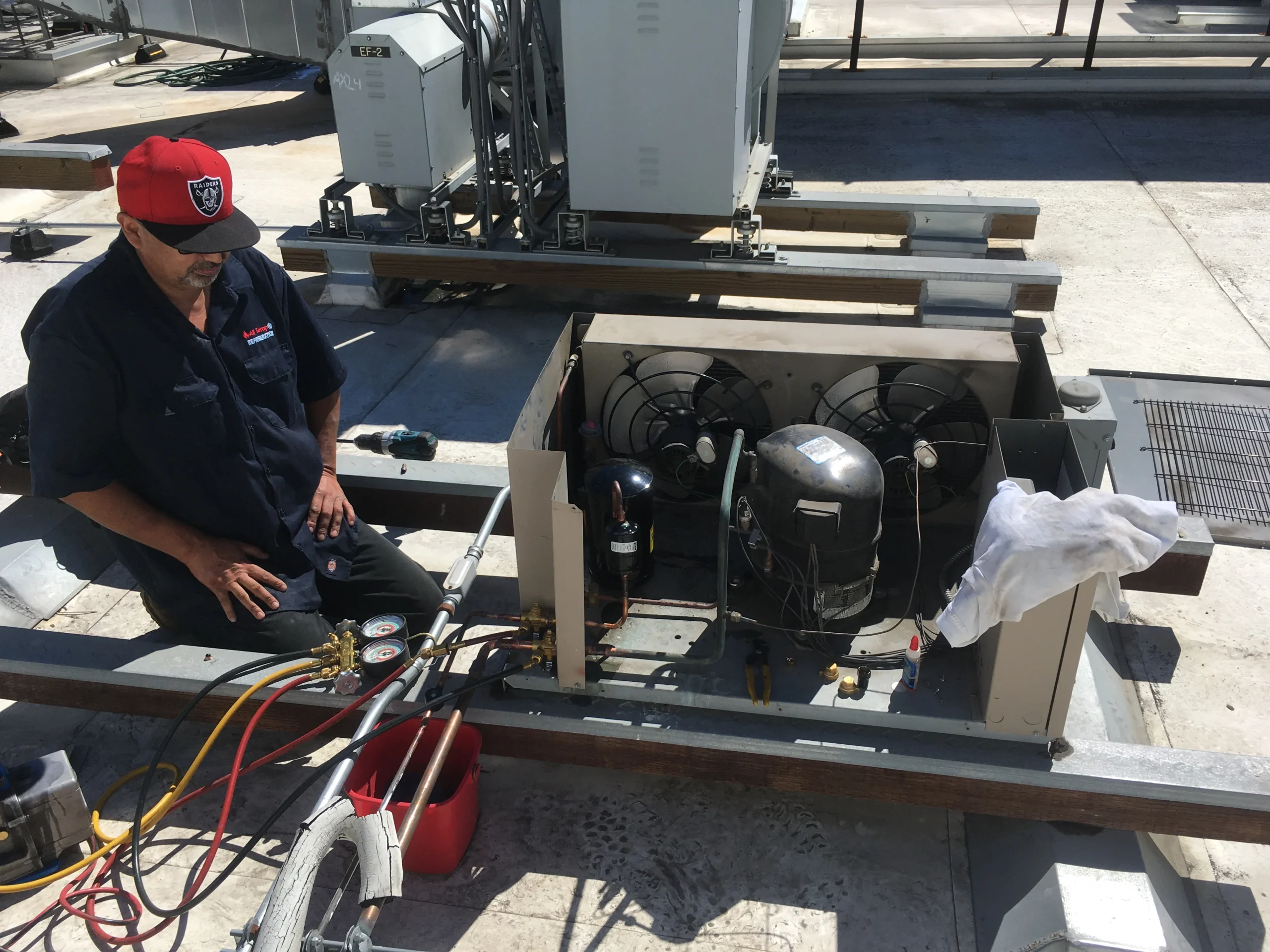
Ignoring these signs leads to catastrophic compressor failures and massive business disruptions. Engaging expert commercial HVAC repair services quickly minimizes downtime. A qualified technician can recalibrate the economizer, replace heavy-duty commercial filters, and deep-clean massive condenser coils covered in ash.
Actionable Steps Before, During, and After a Fire
Preparation and rapid response dictate how well your HVAC system survives a wildfire event. Follow these structured steps to minimize damage and maintain a safe indoor environment.
Pre-Season Preparation
Do not wait until you smell smoke to prepare. Spring is the ideal time to ready your property for California’s fire season.
- Stock Up on Filters: Purchase a multi-pack of high-MERV filters. When a fire breaks out, hardware stores sell out of premium filters immediately. Having a private stockpile ensures you are never caught empty-handed.
- Seal the Envelope: Inspect the weather stripping around your doors and windows. Re-caulk any gaps. The tighter your building envelope, the less smoke can infiltrate naturally.
- Schedule Professional Maintenance: Have your system inspected and cleaned thoroughly by the experts at 1800CoolAid. Starting the season with clean coils and an optimized motor is your best defense against failure.
What to Do When Smoke is Heavy
When the air quality index (AQI) spikes into the unhealthy or hazardous zones, shift into active defense mode.
- Close Everything: Ensure all windows and doors are firmly shut.
- Limit Exhaust Fans: Avoid running bathroom exhaust fans or kitchen range hoods for extended periods. These create negative pressure and suck smoke in from outside.
- Run the Fan: If you have a MERV 11 or higher filter installed, switch your thermostat fan from “Auto” to “On” to continuously filter the indoor air.
- Deploy Standalone Purifiers: Turn on any portable HEPA air purifiers you have, placing them in the rooms where you spend the most time.
- Monitor Your Filter: Check your central HVAC filter every few days. If it looks dark gray or black, swap it out immediately, regardless of how long it has been installed.
Post-Wildfire System Recovery
The danger does not end when the skies clear. The ash and soot left behind continue to pose a threat to your equipment and your lungs.
Once the outdoor air quality returns to safe levels, it is time for recovery. Open your windows to flush out any stale, contaminated indoor air. Replace your air filter one final time to ensure no residual trapped soot circulates back into the house.
Most importantly, inspect your outdoor unit. If a fine layer of ash coats the metal fins, use a garden hose on a very gentle setting to rinse the debris away. Never use a high-pressure nozzle, as this will bend the delicate aluminum fins and destroy the unit’s ability to transfer heat. If the ash is sticky or caked on, reach out through our contact page to schedule a professional chemical coil cleaning.
Partner with the Climate Control Experts
Navigating the challenges of wildfire season requires vigilance, preparation, and reliable equipment. Your HVAC system is your primary shield against the toxic effects of heavy smoke and particulate matter. By understanding how smoke compromises filters, strains blower motors, and suffocates condenser coils, you can take proactive steps to protect your property.
Whether you need to upgrade the filtration in your family home or recalibrate the ventilation systems in a sprawling commercial facility, you do not have to face fire season alone. Rely on professional guidance to keep your air clear, your equipment running efficiently, and your occupants breathing easy. Stay prepared, stay safe, and prioritize your indoor air quality year-round.
Stay Comfortable Year-Round With Expert HVAC Service
Book a trusted technician to handle your heating or cooling issue—fast, professional, and done right the first time.
Book Service Now