When your heating or cooling system stops working, time suddenly feels personal. Every hour without heat or AC feels longer than the last, and the first thing most homeowners want to know is how quickly normal life can resume.
The honest answer is that HVAC repairs don’t all move at the same pace. Some problems really are quick fixes. Others take longer because doing them right requires careful testing, the correct parts, and sometimes patience. Speed matters, but accuracy matters more. A rushed repair that misses the real issue usually means another breakdown not far down the road.
At Cool Aid A/C & Refrigeration, we focus on setting realistic expectations from the start. That means explaining what needs to be checked, why some repairs take longer than others, and what can slow things down even when the technician is working efficiently. When you understand the process, the wait makes more sense, and you know the repair is being done for the right reasons.
Why HVAC Repair Time Varies More Than Most People Realize
Two homes can have the exact same symptom—for example, an AC that’s blowing warm air—but the repair times can be wildly different. One might be a 45-minute fix, while the other takes two days. The variation comes from the complexity of the system, the nature of the failure, and the accessibility of parts. A simple electrical failure is a world away from a major mechanical breakdown, and the timeline reflects that.
The First Step That Determines Everything: Proper Diagnosis
The single most important factor in determining repair time is the initial diagnosis. This is where a skilled technician separates themselves from a parts-swapper.
Why a 10-minute “guess” leads to repeat repairs
A technician who arrives, spends ten minutes looking at the unit, and says, “It’s probably the capacitor,” is guessing. They might be right, but they might be wrong. If they swap the part and the system still doesn’t work, the clock resets, and you’re back to square one. This is how a “quick fix” turns into a full day of frustration and multiple trips to the supply house.
What technicians check before quoting repair timelines
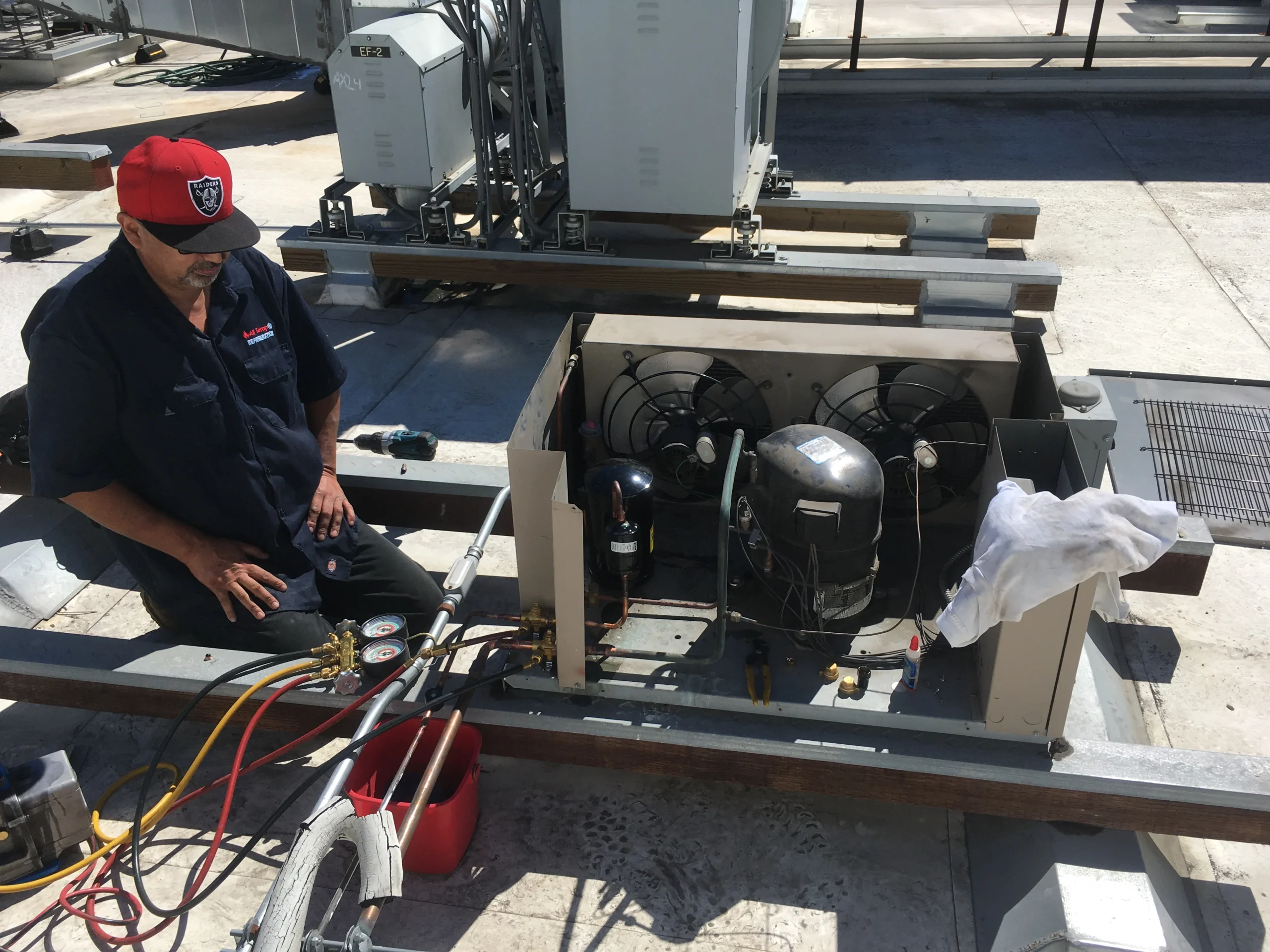
A professional diagnosis is a methodical process. A technician will talk to you about the problem, then use tools to measure airflow (static pressure), check electrical readings (voltage, amperage, capacitance), and read refrigerant pressures. They are collecting data to build a complete picture of the system’s health. Only after they have pinpointed the exact cause of failure can they give you an accurate estimate of the repair time and cost.
Common HVAC Repairs and How Long They Usually Take
While every job is different, many common failures fall into predictable timeframes, assuming the technician has the part on their truck.
Capacitors, contactors, and small electrical repairs
These are some of the most frequent and fastest repairs. A failed capacitor (which helps motors start) or a burnt contactor (which is an electrical switch) can often be diagnosed and replaced in under an hour. The parts are common, and an experienced technician can swap them out efficiently.
Thermostat and control-related repairs
If the problem is a faulty thermostat, the repair is typically quick. Replacing a thermostat, re-configuring its settings, or fixing a loose wire can often be done in 30 to 60 minutes.
Blower motor, fan motor, and airflow repairs
Replacing a blower motor (inside) or a condenser fan motor (outside) is a more involved job. These repairs can take anywhere from 1.5 to 3 hours, depending on the accessibility of the motor. The technician has to disassemble part of the unit to get the old motor out and put the new one in.
Refrigerant leak detection vs recharge time
This is a two-part problem. Simply adding refrigerant (a “recharge”) might only take 45-90 minutes, but it doesn’t solve the underlying leak. A proper leak search can be time-consuming, sometimes taking 1 to 3 hours or more to pinpoint the exact location of a tiny hole. Once found, repairing the leak can add another hour or more to the job.
Repairs That Take Longer—and Why That’s Normal
Some problems are inherently complex and simply cannot be rushed. Pushing for speed on these jobs almost guarantees a poor outcome.
Compressor and major component replacements
The compressor is the heart of your air conditioner or heat pump. Replacing one is major surgery for your system. It requires recovering all the old refrigerant, cutting out the old compressor, brazing (welding) the new one into place, and then recharging the system with a precise amount of new refrigerant. This is an all-day job, often taking 4 to 8 hours.
Control board failures and system communication issues
Modern HVAC systems are run by complex circuit boards. When a board fails, the repair involves more than just swapping it out. The new board often needs to be configured for your specific system. Diagnosing a communication error between an indoor and outdoor unit can also take significant time, as the technician has to check wiring and settings at multiple points. These jobs can easily take 2 to 4 hours.
Heat pump and inverter system diagnostics
Heat pumps and high-efficiency inverter systems are far more complex than older equipment. They have more sensors and more sophisticated electronics. Diagnosing a problem on an inverter-driven mini-split, for example, requires specialized tools and a deep understanding of the system’s logic. This diagnostic phase can take longer than for a standard system, even if the final repair is simple.
How Parts Availability Impacts HVAC Service Duration
Even the best technician can’t finish a job if they don’t have the part. This is often the biggest variable in HVAC repair time.
Stock parts vs manufacturer-ordered components
Every service truck is stocked with hundreds of “universal” parts—capacitors, contactors, and motors that fit many common brands. If your system needs one of these, the repair can usually be done on the first visit. However, if you need a specific circuit board or a compressor for a less-common brand, that part will likely need to be ordered.
Why some repairs can’t be finished the same day
Manufacturer-specific parts are not kept at every local supply house. Sometimes, a part has to be shipped from a regional warehouse or even from the factory. This can turn a one-hour repair into a two-day process. A good company will be upfront about this, ordering the part immediately and scheduling a return visit as soon as it arrives.
Older Systems vs Newer Systems: Time Expectations Change
The age and technology of your equipment play a huge role in how long a repair will take.
Why aging equipment slows down repair timelines
Working on a 20-year-old furnace can be a slow process. Bolts are rusted, panels are stuck, and parts may be obsolete. A technician has to work more carefully to avoid breaking brittle plastic pieces or stripping a rusted screw. Simply accessing the failed component can take twice as long as on a newer unit.
Modern HVAC systems that diagnose faster—but repair slower
Many new systems have self-diagnostic capabilities that can give a technician an error code, pointing them directly to the problem. This can speed up the diagnosis. However, the components themselves, like inverter boards and variable-speed motors, are often more complex and time-consuming to replace than their older, simpler counterparts.
Emergency HVAC Repairs vs Scheduled Service Calls
A call at 2 PM on a Tuesday is handled differently than a call at 10 PM on a Saturday.
What can realistically be fixed after hours
During an emergency after-hours call, the technician’s primary goal is safety and, if possible, temporary restoration of service. They will have common parts on their truck and can fix many standard failures. However, supply houses are closed. If you need a specific motor or control board, it will have to wait until the next business day.
When stabilization comes before full repair
In some emergency situations, the best a technician can do is stabilize the system. For example, they might bypass a faulty component to get you temporary heat or cooling, or they might simply shut the system down safely to prevent further damage. They will then schedule a follow-up visit during normal hours to complete the permanent repair.
What Homeowners Can Do to Avoid Unnecessary Delays
You can play an active role in making the repair process go as smoothly and quickly as possible.
Access, pets, filters, and system history
Ensure there is a clear path to your indoor and outdoor units. If the furnace is in a cluttered garage or the AC is surrounded by thorny bushes, it will take the technician longer to even get started. Secure any pets before the technician arrives. And if you have any information about the system’s history—when it was last serviced, or if it has had this problem before—share it. These details are valuable clues.
Why clear communication shortens HVAC repair time
Be as descriptive as you can when you first call for service. Was there a strange noise? A weird smell? Did it happen after a power outage? The more information the dispatcher has, the better they can prepare the technician for what they might find, potentially ensuring they bring the right parts on the first trip.
Red Flags That Signal a Repair Is Taking Too Long
Sometimes a repair does take a long time for legitimate reasons. But other times, it’s a sign of an inexperienced technician.
Part swapping without answers
If a technician has been at your home for hours and has replaced multiple parts without solving the problem, it’s a sign they are guessing. A professional should be able to explain their diagnostic process and why they believe a certain part has failed before replacing it.
Vague timelines and changing explanations
A good technician can explain what they are doing and why. If the person at your home is giving you vague answers or if their story keeps changing, it’s a major red flag. They should be able to communicate a clear plan, even if that plan involves ordering a part and returning later.
How Professional HVAC Companies Set Accurate Time Expectations
A trustworthy company focuses on transparency and accuracy over making unrealistic promises.
Flat-rate diagnostics vs open-ended troubleshooting
Many reputable companies charge a flat rate for the initial diagnosis. This allows the technician to take the time needed to thoroughly troubleshoot the system without you having to worry about a runaway hourly bill. This leads to more accurate findings and, ultimately, a faster resolution.
Why transparency matters more than speed
We would rather tell you that a repair will take two days because we need to order a specific part than promise a quick fix that we know won’t last. Transparency builds trust. An honest timeline, even if it’s not what you want to hear, is always better than a false promise.
When a “Long Repair” Is Smarter Than a Fast One
In the world of HVAC, the fastest fix is rarely the best fix.
Preventing repeat HVAC repairs
Taking an extra hour to properly clean a dirty coil, test the airflow, and double-check the electrical connections after replacing a compressor is what prevents you from having to call for another repair in six months. A thorough job takes time, but it’s time well spent.
Choosing durability over temporary fixes
It might be faster to patch a refrigerant leak with epoxy than to replace the entire leaky coil. But that patch is a temporary solution at best. A durable, long-term repair often takes more time and costs more upfront, but it saves you money and headaches down the road.
What to Expect From a Well-Run HVAC Repair Visit
A professional service call should follow a predictable, organized process. It should begin with a conversation, followed by a thorough diagnosis. You should then be presented with a clear explanation of the problem and an upfront price for the repair. After you approve the work, the technician should complete the repair professionally, clean up the area, and test the system to ensure it is working correctly before they leave.
Getting Reliable HVAC Repairs Without Guesswork or Delays
Understanding how long an HVAC repair takes starts with understanding the process. While some fixes are genuinely quick, many require methodical diagnosis and careful work. The goal shouldn’t be speed at all costs, but rather an accurate diagnosis and a durable repair performed in a reasonable amount of time.
At Cool Aid A/C & Refrigeration, we focus on getting it right the first time. Our technicians are trained to be thorough troubleshooters who communicate clearly and work efficiently. If your system needs attention, give us a call. We’ll give you straight answers and a realistic timeline to get your home comfortable again.
Stay Comfortable Year-Round With Expert HVAC Service
Book a trusted technician to handle your heating or cooling issue—fast, professional, and done right the first time.
Book Service Now