We all do it. You hear a rattle in the furnace or notice the AC isn’t cooling the upstairs bedroom quite as quickly as it used to. But life is busy, the system is still technically running, and the thought of scheduling a service call feels like one more thing to add to an already full plate. So, you decide to wait. It’ll probably be fine for another season, right?
The reality is that HVAC systems rarely fix themselves. What starts as a minor quirk—a little noise, a slight drop in airflow—is almost always the beginning of a mechanical chain reaction. By the time the system actually stops working, the damage is often far more extensive and expensive than the original issue.
Understanding why delays matter isn’t about scaring you into a service call; it’s about understanding the mechanics of your home comfort system. When you know what happens inside that metal box when you ignore a problem, you can make smarter decisions that save you money and keep your home comfortable when it matters most.
When “It’s Still Working” Becomes an Expensive Assumption
There is a big difference between a system that is running and a system that is working correctly. Most modern HVAC units are built to be resilient. They will often continue to operate even when a component is failing, compensating for the weakness by working harder. This resilience is great for keeping you comfortable in the short term, but it can be deceptive.
This “limp along” mode is where many homeowners get stuck. Because heat is still coming out of the vents or the house is still reasonably cool, the assumption is that the repair can wait until a more convenient time. But convenient times for HVAC failure don’t exist. Breakdowns almost always happen during peak usage—the hottest week of a San Jose summer or a freezing December night—precisely because that is when the system is under the most stress.
Waiting until the system completely quits transforms a scheduled, manageable repair into an emergency situation. Instead of a standard service call during business hours, you may find yourself paying emergency rates or waiting days for parts that could have been ordered weeks ago. The “it’s still working” mindset assumes that the status quo will hold, but in the world of mechanics, friction and wear never sleep.
What Actually Happens Inside an HVAC System When Repairs Are Put Off
To understand the risk of delay, it helps to look under the hood. Your HVAC system is a complex loop of pressure, temperature, and airflow. Every component relies on the others to function within specific parameters.
When one part starts to fail, it throws the entire balance off. Let’s say your blower motor is struggling because of worn bearings. It can’t push air as efficiently, so the airflow across your evaporator coil drops. Without enough air moving over it, the coil gets too cold and may eventually freeze over. Now, your compressor—the heart of the system—has to work overtime to pump refrigerant through a system that isn’t absorbing heat properly.
This is mechanical stress. It’s not just that one part is broken; it’s that the broken part is forcing every other component to operate outside of its design limits. Heat builds up where it shouldn’t. Pressures rise to dangerous levels. Lubricants break down faster. When you delay a repair, you aren’t just ignoring the broken part; you are subjecting the healthy parts of your system to punishing conditions that accelerate wear and tear across the board.
Small HVAC Problems Rarely Stay Small
In our line of work, we rarely see a “single” problem in systems where repairs have been deferred. What usually happens is a cascading failure. This is where a $200 part fails and takes a $2,000 part down with it.
How minor issues turn into system-wide HVAC damage
Consider a simple contactor—a small electrical relay that controls the flow of electricity to your compressor. Over time, the surface of the contactor can become pitted and worn. It’s a cheap, easy fix. But if you ignore the buzzing sound it makes or the occasional hard start, that contactor can eventually weld itself shut or fail to make a clean connection.
If it welds shut, your compressor might run continuously, even when the thermostat says stop, leading to burnout. If the connection is poor, the voltage to the compressor fluctuates, causing overheating and electrical arcing. Suddenly, instead of replacing a small relay, you are looking at replacing the entire compressor or the outdoor unit.
Another common example is a refrigerant leak. A small leak might just mean the system runs a little longer to cool the house. But as the refrigerant level drops, the compressor loses its primary way of cooling itself (the returning refrigerant cools the motor). An overheated compressor is a dead compressor. By addressing the leak early, you save the most expensive component in your system.
Why Delaying HVAC Repairs Drives Up Repair Costs
There is a direct correlation between how long a problem is ignored and the final bill. This isn’t because contractors want to charge more; it’s because the scope of work physically changes over time.
The difference between early repair costs and emergency HVAC bills
Early intervention is surgical. A technician identifies a specific worn belt, a dirty sensor, or a weak capacitor. They replace that specific part, check the system, and leave. The labor is minimal, and the parts are generally standard.
Deferred maintenance is reconstructive. By the time a neglected system fails, we often have to replace the original failed part, plus the secondary parts it damaged. We may also have to flush lines, recharge refrigerant that leaked out, or repair electrical wiring that melted due to overheating.
Then there is the cost of urgency. If you address a weird noise in April, you have options. If you wait until the unit seizes up on July 4th, you are competing with every other homeowner in the Bay Area who ignored their system. Supply and demand apply to service availability too. Emergency repairs often come with after-hours fees, and if expedited shipping is needed for a specific part, that cost gets passed on to you. Planning ahead keeps money in your pocket.
Energy Bills Are Often the First Warning Sign Homeowners Miss
Before your system makes a loud noise or stops working, it will often hit your bank account. We talk to homeowners who are shocked by a high PG&E bill but haven’t connected it to their HVAC performance. They assume rates went up or they just used more power, but often, the equipment is to blame.
How inefficient operation quietly increases monthly costs
Efficiency is all about heat transfer. When your system is working well, it moves heat in or out of your home with minimal effort. When a repair is needed, that efficiency plummets.
If your condenser coils are dirty or your fan motor is dragging, the system has to consume significantly more electricity to do the same amount of work. It’s like driving a car with the parking brake on; you can still get up to highway speeds, but you’re burning twice the gas to do it.
A system that is short-cycling (turning on and off rapidly) due to a thermostat issue or airflow restriction draws a huge surge of power every time it starts up. Those startups are the most energy-intensive part of the cycle. If your unit starts 10 times an hour instead of two, your electric meter is spinning much faster than it should. Fixing the underlying issue restores efficiency, and often, the savings on your utility bill over a few months can offset a significant portion of the repair cost.
Delayed HVAC Repairs Can Shorten the Life of the Entire System
An HVAC system is an investment, similar to a car. You expect it to last 15 to 20 years. But just like a car that never gets an oil change, an HVAC system that runs with unresolved issues will hit the scrap yard years earlier than it should.
We see systems that are only 8 or 9 years old that are complete write-offs. The culprit is almost always chronic neglect. If a furnace constantly overheats because of airflow restrictions that were never fixed, the heat exchanger—a thick metal component—will eventually crack from the stress of expanding and contracting beyond its limits. Once the heat exchanger is cracked, the furnace is usually done.
Conversely, we see 25-year-old systems in Santa Clara and Fremont that are still humming along because the owners fixed small things immediately. They replaced the capacitor when it tested weak, not when it blew up. They cleared the drain line before it flooded the unit. Delaying repairs steals years from your system’s life, forcing you to budget for a replacement thousands of dollars sooner than you planned.
Comfort Issues Are Usually a Symptom, Not the Main Problem
It starts subtly. The master bedroom is always a few degrees hotter than the hallway. The airflow from the kitchen vent feels weak. You might buy a fan or close the blinds, treating the symptom rather than the cause. But in HVAC, comfort issues are rarely just “the way the house is.” They are data points.
Why uneven temperatures and weak airflow point to deeper HVAC damage
Uneven cooling or heating often points to airflow problems. This could be a failing blower motor that can no longer push air to the far reaches of your ductwork. It could be a damper that has broken and is blocking a main trunk line.
If you ignore these signs, you aren’t just living with a hot room; you are allowing the pressure inside your ductwork to become unbalanced. This can lead to increased duct leakage (blowing expensive air into your attic) or cause the blower motor to overheat and fail. Weak airflow is particularly dangerous for air conditioners because it leads to frozen coils. A frozen coil blocks air completely, and as the ice expands, it can crush the delicate aluminum fins of the coil, ruining it. Treating comfort complaints as repair requests rather than annoyances protects the mechanics of the system.
When Delaying Repairs Becomes a Safety Concern
We keep the tone calm here because panic doesn’t help anyone, but safety is the one area where compromise isn’t an option. HVAC systems involve high-voltage electricity, natural gas, and combustion gases. When they work right, they are incredibly safe. When repairs are ignored, risks increase.
Gas furnaces, for example, rely on precise combustion. If the burners are dirty or the flue is partially blocked, the system may not vent carbon monoxide correctly. Modern systems have sensors to shut down if this happens, but if those sensors are the parts that are failing or being ignored, the safety net is gone.
Electrical issues are another concern. A buzzing wire or a burning smell indicates a loose connection or arcing. Ignoring this can lead to melted wires or, in rare cases, electrical fires within the unit. Water damage is also a real risk; a clogged condensate drain that is ignored can overflow, causing thousands of dollars in water damage to ceilings and floors. Addressing these issues immediately protects your home and your family.
Repair vs. Replacement Decisions Get Harder the Longer You Wait
One of the hardest conversations we have is with a homeowner who faces a $3,000 repair bill on a 12-year-old system. They ask, “Is it worth fixing?”
Why timing matters when evaluating HVAC repair options
If they had called when the noise first started six months ago, the repair might have been $300. At $300, fixing a 12-year-old system is a no-brainer. You do it and get a few more years out of the unit.
But at $3,000, the math changes. You are now putting significant money into an aging asset. You’re caught in a trap: spend a lot of money to patch an old system, or spend even more money unexpectedly to replace it entirely.
Addressing problems early keeps the repair costs low enough that the decision is easy. It allows you to maintain the system economically until you are ready to replace it on your own terms, rather than being forced into a replacement because the repair bill exceeds the value of the unit.
How Professional HVAC Diagnostics Change the Cost Equation
Many homeowners hesitate to call for service because they worry about the cost of the visit itself. They worry that a technician will find problems that aren’t there. We understand that hesitation. Trust is earned, not given.
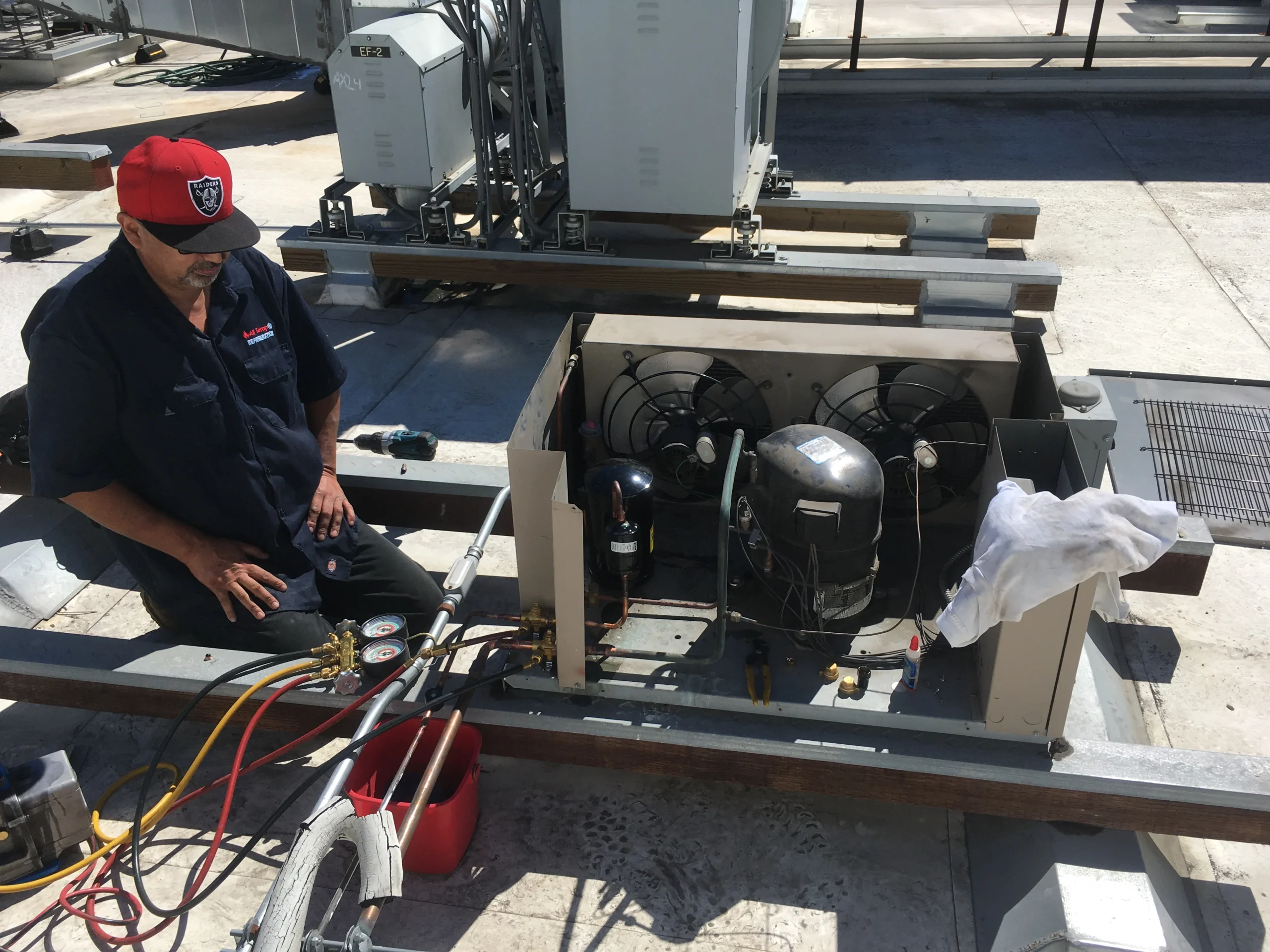
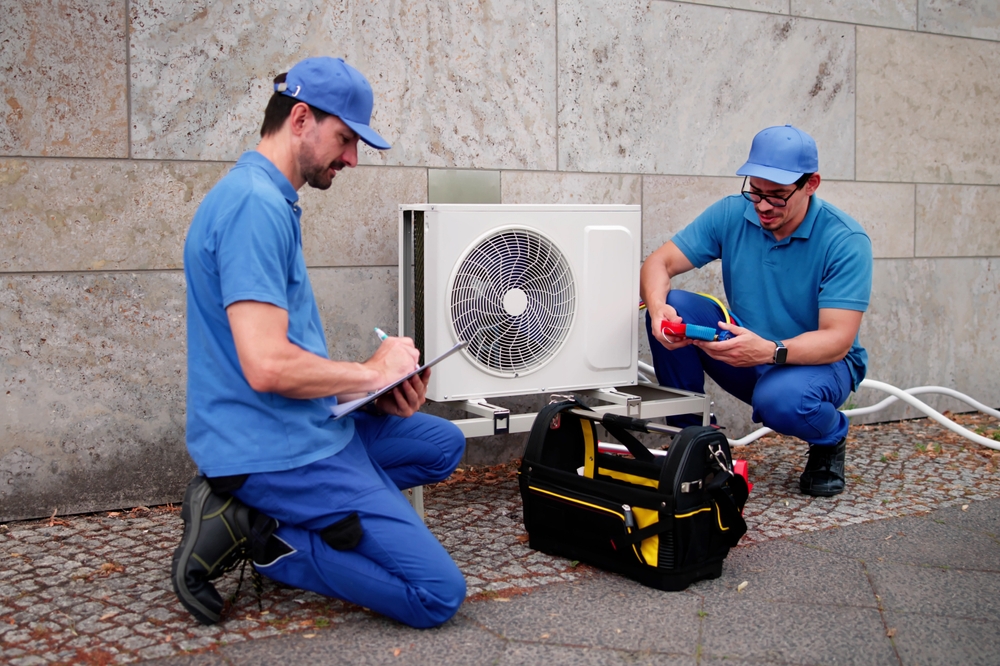
However, a professional diagnostic is actually a tool for cost control. When a trained technician looks at your system, they aren’t guessing. They are using gauges to measure pressures, meters to check amp draws, and thermal tools to spot hotspots.
This data allows for targeted repairs. Instead of replacing parts until the problem goes away, we identify the root cause. A diagnostic visit gives you clarity. You get a clear picture: “This part is failing. Here is what happens if we fix it now, and here is what happens if we wait.” It puts the control back in your hands, moving you from a reactive state (waiting for a breakdown) to a proactive state (managing your home).
If You’re Unsure Whether a Repair Can Wait
If your system is making a noise, smelling odd, or just not keeping up like it used to, you don’t have to commit to a major repair just to get answers. The most expensive choice is usually silence—ignoring the issue until it demands attention.
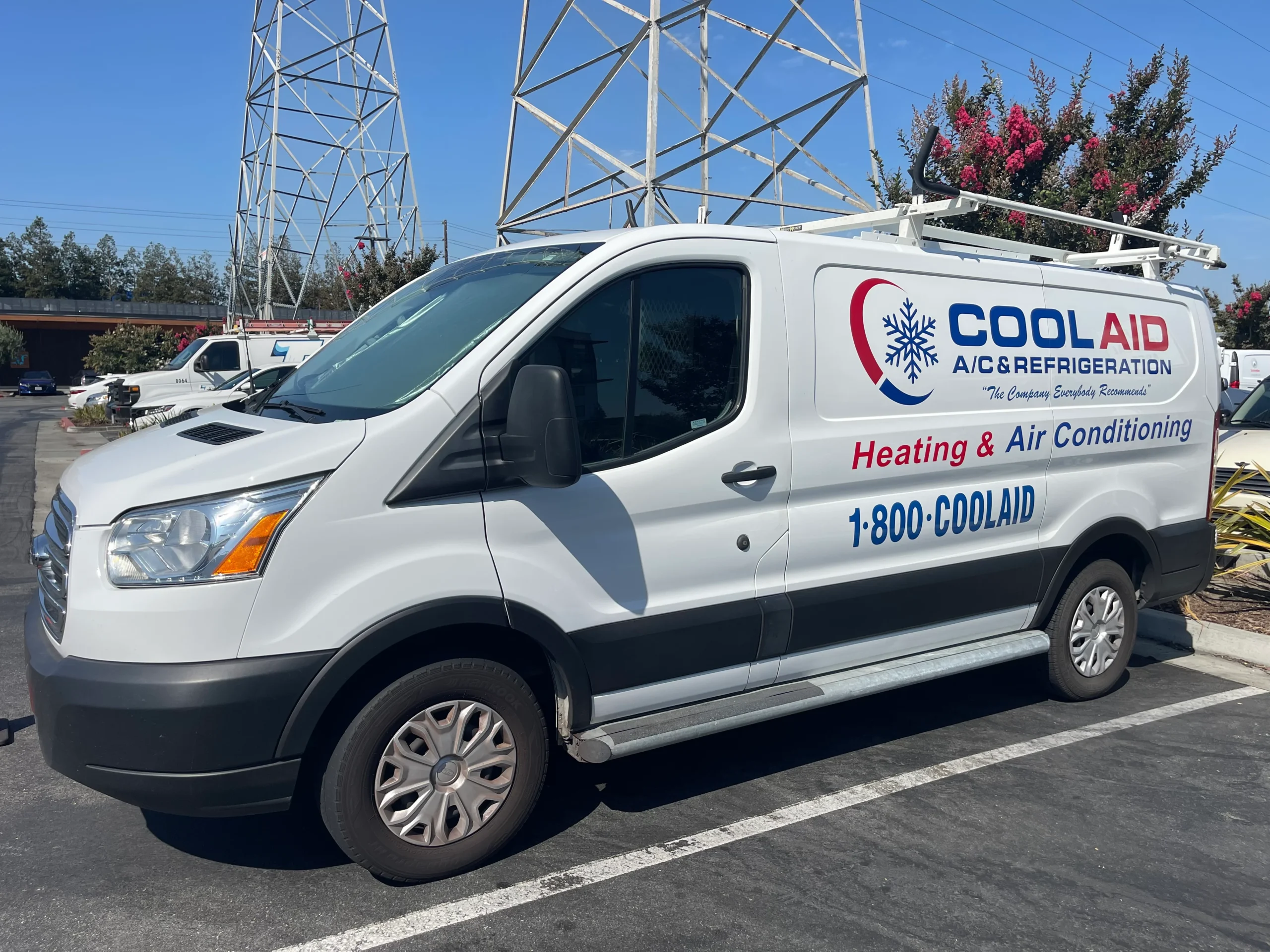
Our team at 1800CoolAid isn’t here to pressure you. We are here to tell you exactly what is going on with your heating or cooling system so you can make a smart decision for your home and budget. Whether it’s a simple tune-up or a specific part replacement, getting eyes on the problem early is the best way to ensure your comfort isn’t interrupted.
Let’s figure out what your system needs. Give us a call, and we’ll help you get back to worry-free comfort.
Stay Comfortable Year-Round With Expert HVAC Service
Book a trusted technician to handle your heating or cooling issue—fast, professional, and done right the first time.
Book Service Now