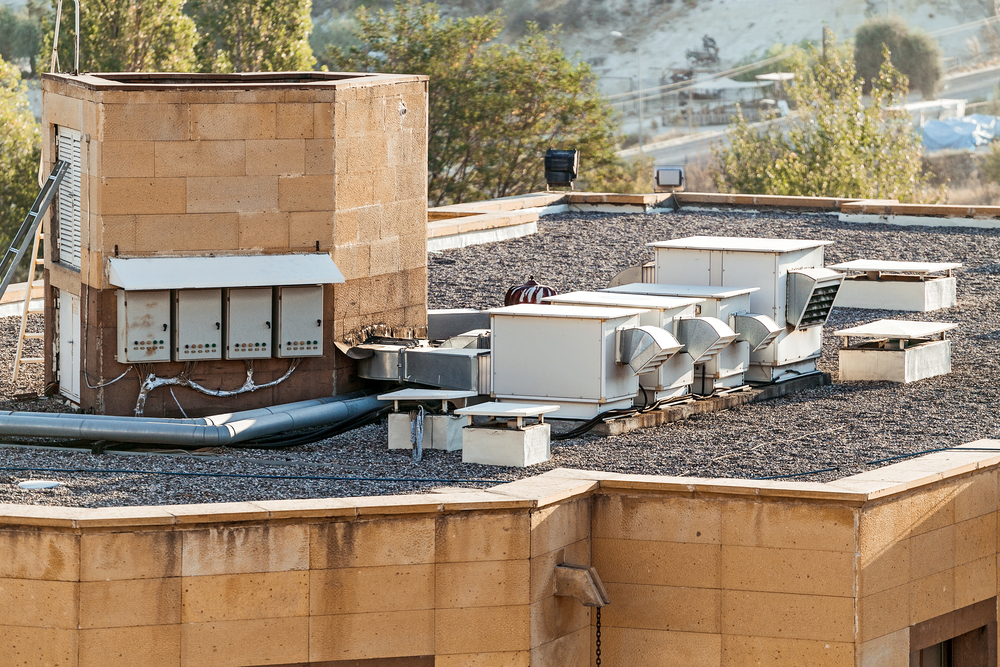
In the competitive landscape of commercial business, every operational cost counts. For many facility managers and business owners in the San Francisco Bay Area, the utility bill is a significant line item, with Heating, Ventilation, and Air Conditioning (HVAC) often accounting for 40% or more of total building energy consumption. Specifically, commercial rooftop units (RTUs) are the workhorses of climate control for retail spaces, offices, and industrial buildings. While they are convenient and space-saving, they can also become massive energy drains if not managed correctly.
Improving the efficiency of your rooftop HVAC system isn’t just about being “green”—it’s about protecting your bottom line. An inefficient unit works harder, breaks down faster, and costs significantly more to run. Whether you are managing a tech startup in Santa Clara or a retail space in San Jose, optimizing your RTU is one of the smartest investments you can make.
This comprehensive guide covers actionable energy efficiency tips for commercial rooftop HVAC units. From simple maintenance routines to advanced technological upgrades, we will explore how you can reduce energy waste, lower costs, and extend the lifespan of your critical equipment.
The Hidden Cost of Inefficiency
Before diving into the solutions, it is crucial to understand the problem. Commercial rooftop units are exposed to the elements 24/7. They endure the scorching summer heat and the winter chill, all while battling dust, debris, and wear and tear. Over time, components degrade. Belts slip, coils get dirty, and sensors drift out of calibration.
When an RTU loses efficiency, it doesn’t necessarily stop working. Instead, it runs longer cycles to achieve the same temperature setpoints. This “energy creep” is often invisible until you analyze year-over-year utility bills. A unit operating at 10% lower efficiency due to neglected maintenance is directly siphoning profits from your business.
By implementing the following strategies, you can reverse this trend and transform your HVAC system from a liability into an asset.
1. Implement a Proactive Maintenance Schedule
The absolute foundation of energy efficiency is regular, professional maintenance. You cannot expect a machine to run at peak performance if it is dirty or mechanically compromised. Many businesses treat HVAC maintenance as a reactive task—calling a technician only when the system fails. This “run-to-failure” approach is the enemy of efficiency.
Coil Cleaning is Non-Negotiable
The condenser and evaporator coils are where heat transfer happens. If these coils are coated in a layer of grime, dust, or pollen, the system cannot release or absorb heat effectively. This forces the compressor to work harder and run longer.
Dirty coils can increase compressor energy consumption by up to 30%. In the Bay Area, where pollen and urban dust are common, scheduling seasonal coil cleaning is essential.
Filter Changes
It sounds simple, but clogged air filters are a primary cause of energy waste. When a filter is blocked, the blower motor must work overtime to push air through the system. This not only spikes energy usage but can also lead to overheating and premature component failure. Establish a strict schedule for checking and replacing filters, or upgrading to higher-efficiency filters that offer better airflow and filtration.
For businesses looking to establish a reliable routine, our Commercial HVAC Maintenance Services are designed to keep your systems running clean and lean year-round.
2. Optimize Thermostat and Control Settings
Modern commercial buildings often suffer from “thermostat wars” or outdated programming that doesn’t align with actual building usage. Optimizing your controls is a low-cost, high-reward strategy for cutting energy waste.
Programmable and Smart Thermostats
If your building still relies on manual thermostats, you are leaving money on the table. Programmable thermostats allow you to set schedules that align with your operating hours. There is no need to cool an office to 72°F at 3:00 AM on a Sunday.
Taking it a step further, smart thermostats and Building Automation Systems (BAS) provide real-time data and remote control. They can learn your building’s thermal patterns and adjust start/stop times to ensure comfort when people arrive without wasting energy hours beforehand.
Widening the Deadband
The “deadband” is the temperature range in which neither heating nor cooling is active. For example, if you heat to 68°F and cool to 72°F, you have a 4-degree deadband. If these setpoints are too close (e.g., heating to 70°F and cooling to 71°F), the system may “short cycle,” constantly switching between heating and cooling modes. Widening this gap prevents the system from fighting itself and reduces unnecessary runtime.
Lock Out Unauthorized Adjustments
Employees often adjust thermostats based on momentary discomfort, which can throw off the entire building’s energy balance. Locking out local controls and centralizing temperature management ensures that your energy-efficient settings remain in place.
3. Utilize Economizers for Free Cooling
One of the greatest advantages of the Bay Area climate is the abundance of cool air, especially in the mornings and evenings. An air-side economizer is a component of a rooftop unit that allows the system to bring in cool outside air to condition the building, rather than running the energy-intensive compressor.
How Economizers Work
Sensors measure the outside air temperature and humidity. When conditions are favorable (e.g., it’s 60°F outside and you want the interior to be 70°F), dampers open to let fresh air in. The compressor shuts off or throttles down, drastically reducing electricity usage.
The Importance of Damper Maintenance
While economizers are fantastic for efficiency, they are prone to mechanical failure. Stuck dampers are a common issue. If a damper is stuck open on a hot day, you are pulling in hot air that the AC must then cool. If it’s stuck closed, you miss out on free cooling. Regular inspections of damper actuators and sensors are critical to ensure this feature is actually saving you money.
If you suspect your economizer isn’t functioning correctly, our Commercial HVAC Repair Services can diagnose and fix the issue promptly.
4. Upgrade to High-Efficiency Motors and Drives
The fans in your rooftop unit—specifically the supply and return fans—consume a large portion of the system’s total energy. Older units typically run these fans at a single speed: 100% on or 100% off. However, your building rarely needs 100% airflow at all times.
Variable Frequency Drives (VFDs)
Installing Variable Frequency Drives (VFDs) on your fan motors allows them to speed up or slow down based on actual demand. According to the “fan laws” of physics, reducing fan speed by just 20% can reduce energy consumption by nearly 50%. VFDs soft-start the motors, reducing electrical stress, and they allow the system to cruise at lower speeds during partial load conditions, which is most of the time.
ECM Motors
Electronically Commutated Motors (ECMs) are another upgrade option. These advanced motors are inherently more efficient than standard AC induction motors. They run cooler, quieter, and offer variable speed capabilities built-in. Retrofitting older RTUs with ECMs is a proven strategy for instant efficiency gains.
5. Seal Your Ductwork and Building Envelope
You can have the most efficient rooftop unit in the world, but if the cool air is leaking out before it reaches your employees or customers, you are wasting energy.
Duct Leaks
In commercial buildings, ductwork often runs through unconditioned spaces like ceiling plenums or attics. Leaks in these ducts mean you are paying to cool the space above your ceiling tiles rather than the office below. Sealing ducts with mastic or metal tape ensures that the air you paid to condition actually arrives at its destination.
Building Insulation and Windows
While not part of the HVAC unit itself, the building envelope directly dictates how hard the unit works. Poor insulation, single-pane windows, and gaps around doors allow heat to enter in summer and escape in winter. Tightening up the building envelope reduces the thermal load, allowing your RTU to run less frequently and last longer.
For specialized environments like server rooms where heat loads are massive, the integrity of the room is even more critical. Learn more about our specialized Commercial Server Room Cooling Services.
6. Demand Controlled Ventilation (DCV)
Commercial building codes require a certain amount of fresh air intake based on the maximum occupancy of the building. However, most buildings are rarely at maximum occupancy. A standard RTU brings in enough fresh air for a full house all day long, which means you are constantly conditioning large volumes of outside air unnecessarily.
Intelligent Ventilation
Demand Controlled Ventilation (DCV) solves this by using CO2 sensors to estimate the actual number of people in the building. When CO2 levels are low (indicating few people), the system reduces the fresh air intake to minimum code requirements. When occupancy rises (and CO2 rises), the dampers open to bring in more fresh air.
This prevents the system from wasting energy heating or cooling outside air when the building is nearly empty. It is a smart, responsive way to manage indoor air quality and energy costs simultaneously.
7. Retrofit or Replace Aging Units
There comes a point where maintenance and minor upgrades yield diminishing returns. Commercial rooftop units generally have a lifespan of 15 to 20 years. If your units are approaching this age, they are likely operating at a fraction of the efficiency of modern units.
SEER and IEER Ratings
Modern RTUs are subject to stricter Department of Energy (DOE) standards. The Seasonal Energy Efficiency Ratio (SEER) and Integrated Energy Efficiency Ratio (IEER) of new units are significantly higher than those from just a decade ago. A unit installed in 2005 might have a SEER of 10, whereas a new high-efficiency model could have a SEER of 17 or higher.
Replacing an old unit can cut energy usage by 20% to 40% immediately. Additionally, new units often come with factory-installed economizers, VFDs, and smart controls, bundling all the efficiency features mentioned above into one package.
If you are considering a replacement, explore our Commercial HVAC Replacement Services to understand the ROI of a modern system.
8. Monitor Refrigerant Charge
The refrigerant is the lifeblood of your air conditioning system. It absorbs heat from the indoors and releases it outdoors. However, the system requires a precise amount of refrigerant (the “charge”) to operate efficiently.
The Impact of Under/Overcharging
- Undercharged: If the system has a leak and is low on refrigerant, the compressor works harder to reach the desired pressure, running longer and hotter. It also reduces cooling capacity, leading to comfort complaints.
- Overcharged: Too much refrigerant increases pressure in the system, which can damage the compressor and reduce efficiency.
Regular checks during preventative maintenance ensure the charge is within manufacturer specifications. Even a 10% deviation in refrigerant charge can increase operating costs by up to 20%.
9. Reduce Heat Load from Internal Sources
Sometimes the best way to help your HVAC unit is to reduce the work it has to do. Commercial spaces are filled with heat-generating equipment: computers, servers, lighting, and machinery.
- Lighting: Switch to LED lighting. LEDs emit a fraction of the heat of incandescent or fluorescent bulbs. This lowers the cooling load on your RTU.
- Equipment: Turn off machinery and computers when not in use.
- Window Treatments: Install blinds or solar films on south and west-facing windows to block solar heat gain during the afternoon.
10. Seasonal Start-Up and Shut-Down Procedures
The transition between heating and cooling seasons is a critical time for efficiency. Simply flipping the switch from “Heat” to “Cool” without preparation is a missed opportunity.
Spring Start-Up
Before the summer heat hits, a technician should inspect belts for tension and wear. Loose belts slip, transferring less power to the fan and wasting energy. They should also clear drainage lines to prevent water damage and humidity issues.
Winter Prep
For gas-fired rooftop units, checking the heat exchanger for cracks is a safety priority as well as an efficiency one. Proper combustion calibration ensures you are getting the most heat energy out of every therm of natural gas.
For comprehensive seasonal support, consider our diverse range of Commercial HVAC Services.
The Role of Professional Partners
Achieving maximum energy efficiency in commercial rooftop HVAC units is rarely a DIY job. It requires a combination of strategic planning, technical expertise, and consistent execution. Partnering with a dedicated HVAC provider ensures that someone is keeping an eye on the complex variables that drive your energy costs.
At 1800coolaid.com, we specialize in helping businesses across the Bay Area optimize their climate control systems. Whether you need emergency repairs, routine maintenance, or a complete system overhaul, our team understands the unique challenges of our local climate and commercial infrastructure.
Why Choose Local Expertise?
We understand the microclimates of the Bay Area—from the foggy mornings in San Francisco to the heat of San Jose. This local knowledge allows us to calibrate economizers and control strategies more effectively than a generic, one-size-fits-all approach. We serve a wide area including Palo Alto, Los Gatos, and Fremont, bringing tailored solutions to every client.
Conclusion: A Strategy for Savings
Energy efficiency is not a destination; it is an ongoing process of monitoring, maintaining, and upgrading. By focusing on your commercial rooftop HVAC units, you address one of the largest energy consumers in your building.
Start with the basics: clean coils, fresh filters, and a programmed thermostat. Move on to advanced strategies like VFDs, economizers, and Demand Controlled Ventilation. And when the time comes, don’t hesitate to invest in high-efficiency replacement units that will pay for themselves in lower utility bills.
Reducing HVAC energy costs requires action. Do not let your profits evaporate through an inefficient rooftop unit. Take control of your energy usage today.
Ready to optimize your commercial HVAC system? Contact the experts at 1800coolaid.com to schedule an energy audit or maintenance visit. Let us help you keep your business cool, comfortable, and cost-effective.
Frequently Asked Questions about Rooftop HVAC Efficiency
Q: How often should commercial rooftop units be serviced?
A: At a minimum, they should be serviced quarterly (4 times a year). This typically includes filter changes and belt inspections, with more comprehensive cleaning occurring in spring and fall.
Q: Can I retrofit my old HVAC unit to be energy efficient?
A: Yes, to a degree. You can add VFDs, better controls, and economizers to older units. However, if the unit is over 15 years old, replacement is often the more financially sound choice due to the leap in technology standards.
Q: What is the biggest energy waster in rooftop units?
A: Neglected maintenance is the biggest culprit. Dirty coils and clogged filters force the system to work much harder than necessary. The second biggest waster is improper scheduling (running the AC when the building is empty).
Q: Do smart thermostats really save money in commercial buildings?
A: Absolutely. They prevent human error (leaving the AC on overnight), provide data on usage, and prevent unauthorized temperature changes, all of which contribute to significant savings.
Stay Comfortable Year-Round With Expert HVAC Service
Book a trusted technician to handle your heating or cooling issue—fast, professional, and done right the first time.
Book Service Now