You open your monthly utility bill and get a shock. The number is significantly higher than last month, and much higher than the same time last year. Your first thought might be to blame the utility company for a rate hike. While that can be a factor, a sudden and dramatic increase in your energy bill often points to a problem closer to home—specifically, with your heating, ventilation, and air conditioning (HVAC) system.
Your HVAC system is the single largest energy consumer in your home. When it’s running efficiently, it provides comfort at a predictable cost. But when a component starts to fail or the system loses efficiency, it begins to draw more and more power just to keep up. That wasted energy shows up directly on your bill.
At Cool Aid A/C & Refrigeration, we often find that a high energy bill is the very first symptom of a developing HVAC problem. It’s a financial warning sign that appears long before the system breaks down completely. Understanding what causes these energy spikes can help you identify the root cause, save money, and prevent a small issue from turning into a major repair.
When High Energy Bills Point to an HVAC Problem
It’s easy to dismiss a high bill as a one-time fluke or a consequence of a hot spell. But if your bills stay high, or if they spike without a corresponding change in weather, it’s time to look at your equipment. An inefficient HVAC system works harder, not smarter. It runs longer and draws more power to produce the same amount of cooling or heating, and that inefficiency is paid for out of your pocket.
Why utility rate changes aren’t always the real reason
Utility rates do change, but they usually don’t account for a 30%, 40%, or 50% jump in your bill overnight. Before you spend an hour on the phone with the power company, consider if your system’s behavior has changed. Is it running more often? Does it seem to struggle to keep the house comfortable? If so, the problem isn’t the price of electricity; it’s the amount of electricity your system is consuming. An efficiency problem in your HVAC unit will amplify any rate increase, making it seem much more dramatic.
How an Inefficient HVAC System Burns Power Without Improving Comfort
The core sign of an inefficient system is that it uses more energy but delivers less comfort. You’re paying more for a house that feels less comfortable. This happens because the system is struggling against a restriction, a failing part, or a loss of performance, forcing it to run in ways that are mechanically and electrically wasteful.
Long run times vs. frequent cycling
Two common behaviors indicate a struggling system. The first is excessively long run times, where your air conditioner or furnace runs for hours on end without ever shutting off. This means it no longer has the capacity to reach the temperature set on the thermostat. The second is short cycling, where the system turns on and off every few minutes. Both are incredibly inefficient. The system is either stuck in a state of constant power draw or is subjected to repeated, high-amperage startups that consume a massive amount of energy for very little cooling or heating.
Dirty Filters and Restricted Airflow That Drive Up Costs
The relationship between airflow and energy consumption is direct and absolute. Your HVAC system is designed to move a specific volume of air. Anything that gets in the way of that airflow forces the blower motor to work harder, drawing more electricity. The most common culprit is a simple, dirty air filter.
How restricted airflow forces the system to work harder
Think of it like trying to breathe through a straw. A clogged filter makes the blower motor strain to pull in enough air. This strain increases the amperage draw of the motor, which directly increases your energy bill. But it doesn’t stop there. Restricted airflow also suffocates the rest of the system, causing the AC coil to freeze or the furnace heat exchanger to overheat. This reduces the system’s ability to transfer heat, making it run longer to do its job. You end up with a double penalty: a harder-working motor and longer run times, both of which spike your costs.
Thermostat Settings That Quietly Increase Energy Use
Sometimes, the problem isn’t a mechanical failure but a simple setting on the wall. Your thermostat is the brain of the operation, and if it’s giving the wrong commands, it can lead to significant energy waste without you even realizing it.
Fan set to “On” and constant blower operation
The fan setting on your thermostat should almost always be set to “Auto.” This means the blower fan only runs when the system is actively heating or cooling. If the fan is set to “On,” the blower will run 24 hours a day, 7 days a week. While this does circulate air, it also means a motor is constantly drawing power. Depending on the type of motor you have, this alone can add $30 to $50 or more to your monthly bill.
Schedule overrides and smart thermostat misconfigurations
Programmable and smart thermostats are great for saving energy, but only if they are configured correctly. We often see schedules that are set up inefficiently, calling for the system to run hard at times when no one is home. A vacation hold that was never turned off or a smart thermostat that has been misconfigured can lead to the system maintaining a temperature that is unnecessarily low or high, running up the bill while you’re away.
Refrigerant Issues That Reduce Cooling Efficiency
Your air conditioner’s refrigerant is the lifeblood of the cooling process. It’s the substance that absorbs heat from inside your home and moves it outside. If the system is low on refrigerant due to a leak, its cooling capacity plummets.
Why low refrigerant increases run time and power draw
A system that is low on refrigerant cannot absorb heat effectively. As a result, the air coming out of your vents won’t be as cold. To compensate, the system has to run much longer to try and reach the temperature set on the thermostat. Your air conditioner might run for hours on a hot afternoon instead of cycling on and off normally. During this entire time, the compressor and fans are drawing their full electrical load, leading to a massive spike in energy consumption for very little actual cooling.
Duct Leaks That Send Conditioned Air Where You Don’t Want It
Your ductwork is the delivery network for your conditioned air. If that network is leaking, a significant portion of the air you’re paying to heat or cool is being dumped into your attic, crawlspace, or behind walls.
Why attic and crawlspace duct leaks spike utility bills
According to the Department of Energy, the average home can lose 20-30% of its conditioned air through duct leaks. This is a staggering amount of waste. If a supply duct is disconnected in your 120-degree attic, your AC is running continuously to cool a space that can never be cooled. At the same time, this loss of pressure can cause the system to pull unconditioned, humid, or dusty air into the house from outside, further increasing the load on the system and degrading your indoor air quality.
Aging HVAC Components That Lose Efficiency Over Time
Like any mechanical device, HVAC components wear out. As they age, they lose their original efficiency and begin to consume more power to perform the same task. This gradual decline can be hard to notice until it shows up as a sudden jump on your bill.
Motors, capacitors, and coils that no longer operate cleanly
- Motors: As the bearings in a fan motor wear out, friction increases, and the motor must draw more power to spin at the correct speed.
- Capacitors: Start and run capacitors provide the necessary electrical boost to get motors running and keep them running efficiently. As they weaken, motors struggle to start and run, drawing higher amps and running hotter.
- Coils: If the outdoor condenser coil is caked in dirt, dust, and grass clippings, it cannot release heat effectively. The compressor has to work much harder to condense the refrigerant, driving up pressure and energy consumption.
Short Cycling and Electrical Problems That Waste Energy
An HVAC system is most efficient when it runs for a steady, continuous cycle of about 15-20 minutes. Problems that cause it to start and stop frequently are incredibly wasteful.
Why frequent starts cost more than steady operation
The startup of an HVAC system is its moment of highest power draw. The compressor and fan motors require a huge surge of electricity to get moving from a dead stop. If your system is short cycling—turning on for 3 minutes, off for 5, and on again—it is constantly undergoing this high-amperage startup sequence. This not only puts extreme wear and tear on the components but also consumes far more electricity than a system running in normal, longer cycles.
Why Energy Bills Rise Before the System Fully Breaks
A high energy bill is often the canary in the coal mine. It’s an early warning that your system is sick, long before it stops working altogether. A failing component or a developing restriction forces the system into a state of inefficiency, and that inefficiency is measured in kilowatt-hours.
Cost increases as an early diagnostic clue
Think of it as the system’s “check engine” light. A refrigerant leak doesn’t happen overnight; it starts small, causing the system to run a little longer each day. A motor doesn’t just die; its bearings wear down over months, causing it to draw slightly more power each week. These small, incremental losses in efficiency add up. By the time you notice a $100 increase on your bill, the problem has likely been developing for some time. Treating the high bill as a diagnostic clue allows you to fix the problem while it’s still a minor repair, not a full system replacement.
What Homeowners Can Check Before Calling for HVAC Repair
Before you schedule a service call, there are several simple checks you can perform that might explain a sudden spike in your bill.
Simple checks that often explain sudden bill spikes
- Check the Air Filter: Is it clogged with dust and debris? A fresh filter is the cheapest and most effective way to restore airflow and efficiency.
- Examine Thermostat Settings: Is the fan set to “On” instead of “Auto”? Is there a program or hold that is keeping the temperature at an extreme level?
- Inspect the Outdoor Unit: Is the condenser coil covered in cottonwood fluff, grass clippings, or dirt? Gently rinsing it with a garden hose (with the power off at the breaker) can significantly improve its ability to release heat.
- Check Your Vents: Are all supply and return vents in your home open and unobstructed by furniture, rugs, or drapes?
How Professionals Diagnose High Energy Bills Linked to HVAC Systems
When we arrive to diagnose an energy bill complaint, we go beyond a simple visual inspection. We use specialized tools to measure the system’s actual performance and efficiency.
Airflow testing, electrical measurements, and system evaluation
- Static Pressure Test: This tells us if the system is “choking” on restricted airflow from a dirty filter, clogged coil, or bad duct design.
- Amperage and Voltage Readings: We measure the power draw of the compressor, fan motors, and other components to see if they are operating within the manufacturer’s specified range. A motor drawing high amps is a clear sign of a problem.
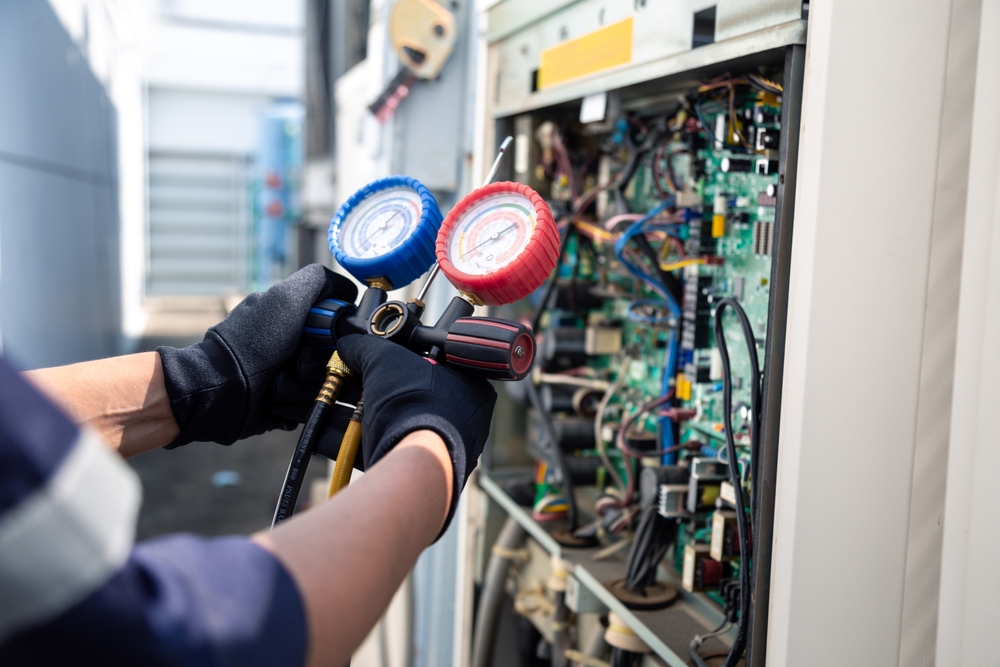
- Refrigerant Charge Check: We use gauges to confirm that the refrigerant pressures are correct, which indicates both proper charge and efficient operation.
- Temperature Differential: We measure the temperature of the air going into and coming out of the system. A low temperature drop can point to low refrigerant or poor airflow.
If Your Energy Bills Keep Climbing Without a Clear Reason
A consistently high energy bill is a problem that won’t fix itself. It’s a clear signal that your HVAC system is wasting energy, money, and is likely heading toward a more serious breakdown. Don’t resign yourself to overpaying the utility company month after month.
At Cool Aid A/C & Refrigeration, we can trace that high bill back to its source. Our technicians are trained to diagnose the root causes of inefficiency, from hidden duct leaks to failing electrical components. We’ll identify where your system is losing performance and provide clear, practical options to stop the waste and restore proper operation.
If you’re tired of seeing your energy bills climb, contact us today. Let’s get your system running efficiently again and bring your utility costs back under control.
Stay Comfortable Year-Round With Expert HVAC Service
Book a trusted technician to handle your heating or cooling issue—fast, professional, and done right the first time.
Book Service Now