When your commercial refrigeration system fails, panic usually sets in fast. Restaurants, floral shops, pharmaceutical companies, and grocery stores all rely heavily on cold storage to protect their valuable inventory. A broken walk-in cooler is not just an inconvenience. It is an immediate threat to your bottom line, risking thousands of dollars in spoiled goods and lost revenue.
Understanding the cost to repair a walk-in cooler helps you make swift, informed decisions when a breakdown happens. Prices can vary widely depending on the exact component that failed, the age of your equipment, and whether you need immediate emergency service. Business owners in the Bay Area face unique challenges, from high local labor rates to strict environmental regulations regarding refrigerants.
This comprehensive guide breaks down everything you need to know about walk-in cooler repairs. We will explore the most common issues, detail the expected costs for various parts, and provide a framework to help you decide whether repairing or replacing your unit makes the most financial sense. By the end of this article, you will be fully prepared to handle any refrigeration emergency with confidence.
Why Prompt Walk-In Cooler Repair is Critical
Ignoring a minor refrigeration issue almost always leads to a major catastrophe. Walk-in coolers run continuously to maintain strict temperature parameters. When one component struggles, the rest of the system must work overtime to compensate.
The Domino Effect of Neglected Repairs
Consider a simple worn-out door gasket. This small rubber seal keeps warm air out and cold air in. When it tears, your cooler constantly loses chilled air. To maintain the set temperature, your compressor must run constantly without cycling off. Eventually, the overworked compressor overheats and burns out. What started as a minor nuisance turns into a massive repair bill simply because the initial problem was ignored.
Protecting Your Valuable Inventory
The primary purpose of your walk-in cooler is inventory protection. Health department regulations require perishable foods to remain below 41 degrees Fahrenheit. If your cooler struggles to maintain this temperature, you risk bacterial growth and foodborne illness. Tossing out an entire cooler full of premium steaks, fresh produce, or sensitive medical supplies often costs far more than the repair itself.
Energy Efficiency and Operating Costs
Commercial refrigeration systems consume a massive amount of electricity. When a cooler operates inefficiently due to dirty coils, low refrigerant, or failing fan motors, your utility bills will skyrocket. The Bay Area already features some of the highest commercial electricity rates in the country. Promptly scheduling commercial walk-in cooler repair services restores your system’s efficiency, saving you a significant amount of money on your monthly overhead.
Average Cost to Repair a Walk-In Cooler
Because walk-in coolers consist of several complex subsystems, naming a single average price is difficult. The final bill depends entirely on what broke and how long it takes to fix it.
Generally speaking, minor repairs cost between $150 and $400. These include simple tasks like replacing a thermostat, swapping out a relay, or adjusting a door hinge. Moderate repairs, such as fixing minor refrigerant leaks or replacing a fan motor, typically range from $400 to $1,200. Major repairs, such as replacing a commercial compressor or rebuilding the entire condensing unit, can cost anywhere from $1,500 to over $4,000.
You must also factor in labor rates. Commercial refrigeration technicians possess specialized skills and certifications. In the Bay Area, you can expect to pay between $150 and $250 per hour for standard commercial labor. Emergency calls outside of normal business hours usually carry a premium rate or a minimum diagnostic fee.
Common Walk-In Cooler Problems and Repair Costs
To help you budget accurately, let’s break down the most frequent points of failure within a commercial walk-in cooler. Each of these components plays a vital role in the refrigeration cycle, and their repair costs vary significantly.
Compressor Failure: The Heart of the System
The compressor acts as the heart of your refrigeration system. It pumps refrigerant gas through the coils, facilitating the heat exchange process that keeps your box cold. When a compressor fails, the entire system stops cooling immediately.
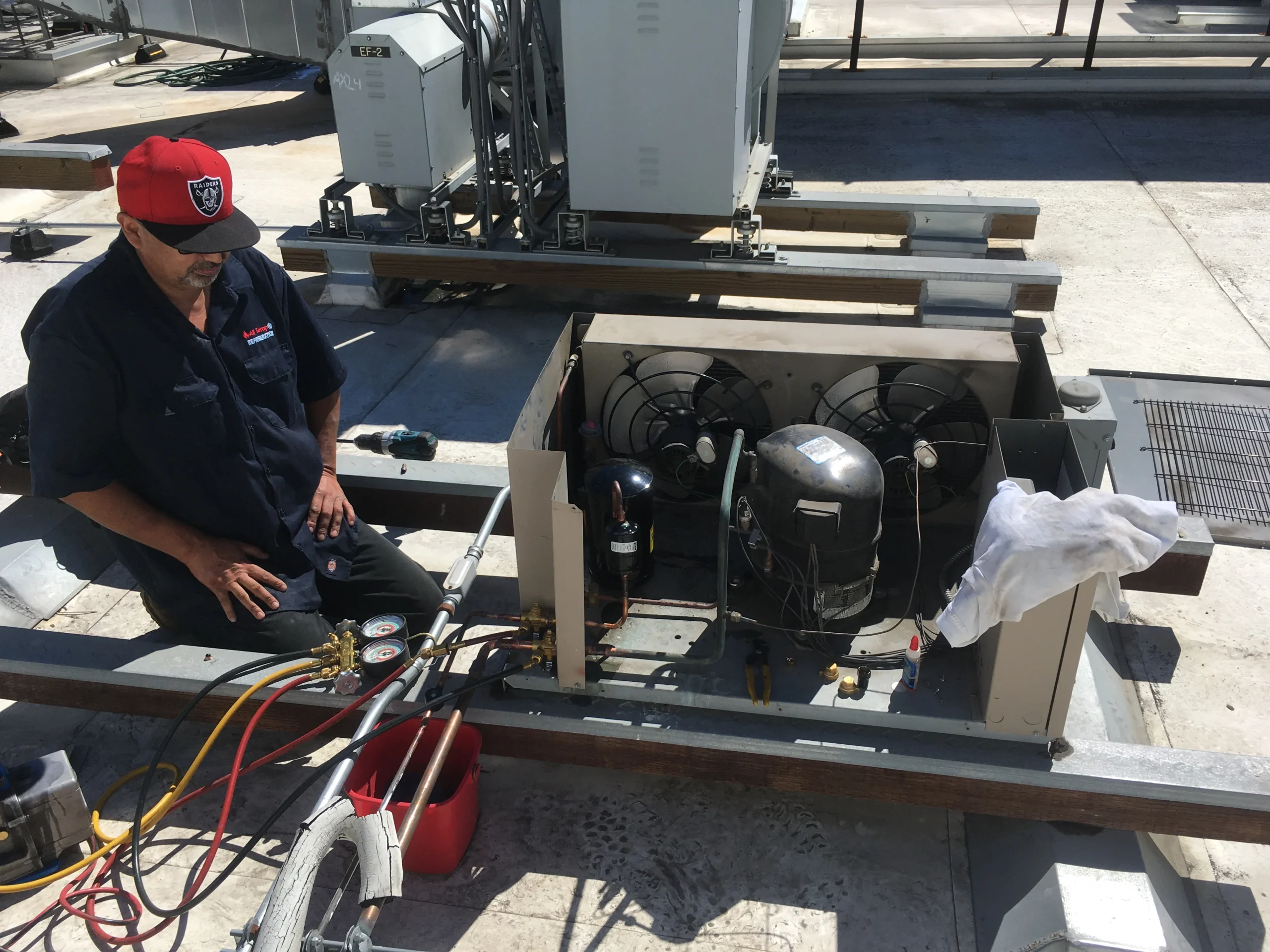
Compressor replacement is almost always the most expensive repair you will face. A new commercial compressor can cost between $1,000 and $3,000 just for the part. When you add the labor required to recover the old refrigerant, unbraze the broken compressor, weld the new one in place, install a new filter drier, pull a deep vacuum, and recharge the system, the total bill often lands between $2,000 and $4,500.
Because compressors rarely fail on their own, the technician must also identify and fix the underlying issue that caused the failure. If they do not fix the root cause, your new compressor will likely suffer the same fate.
Refrigerant Leaks and Recharging
Walk-in coolers use closed-loop systems. They do not consume refrigerant over time. If your system is low on refrigerant, you have a leak.
Locating and repairing a leak is a meticulous process. Technicians use electronic leak detectors and specialized dyes to find microscopic pinholes in the copper lines or coils. Repairing a leak usually involves recovering the remaining gas, brazing the hole shut, and recharging the system with fresh refrigerant.
The cost to fix a leak typically ranges from $500 to $1,500. The price of the refrigerant itself plays a huge role in this cost. Environmental regulations have phased out many older refrigerants, making them extremely expensive and difficult to source. If your older unit uses a phased-out gas, a simple leak can become a costly headache.
Evaporator and Condenser Fan Motors
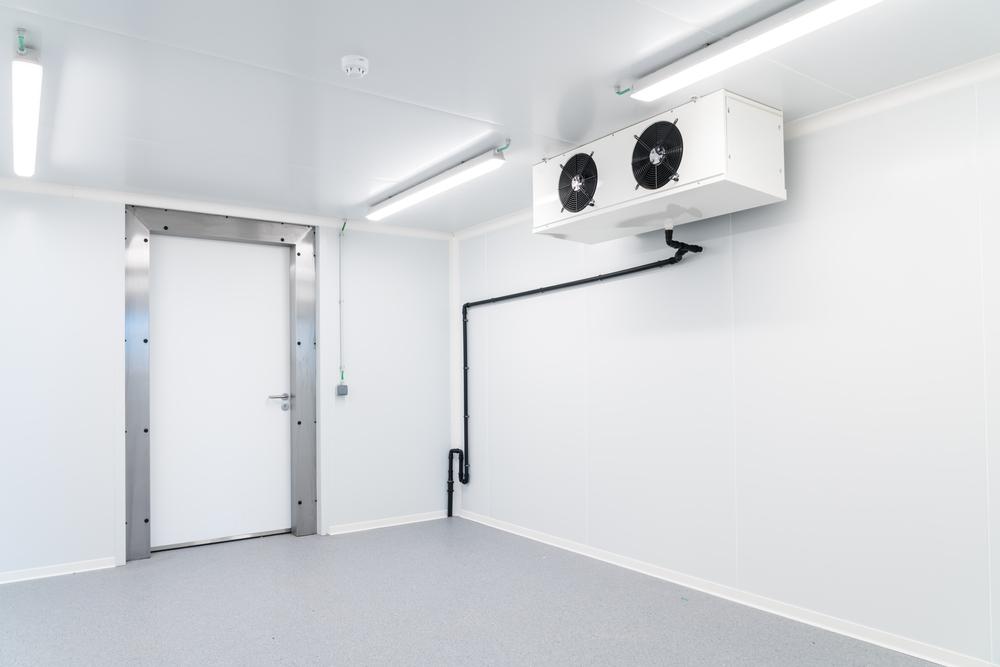
Your walk-in cooler uses fans to move air across the coils. The evaporator fans circulate cold air inside the box, while the condenser fans blow hot air away from the compressor unit outside.
These motors run continuously and endure significant wear and tear. When a fan motor dies, the coils can freeze over, or the compressor can overheat. Replacing a commercial fan motor usually costs between $300 and $800, depending on the horsepower of the motor and its accessibility. If the fan blade itself is damaged or unbalanced, that will add a small amount to the total cost.
Thermostat and Temperature Sensor Issues
The thermostat acts as the brain of your walk-in cooler. It monitors the internal temperature and tells the cooling cycle when to start and stop. If the thermostat fails, the cooler might run constantly and freeze your products, or it might not turn on at all.
Fortunately, thermostat and sensor replacements are relatively affordable. You can expect to pay between $150 and $400 to have a technician diagnose the control issue and install a new commercial-grade thermostat. Upgrading to a digital, programmable thermostat can improve your system’s accuracy and efficiency.
Electrical Problems and Defrost Timers
Commercial walk-in freezers and coolers rely on complex electrical circuits. Contactors, relays, capacitors, and defrost timers all manage the heavy electrical loads required to run the compressor and heaters.
A failed defrost timer is a very common issue. If the timer breaks, the system will not enter its defrost cycle. Ice will quickly build up on the evaporator coil, blocking airflow and stopping the cooling process entirely. Electrical repairs, including replacing defrost timers, contactors, or blown fuses, generally cost between $200 and $600.
Worn Door Gaskets and Hardware
The door of your walk-in cooler takes a massive beating. Employees open and close it dozens of times a day, often kicking it shut or bumping it with heavy carts.
The rubber gasket around the edge of the door creates an airtight seal. Over time, this rubber dries out, cracks, or tears. Replacing a door gasket usually costs between $150 and $300. You might also need to replace broken door hinges, sagging sweeps, or damaged latch mechanisms, which can add another $200 to $400 to the bill. Keeping the door in good shape is the easiest way to prevent excessive wear on the rest of the system.
Factors Influencing Walk-In Cooler Repair Pricing
While the average costs listed above provide a solid baseline, several external factors will influence the final price you pay for refrigeration service in the Bay Area.
Emergency Service vs. Scheduled Maintenance
Refrigeration breakdowns rarely happen at convenient times. They usually occur at the peak of a busy Friday night dinner rush or during a sweltering weekend heatwave.
When you need immediate help outside of standard business hours, you must utilize commercial emergency refrigeration services. Emergency dispatches always cost more than scheduled visits. Contractors must pull technicians off their regular routes or pay them overtime to respond at night. While paying an emergency fee hurts, it is always cheaper than losing your entire inventory to spoilage.
Age and Condition of the Unit
Older walk-in coolers cost more to fix. Finding replacement parts for a twenty-year-old condensing unit often requires extensive research and special shipping from the manufacturer. Furthermore, older units tend to have brittle wiring, rusted bolts, and degraded insulation, making the technician’s job much harder and more time-consuming.
If your cooler has a history of poor maintenance, a single breakdown might reveal a cascade of other issues. A technician arriving to fix a broken fan motor might discover a severe refrigerant leak and a failing contactor in the process.
Bay Area Labor Rates and Logistics
Operating a service business in the Bay Area is expensive. High costs of living, heavy traffic, and strict local regulations all drive up the cost of doing business. Reputable refrigeration contractors must charge labor rates that reflect these local economic realities.
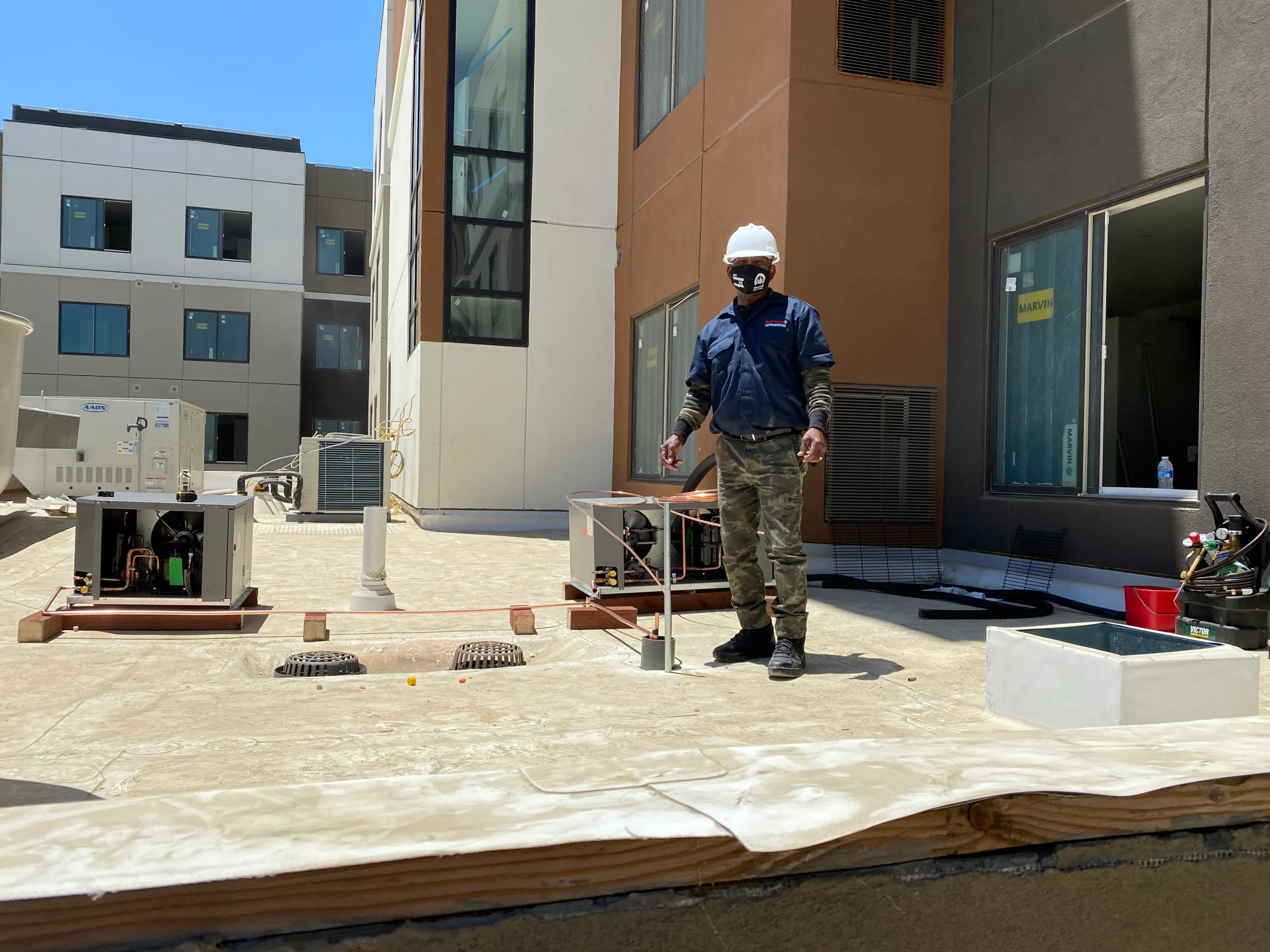
Logistics also play a role. If your condensing unit sits on the roof of a high-rise building in downtown San Francisco, simply accessing the equipment takes time and effort. Difficult access, limited parking, and strict building management rules can all increase the labor hours required to complete a repair.
The Repair vs. Replace Dilemma
Every business owner with an aging walk-in cooler eventually faces a tough choice. Should you keep pouring money into an old, failing system, or is it time to bite the bullet and invest in brand new equipment? Making the right choice requires a careful cost-benefit analysis.
When to Repair Your Walk-In Cooler
Repairing the unit makes the most sense if your equipment is less than ten years old. Most commercial refrigeration systems are built to last 15 to 20 years with proper care. If the system is relatively new and you experience a single component failure, fixing it is the logical step.
You should also lean toward repair if the cost of the fix is less than half the price of a total replacement. Routine issues like broken fans, faulty thermostats, or torn door gaskets are standard maintenance items. These minor repairs do not indicate that the entire system is failing.
Finally, consider your current financial situation. If a full replacement will devastate your quarterly budget, repairing the unit buys you time. You can fix the immediate issue and start aggressively saving for a planned replacement next year.
When to Replace Your Walk-In Cooler
Sometimes, repairing an old unit is just throwing good money after bad. You should strongly consider replacing your walk-in cooler if the system is constantly breaking down. If you are calling a technician every other month, the cumulative cost of those repairs, combined with the stress of constant downtime, quickly outweighs the cost of a new unit.
Major component failures on older units usually signal the end of the line. If a 15-year-old cooler suffers a catastrophic compressor failure, replacing the compressor is risky. The new compressor will place added strain on the old coils and piping, likely causing another failure soon after.
Energy efficiency is another massive factor. Modern commercial refrigeration equipment is vastly more efficient than models built a decade ago. The energy savings from a new, high-efficiency condensing unit can often offset the cost of the equipment over a few short years. Upgrading your system through professional commercial refrigeration services provides peace of mind, a fresh warranty, and drastically lower utility bills.
Preventing Costly Breakdowns with Routine Maintenance
The absolute best way to manage repair costs is to prevent breakdowns before they happen. Routine maintenance is the secret weapon of successful facility managers and restaurant owners.
You should schedule professional maintenance for your walk-in cooler at least twice a year. During these visits, a qualified technician will clean the condenser coils, check refrigerant levels, calibrate the thermostat, and inspect all electrical connections. They will also look for signs of wear on belts, bearings, and door seals.
A dirty condenser coil is the leading cause of premature compressor failure in commercial kitchens. Grease, flour, and dust coat the coils, trapping heat and forcing the system to work incredibly hard. Having a technician power-wash these coils routinely ensures the system breathes easily and operates at peak efficiency. Preventative maintenance costs a fraction of emergency repairs and extends the lifespan of your expensive equipment by years.
Managing Broad Commercial HVAC Needs
Many Bay Area businesses operate from massive facilities that require comprehensive climate control alongside their specialized refrigeration needs. Keeping a commercial space comfortable is just as important as keeping the inventory cold.
If your building’s air conditioning system struggles, it can actually impact your walk-in cooler. A hot, humid kitchen forces the walk-in cooler to work much harder every time someone opens the door. Ensuring your overall facility is properly cooled reduces the ambient load on your refrigeration equipment. If you notice your building’s climate control slipping, prompt commercial HVAC repair services will restore comfort and protect your auxiliary systems. Building a relationship with a contractor who can handle both your HVAC and refrigeration needs streamlines your facility management and often leads to better service rates.
Choosing the Right Bay Area Refrigeration Contractor
Your walk-in cooler is a critical piece of infrastructure. You cannot trust its repair to just anyone. Selecting a highly qualified, deeply experienced commercial refrigeration contractor ensures the job is done right the first time.
Look for Commercial Specialization
Do not hire a residential contractor to fix a commercial walk-in cooler. The systems are fundamentally different. You need technicians who specialize in commercial applications and understand the unique demands of food service, medical storage, and heavy industry. They must be familiar with three-phase power, complex defrost controls, and commercial-grade refrigerants.
Verify Licensing and Certifications
Ensure the contractor holds the appropriate state licenses and carries robust liability insurance. Technicians handling refrigerants must possess EPA Section 608 certification. A reputable company will gladly provide proof of their credentials and insurance coverage upon request.
Check Their Reputation
A reliable contractor leaves a trail of satisfied clients. Take the time to read through their reviews to see how they treat their customers. Look for patterns of punctuality, transparent pricing, and success in handling high-pressure emergency situations. A company with a stellar reputation in the Bay Area has earned it through consistent, high-quality work.
Demand Clear Communication
You need a contractor who explains the problem clearly and provides upfront pricing before starting the repair. They should outline your options, explain the risks and benefits of repairing versus replacing, and give you an accurate timeline for completion. Clear communication eliminates surprise billing and builds long-term trust.
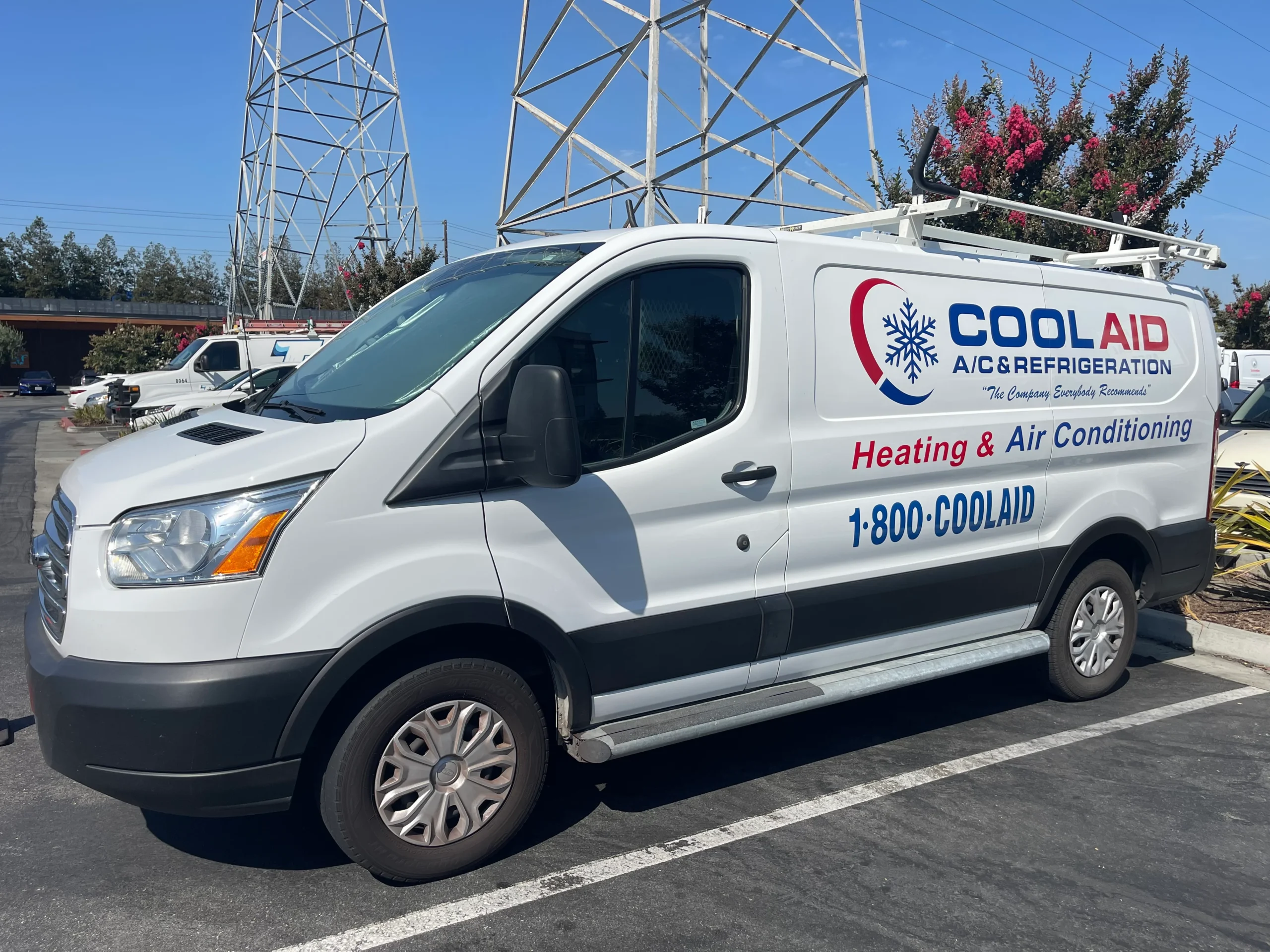
Partner with the Experts at Cool Aid
Managing a commercial facility in the Bay Area requires reliable equipment and even more reliable service partners. A broken walk-in cooler threatens your inventory, disrupts your operations, and causes immense stress. By understanding the common issues and average repair costs, you can navigate these emergencies with clear-headed confidence.
Whether you need an immediate emergency repair, a routine maintenance tune-up, or a full system replacement, our team is ready to deliver fast, effective solutions. We specialize in keeping Bay Area businesses running smoothly, no matter how tough the commercial environment gets.
If your walk-in cooler is struggling to hold temperature, or if you are ready to proactively protect your equipment with a maintenance plan, contact us today. Return to our homepage to learn more about our comprehensive commercial cooling solutions, and let us help you protect your most valuable inventory.
Stay Comfortable Year-Round With Expert HVAC Service
Book a trusted technician to handle your heating or cooling issue—fast, professional, and done right the first time.
Book Service Now