You can replace parts, upgrade equipment, and tweak thermostat settings all day long, but if air isn’t moving the way it should, your home will never feel right. Hot bedrooms, cold living rooms, constant system run times, and rising energy bills are almost always signs of airflow problems, not broken equipment.
We see this constantly in Bay Area homes. The system turns on. The air feels cool or warm at the vents. Yet comfort never evens out, and repairs keep stacking up. That’s because airflow issues don’t announce themselves with a single failed part. They hide inside ductwork, return paths, and pressure imbalances that most service calls never measure.
Professional airflow testing removes the guesswork. It shows how much air your system is actually moving, where it’s being restricted, and why your HVAC equipment is working harder than it should. Once airflow is measured and corrected, comfort improves, systems run quieter, and many “mystery” HVAC problems finally make sense.
Why Airflow Problems Are Behind Most HVAC Comfort Complaints
Your HVAC system is designed to be a balanced circuit. It pushes a specific amount of conditioned air into your rooms (supply) and pulls the same amount back to be re-conditioned (return). When that balance is off, the entire system struggles, and you feel the results.
Hot and cold rooms aren’t a thermostat issue
It’s a common complaint: the thermostat is set to 72 degrees, but the master bedroom is 78 while the living room feels like a meat locker. This isn’t a sign that your thermostat is broken. It’s a classic symptom of an airflow imbalance. The thermostat is only reading the temperature in its immediate vicinity. If not enough conditioned air is reaching the bedroom, it will never get cool, no matter how low you set the thermostat.
Why “the system is running” doesn’t mean air is moving correctly
You hear the air conditioner kick on, and you feel some air coming out of the vents. It’s easy to assume everything is working. But the volume of air is what matters. An HVAC system needs to move a specific amount of air—measured in cubic feet per minute (CFM)—across its indoor coil to operate efficiently. If a system designed for 1,200 CFM is only moving 800 CFM, it will run constantly, struggle to cool your home, and put immense strain on its components.
What HVAC Airflow Testing Actually Measures
Professional airflow testing goes beyond a visual check. It uses specialized tools to gather hard data about your system’s performance, revealing problems that are otherwise invisible.
Static pressure and why it tells the real story
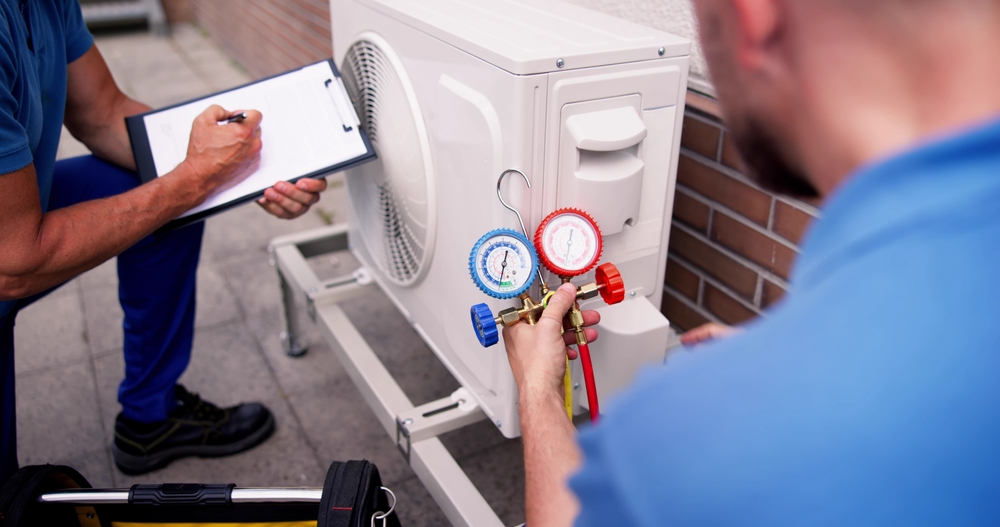
Static pressure is essentially the blood pressure of your HVAC system. It measures the amount of resistance the blower fan has to overcome to push and pull air through your ductwork. High static pressure is a sign that the system is choking. It’s like trying to breathe through a pinched straw. A technician uses a manometer to measure static pressure, and the readings tell them exactly how restricted the airflow is.
Supply vs return airflow — where systems usually choke
A balanced system needs just as much air going back to it as it’s sending out. We often find that the return side of the system is the problem. A home might have plenty of supply vents but only one or two undersized return grilles. This starves the system for air, forcing the blower motor to work harder, reducing efficiency, and making the house noisy.
How airflow testing differs from a visual inspection
A visual inspection might spot a disconnected duct, but it can’t tell you if the ducts are the right size or if the filter you’re using is too restrictive. Airflow testing provides quantifiable numbers. A technician can say, “Your system is designed to operate at 0.5 inches of static pressure, but it’s running at 0.9. That’s why your motor is overheating.” This data turns guesswork into a diagnosis.
Common Airflow Imbalances Found in Bay Area Homes
Every home is unique, but we see the same airflow problems show up again and again in Bay Area residences, from older Eichlers to modern constructions.
Undersized or restricted ductwork
This is the most common issue. Builders, especially in older developments, often installed ductwork that was barely adequate for the original, smaller HVAC system. When a new, more powerful system is installed, the old ducts can’t handle the increased airflow, creating high static pressure from day one. Flexible ducts that are kinked or crushed in an attic or crawlspace are another frequent cause of restriction.
Dirty coils and blower wheels reducing air volume
Over time, the indoor evaporator coil and the blower wheel get coated with a layer of dust and grime. This buildup acts like a blanket, blocking air from passing through. We can measure the airflow before and after cleaning a dirty blower wheel and see a dramatic improvement. This is a problem that gets progressively worse with every year of skipped maintenance.
Poor return air design in older homes
Many older Bay Area homes were built with a single, central return grille in a hallway. This design is often completely inadequate for the home’s cooling and heating needs. When you close a bedroom door, you effectively cut that room off from the return path, pressurizing the room and preventing conditioned air from getting in. This is a major source of hot and cold spots.
Why Airflow Balance Matters More Than Equipment Size
Many people believe that if their AC isn’t cooling well, they need a bigger unit. In reality, a bigger system paired with a bad duct system will only make the problem worse.
How poor airflow forces systems to overwork
When airflow is low, your air conditioner can’t transfer heat effectively. The indoor coil can get too cold and even freeze into a block of ice. Your furnace can’t get rid of its heat fast enough, causing it to overheat and shut down on its high-limit safety switch. In both cases, the equipment is working harder, running longer, and failing sooner, all because it can’t breathe.
The connection between airflow and short cycling
An oversized unit on a restrictive duct system will cool the space near the thermostat very quickly and then shut off. This is called short cycling. Because the air isn’t distributing properly, other parts of the house never get comfortable. This constant on-and-off cycling is extremely damaging to the compressor, the most expensive component in your AC.
Why bigger HVAC systems don’t fix airflow problems
Installing a larger HVAC unit without addressing the ductwork is like putting a V8 engine in a car with bicycle tires. You have all this power, but you can’t get it to the road. A bigger system will just create more noise and higher pressure in the undersized ducts, often leading to duct leakage and even higher energy bills. The problem isn’t the engine; it’s the delivery system.
How Professional Airflow Testing Improves System Performance
When you correct airflow problems based on professional testing, the benefits are immediate and noticeable.
Lower energy bills through proper air distribution
When air moves freely, your system doesn’t have to run as long to satisfy the thermostat. It reaches the desired temperature more quickly and efficiently. This reduction in runtime directly translates to lower electricity and gas bills every month.
Longer equipment lifespan from reduced strain
Correcting high static pressure is one of the best things you can do to extend the life of your HVAC equipment. You are taking a massive amount of strain off the blower motor and the compressor. These components can now operate within the temperature and pressure ranges they were designed for, dramatically reducing the risk of premature failure.
More consistent temperatures room to room
Once airflow is balanced, the conditioned air is distributed evenly throughout the home. This finally eliminates those frustrating hot and cold spots. Every room gets the amount of air it was designed to receive, leading to consistent, whole-home comfort.
Airflow Testing vs Guesswork Adjustments
Without data, any attempt to fix airflow is just a shot in the dark, and some common “fixes” actually do more harm than good.
Why closing vents usually makes things worse
It seems logical: if one room is too cold, just close the vent. But this is one of the worst things you can do. Closing vents increases the overall static pressure in the system, forcing the blower to work even harder and often causing air to leak out of your ductwork into your attic or crawlspace. You’re not redirecting air; you’re just bottling it up.
Why “it feels fine” isn’t a diagnostic method
You can’t diagnose airflow by holding your hand up to a vent. You might feel air, but you have no idea if it’s 50 CFM or 150 CFM. Without measuring the volume and pressure, you are simply guessing. This is why problems persist—the root cause is never accurately identified.
Data-driven corrections vs trial-and-error fixes
Airflow testing provides a roadmap for correction. The data might point to adding a return air duct in a specific bedroom, or replacing a section of crushed duct in the attic. These are precise, data-driven solutions that solve the problem permanently, unlike the endless trial-and-error of randomly opening and closing vents.
When Airflow Testing Should Be Done
Airflow testing isn’t necessary for every service call, but in certain situations, it is the most important diagnostic step.
After repeated repairs with no real improvement
If you’ve had a technician out multiple times to fix the same issue, or if you keep having different components fail one after another, it’s a massive red flag that an underlying airflow problem is the real culprit. Stop treating the symptoms and test for the disease.
During HVAC replacement or major upgrades
It is absolutely critical to have airflow testing done before installing a new HVAC system. This ensures the new, expensive equipment is being connected to a duct system that can support it. A good contractor will not install a new unit without first verifying that the static pressure is within the manufacturer’s acceptable range.
When comfort complaints never fully go away
If you’ve lived in a house for years and have never been able to get the temperature consistent across all rooms, an airflow imbalance is almost certainly the reason. Testing can finally provide the answers and solutions you’ve been looking for.
What Technicians Look for During Professional Airflow Testing
A technician performing airflow testing is like a detective looking for clues about where the air is struggling to move.
Pressure readings that signal duct restrictions
Using a manometer, a technician will take pressure readings at multiple points: before the filter, after the filter, before the indoor coil, and after the coil. A large pressure drop across any single component immediately identifies it as a major restriction. For example, a big drop across the filter means it’s either dirty or too dense for the system.
Blower performance vs manufacturer specs
Every HVAC system has a fan chart that shows how much air the blower should move at a given static pressure. By plotting the measured static pressure on this chart, a technician can see if the blower is performing as designed. If it’s not, it could indicate a failing motor or a dirty blower wheel.
Signs airflow issues are causing hidden damage
During testing, a technician might also notice that the indoor coil is unusually dirty, or that the blower motor is running extremely hot to the touch. These are physical signs of the damage being caused by poor airflow, reinforcing the need for correction.
Airflow Testing and Indoor Air Quality
Proper airflow is not just about comfort and efficiency; it’s also fundamental to the health of your home’s air.
How restricted airflow increases dust and allergens
When airflow is weak, your system can’t effectively pull air through the filter. This means more dust, pollen, and other allergens bypass the filter and are simply re-circulated throughout your home. Improving airflow enhances your filter’s ability to do its job.
Moisture problems caused by improper air movement
If your air conditioner isn’t getting enough air moving across its coil, it can’t dehumidify your home’s air properly. This can leave your home feeling cool but clammy and can contribute to moisture issues or even mold growth in poorly ventilated areas.
Why airflow balance affects filtration effectiveness
High-efficiency air filters (like MERV 11 or higher) are great for indoor air quality, but they are also more restrictive than standard filters. If your duct system already has high static pressure, adding a dense filter can choke the system completely. Airflow testing helps determine what level of filtration your specific system can handle without negatively impacting performance.
DIY Airflow Checks vs Professional Testing
While a full diagnosis requires professional tools, homeowners can often spot the initial warning signs of an airflow problem.
What homeowners can notice without tools
- Loud Noises: Is your system unusually loud when it runs? This is often a sign of high static pressure.
- Weak Air from Vents: Does the air coming from the vents, especially those furthest from the furnace, feel weak?
- Dirty Vents: Are your supply vent covers constantly covered in dust? This can indicate leaky ducts or poor filtration.
- Doors Whistling: Do you hear a whistling sound from under doors when the system is running? This signals a return air problem.
What requires meters, probes, and experience
Measuring static pressure, airflow velocity (CFM), and temperature rise/drop requires specialized and calibrated instruments like manometers, anemometers, and digital thermometers. Interpreting this data correctly requires training and experience.
Why airflow problems are often misdiagnosed
Without hard data, it’s easy to misdiagnose an airflow problem as something else. A frozen coil might be blamed on low refrigerant when the real cause is a dirty blower. A furnace that is overheating might be blamed on a faulty switch when the real issue is an undersized return duct. Testing eliminates this expensive guesswork.
Why Airflow Testing Saves Money Long-Term
Investing in professional airflow testing is not an expense; it’s a strategy that pays dividends for years to come.
Preventing motor, coil, and compressor failures
By reducing the strain on your system, you are directly preventing the premature failure of its most expensive components. The cost of one airflow correction is a fraction of the cost of replacing a burned-out compressor.
Reducing repeat service calls
When you fix the root cause of the problem, the symptoms go away for good. You break the cycle of expensive, recurring repairs that never seem to solve the issue.
Fixing root causes instead of symptoms
Airflow testing allows a technician to address the foundational problem with your HVAC system’s delivery network. It’s the difference between patching a leaky tire every week and actually fixing the hole.
How Cool Aid Approaches HVAC Airflow Testing
We believe that data, not assumptions, should drive every HVAC solution. Our approach is methodical and transparent.
Measuring first, adjusting second
We don’t make recommendations until we have collected all the necessary data. Our technicians will show you the pressure and airflow readings from your system and explain what they mean in plain language.
No upsells — only fixes that data supports
We will never try to sell you a new system if an airflow correction can solve your problem. Our recommendations—whether it’s modifying ductwork, cleaning a coil, or simply changing to a less restrictive filter—will be directly tied to the diagnostic data we collect.
Local experience with Bay Area duct layouts
We have worked on thousands of homes across the Bay Area. We understand the unique construction styles and common ductwork issues found in our local communities, from San Jose to Fremont and beyond. This experience allows us to pinpoint problems quickly and effectively.
When Better Airflow Changes Everything
The results of correcting a long-standing airflow problem can be transformative for a home.
Comfort improves without replacing equipment
Often, homeowners are shocked to find that their existing HVAC system can perform like new once it can finally breathe properly. The improvement in comfort is immediate and dramatic.
Systems run quieter and more efficiently
With the strain removed, systems run smoother and quieter. The loud “whoosh” from the return grille disappears, and the unit outside doesn’t have to work as hard, saving energy.
Homes finally cool and heat evenly
Perhaps the biggest benefit is the end of the thermostat wars. When every room gets the air it needs, the entire house becomes a zone of consistent comfort, just as it was designed to be.
If you’re tired of dealing with hot and cold spots, high energy bills, or constant HVAC repairs, it’s time to look deeper. Contact Cool Aid A/C & Refrigeration today to schedule a professional airflow assessment. We’ll give you the data and the straight answers you need to make your home comfortable once and for all.
Stay Comfortable Year-Round With Expert HVAC Service
Book a trusted technician to handle your heating or cooling issue—fast, professional, and done right the first time.
Book Service Now