When we think about commercial air conditioning, we often focus on the mechanics: the cooling capacity (tonnage), the energy efficiency ratings (SEER2 or IEER), and the brand reliability. These are undoubtedly critical factors for comfort and operational costs. However, there is a literal foundation to every successful HVAC project that is often overlooked until it becomes a problem: the structural integrity of the roof itself.
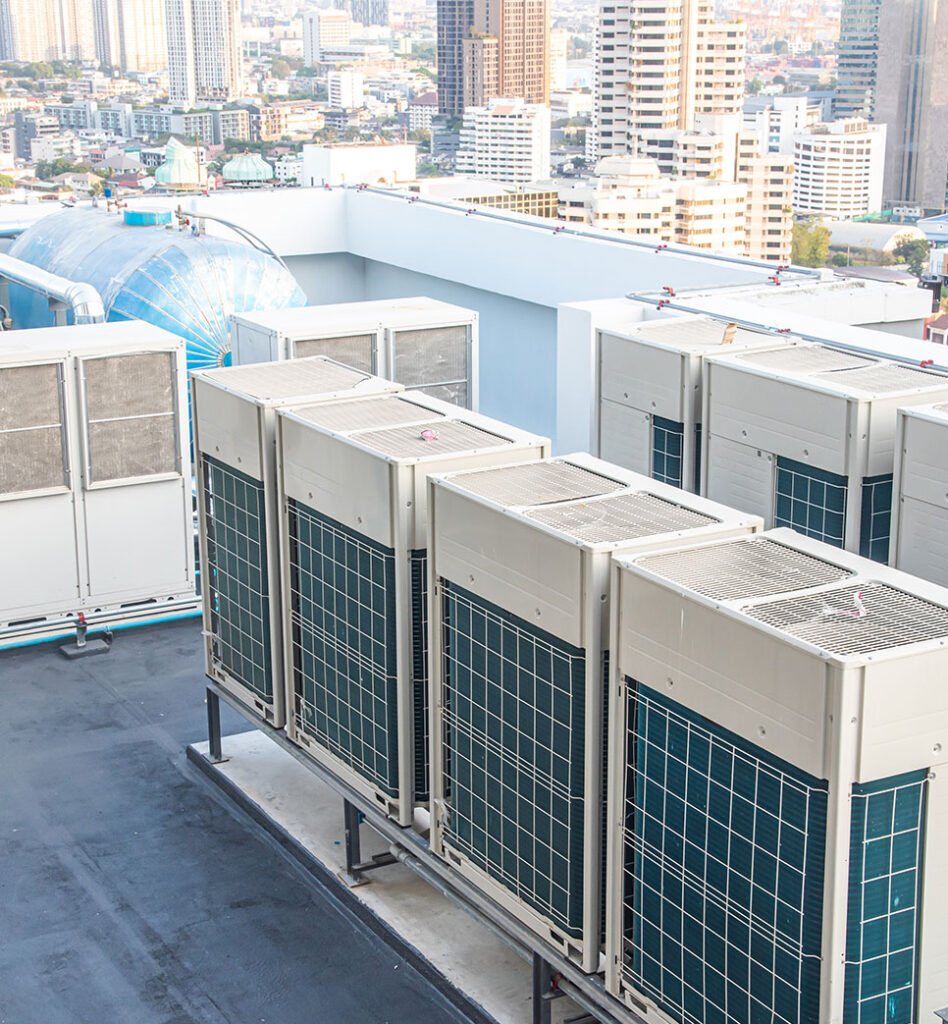
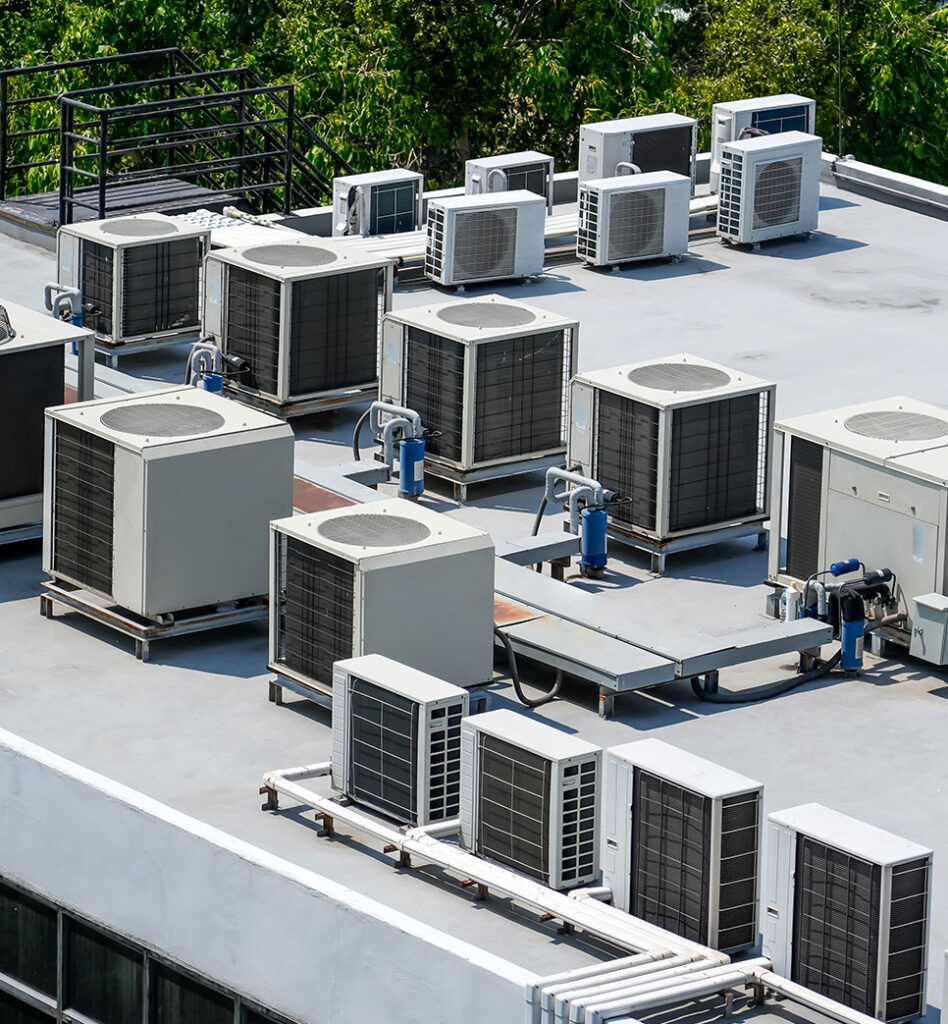
Installing a commercial rooftop unit (RTU) is not merely a mechanical task; it is a structural engineering challenge. These units can weigh anywhere from 500 pounds to over 20,000 pounds. They vibrate, they resist high winds, and they sit on top of the primary shelter for your business assets. A miscalculation in structural planning can lead to roof leaks, structural sagging, excessive noise, and in worst-case scenarios, catastrophic collapse.
Whether you are constructing a new facility or planning a replacement for an aging system, understanding the structural considerations is paramount. This guide provides a deep dive into the physical demands of rooftop HVAC installations and how professional contractors ensure your building can safely support your climate control needs.
Why Structure Matters More Than Equipment Efficiency
You can buy the most expensive, high-efficiency HVAC unit on the market, but if the roof cannot support it properly, that investment is worthless. The relationship between the building’s envelope (the roof) and the mechanical equipment is symbiotic.
A roof is designed primarily to shed water and protect the interior from the elements. When you introduce a massive piece of mechanical equipment, you are fundamentally altering the roof’s function. You are turning a passive protective layer into an active mechanical platform. This shift introduces new stresses—weight, movement, and environmental exposure—that the original building architect may or may not have anticipated.
Ignoring these factors is a liability. Structural failure doesn’t always look like a roof collapsing (though that is the extreme risk). More often, it manifests as:
- Ponding water around the unit due to deck sagging, leading to premature roof failure.
- Micro-cracks in the ceiling drywall or masonry.
- Unbearable noise transferring into conference rooms or offices below.
- Doors that stick because the door frames have shifted slightly under the new load.
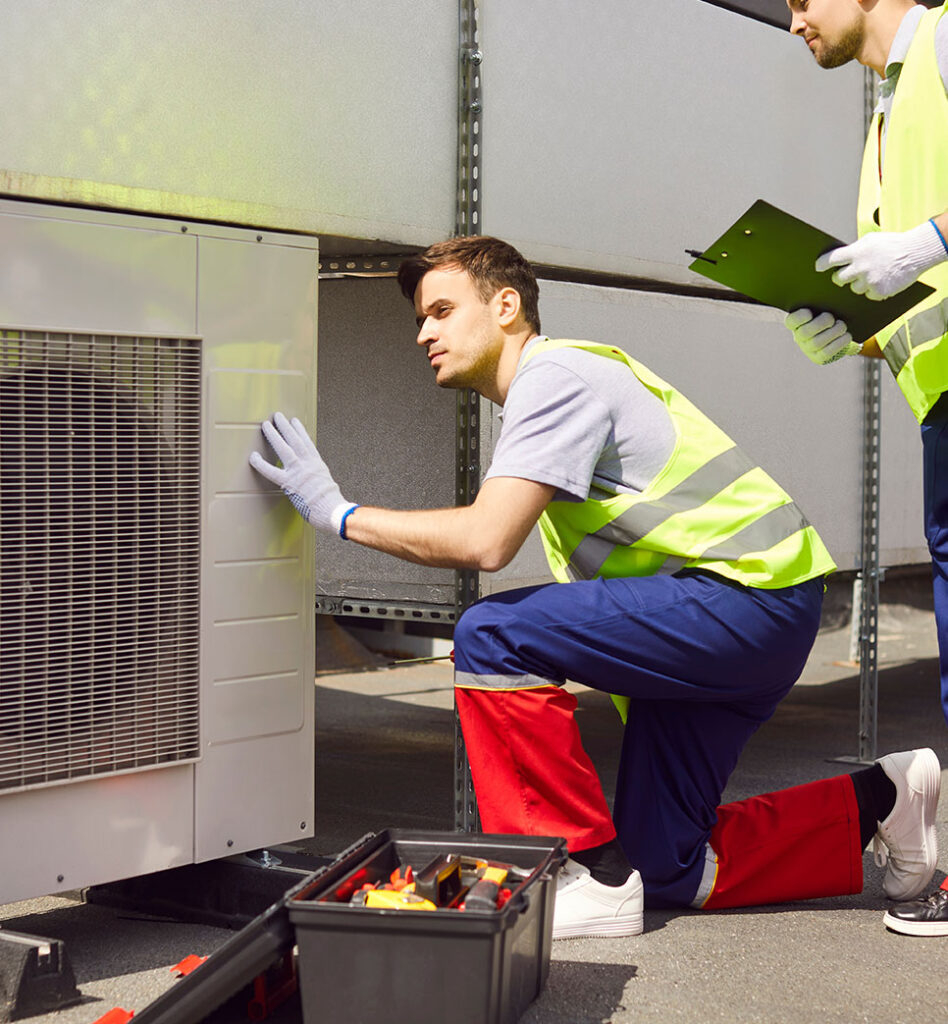
To avoid these issues, a comprehensive structural assessment is the first step in any reputable commercial HVAC services project.
Evaluating Load-Bearing Capacity: The Foundation of Safety
The most obvious consideration is weight. Can the roof hold the unit? While the question is simple, the answer involves complex physics. It’s not just about the total weight of the unit; it’s about how that weight is distributed and how it interacts with the building’s frame.
Static Loads vs. Dynamic Loads
Structural engineers and HVAC professionals categorize weight into two main types: static and dynamic.
- Static Load (Dead Load):
This is the weight of the HVAC unit when it is sitting still. It includes the cabinet, the compressors, the motors, and the coils. However, “static” also includes everything attached to the unit. This means the weight of the refrigerant, the ductwork hanging from the unit (if suspended from the roof structure), the gas piping, the electrical conduit, and even the curb it sits on. - Dynamic Load (Live Load):
This is where things get complicated. An HVAC unit is not a rock; it is a machine with heavy, spinning components. When a 50-horsepower motor kicks on, or when large fans are spinning at high RPMs, they create torque and vibration. This movement creates a “dynamic load” that exerts additional stress on the roof structure.
Furthermore, dynamic loads include transient forces. For example, when a technician walks around the unit to service it, their weight is a live load. When a gust of wind hits the side of the unit, it creates a tipping moment (torque) that pushes down on the leeward side of the curb. A roof that can support the static weight might fail under the stress of dynamic loads if not properly reinforced.
Point Loading vs. Uniform Loading
A common misconception is that a roof has a uniform weight capacity, such as “20 pounds per square foot.” While this is true for the general decking, HVAC units do not distribute their weight evenly across the entire roof. They concentrate thousands of pounds into a relatively small footprint—specifically, the perimeter of the roof curb or the feet of the steel dunnage.
This creates “point loads.” If a 4,000-pound unit sits on a curb that is 4 feet by 5 feet, that weight is transferred down through the curb walls to the specific joists or beams directly underneath. If those specific beams aren’t reinforced, they can buckle, even if the rest of the roof is strong.
Structural analysis determines if the load needs to be spread out. This is often achieved using spreader beams or steel rails that span across multiple joists, effectively turning a dangerous point load into a safer distributed load.
The Role of Structural Engineers
For any significant installation, particularly on existing buildings, engaging a structural engineer is non-negotiable. They will review the “as-built” drawings of your facility to determine the spacing and size of the trusses, beams, and columns. They will calculate the shear strength and deflection limits.
If the existing structure falls short, they will design a reinforcement plan. This might involve welding new angle iron to the bar joists or installing new vertical columns inside the building to carry the weight down to the foundation.
Roof Decking and Material Compatibility
The “structure” isn’t just the steel beams; it’s also the deck and membrane surface. The type of roof you have dictates how the installation must proceed to preserve the watertight integrity of the building.
Flat Roofs vs. Pitched Surfaces
Most commercial buildings utilize flat (low-slope) roofs, which are ideal for mounting equipment. However, “flat” is a misnomer; they are slightly pitched for drainage. The HVAC unit must be leveled perfectly for the compressors and oil return systems to function correctly. This requires a “pitched curb”—a custom-fabricated metal frame that matches the slope of the roof on the bottom but provides a perfectly level surface on top.
Installing a unit on a pitched metal roof or a shingled commercial roof presents different challenges. In these cases, the unit is often mounted on an elevated steel frame (dunnage) that penetrates the roof surface to reach the structural members below. The waterproofing around these penetration points (pitch pockets or boots) is a critical structural detail that requires regular inspection via commercial HVAC repair services.
Membrane Types and Protection
The traffic associated with an installation can destroy a roof membrane.
- TPO and PVC: These single-ply membranes are durable but can be punctured by dropped screws, sheet metal scraps, or heavy boots.
- EPDM (Rubber): While flexible, EPDM can be prone to tears if equipment is dragged across it.
- Built-Up Roofs (Tar and Gravel): These are tough but make it difficult to locate beams and joists underneath without exploratory cutting.
Structural consideration includes protecting these surfaces. Professionals lay down plywood paths or specialized protection mats during the installation to distribute the weight of the workers and equipment, preventing damage to the insulation and membrane below.
Managing Vibration and Acoustics
Structural integrity is also about “serviceability”—meaning the building must remain usable. A roof that holds the weight but vibrates like a drum is a failed design.
The Science of Structural Vibration
Every building structure has a natural frequency—a rate at which it naturally wants to vibrate. Every piece of rotating machinery (like a fan or compressor) also has an operating frequency. If the HVAC unit’s frequency matches the roof structure’s natural frequency, a phenomenon called “resonance” occurs.
Resonance amplifies the vibration significantly. This can cause the roof deck to bounce visibly, loosen bolts, crack welds, and generate a low-frequency hum that creates an unbearable acoustic environment inside the building. This is often described by occupants as a “rumble” that feels like it’s coming from everywhere.
Isolation Curbs and Spring Mounts
To prevent structural vibration transmission, the unit must be mechanically decoupled from the roof.
- Spring Isolators: For units mounted on steel rails (dunnage), heavy-duty steel springs are placed between the unit and the rail. These springs absorb the energy of the unit’s operation.
- Isolation Curbs: For curb-mounted units, a specialized curb with built-in rubber grommets or spring rails is used. This allows the unit to float slightly, preventing the vibration from traveling down into the sheet metal ductwork and the roof joists.
- Flex Connectors: The connection between the unit and the rigid ductwork must be flexible. Canvas or rubber “flex connectors” are used to ensure that the vibration of the fan doesn’t rattle the ducts running through your ceiling.
Environmental Stressors: Wind, Snow, and Seismic Activity
A rooftop unit is exposed to the harshest environmental conditions. The structure must be able to hold the unit not just on a sunny day, but during the worst storm of the century.
Wind Shear and Uplift
In many regions, wind is the enemy. High winds flowing over a roof create negative pressure—lift—that tries to suck the HVAC unit off its curb. This is the same physics that allows airplanes to fly.
Structural codes require that units be mechanically anchored to the curb, and the curb anchored to the roof structure, to resist specific wind speeds (often up to 120 mph or more in hurricane zones). This isn’t just gravity holding it down; it’s heavy-gauge steel straps and bolts. The surface area of the unit acts like a sail; the larger the unit, the more substantial the anchoring required.
Snow Loads and Water Accumulation
In colder climates, you must account for the weight of snow on top of the unit and drifting snow against the unit. A large rooftop unit can act as a windbreak, causing snow to pile up deeply on one side. This creates an eccentric (off-center) load that can twist beams.
Similarly, structural engineers must ensure that the placement of the unit doesn’t block water drainage paths. If a unit is placed directly in a valley or near a drain, it can dam up water, creating massive pools that add thousands of pounds of unplanned weight to the roof deck.
Seismic Restraints for Earthquake Zones
For businesses in seismically active areas (like the West Coast), earthquake safety is a primary structural concern. During an earthquake, the roof moves horizontally. A tall, heavy HVAC unit has a high center of gravity and wants to tip over.
Seismic regulations require robust restraint systems. This often involves:
- Snubbers: Steel brackets with rubber bumpers that limit how much the unit can move on its vibration springs.
- Cable Bracing: Steel cables that tether the unit to the structure.
- Reinforced Curbs: Curbs built with heavier gauge steel and additional cross-bracing to prevent them from collapsing under lateral forces.
Support Systems: Curbs, Dunnage, and Rails
How the unit attaches to the building is the critical link in the structural chain. There are three main methods, each with structural implications.
The Importance of the Roof Curb
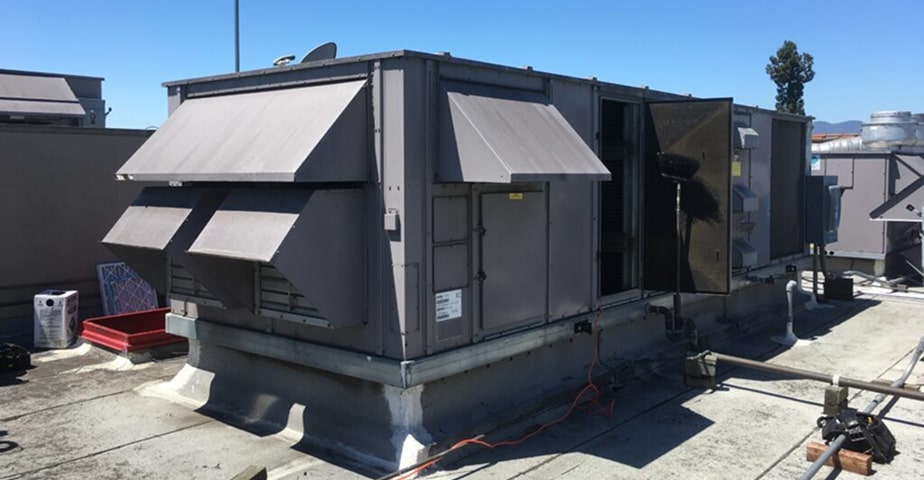
The most common method for packaged units is the roof curb. It provides a watertight seal and a path for the ductwork. Structurally, the curb acts as the interface between the machine and the building.
Ideally, a curb should span at least two structural joists. If the unit is small and the joists are wide apart, additional structural supports (blocking) must be installed between the joists to support the curb walls. A floating curb—one that relies only on the roof decking without underlying support—is a recipe for a sagging roof and eventual leaks.
When to Use Steel Dunnage
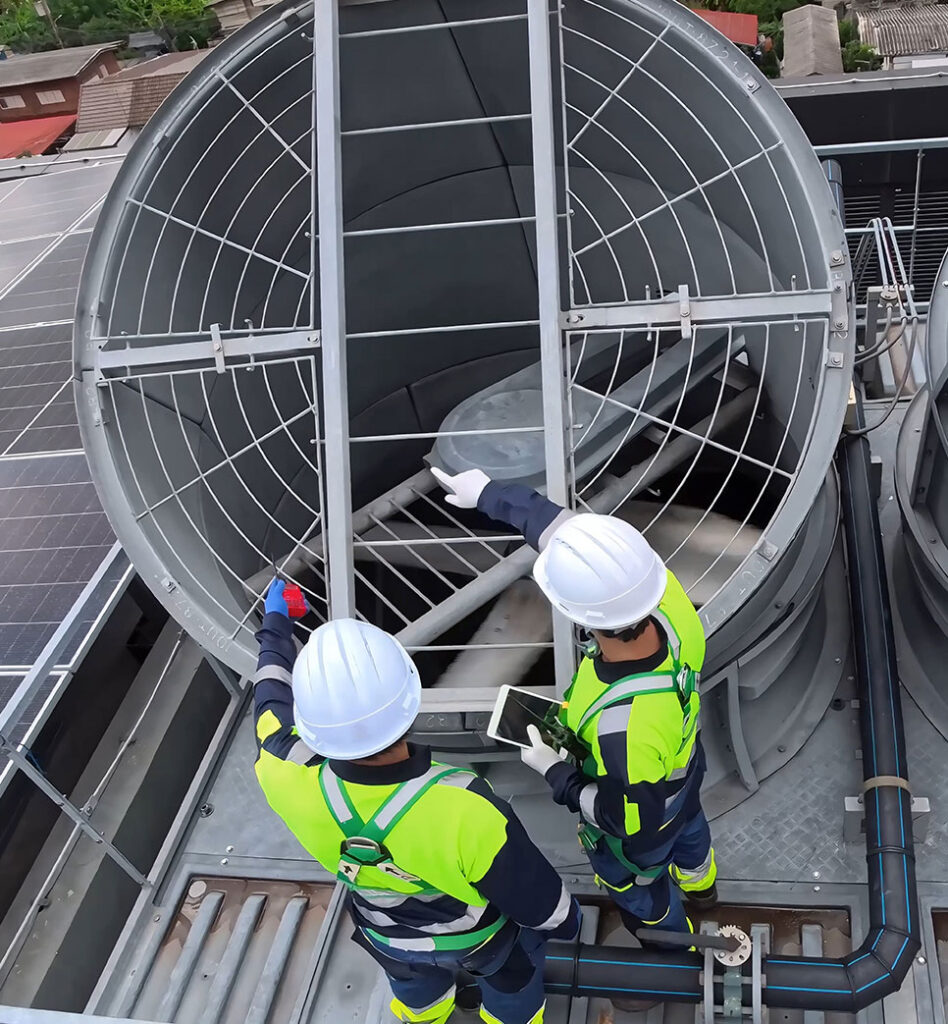
For very heavy units, chillers, or cooling towers, a standard curb is insufficient. These are mounted on structural steel dunnage—essentially a steel table with legs that go through the roof.
Dunnage allows the weight to be transferred directly to the building’s main columns (the strongest part of the structure) rather than the roof deck. It also elevates the unit higher, which is beneficial for airflow and allows for easier roof maintenance and re-roofing in the future.
Equipment Rails for Auxiliary Components
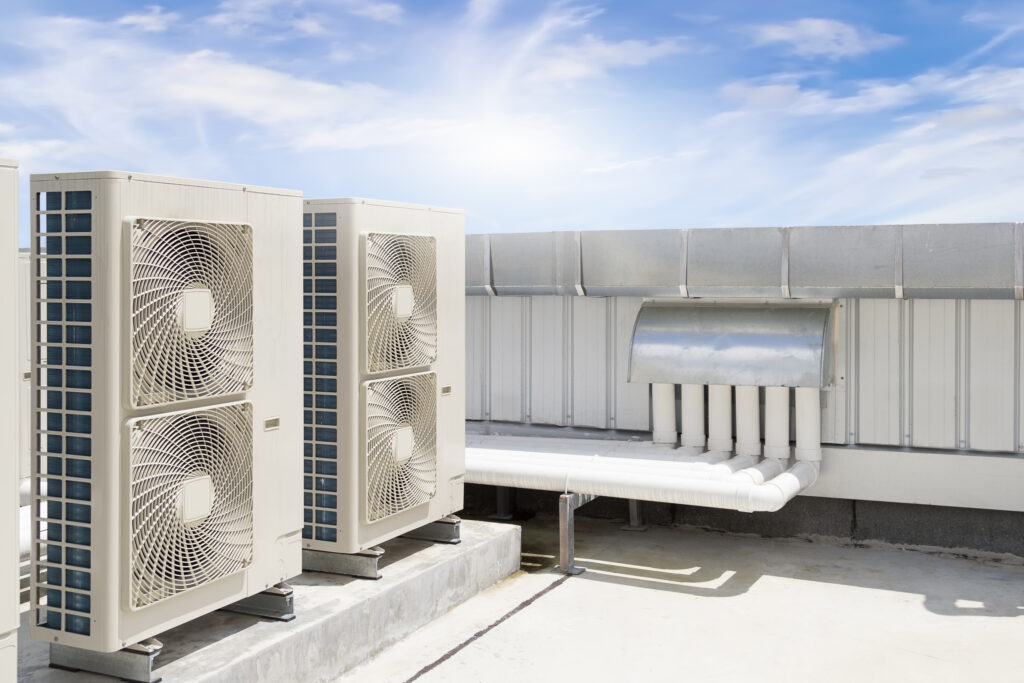
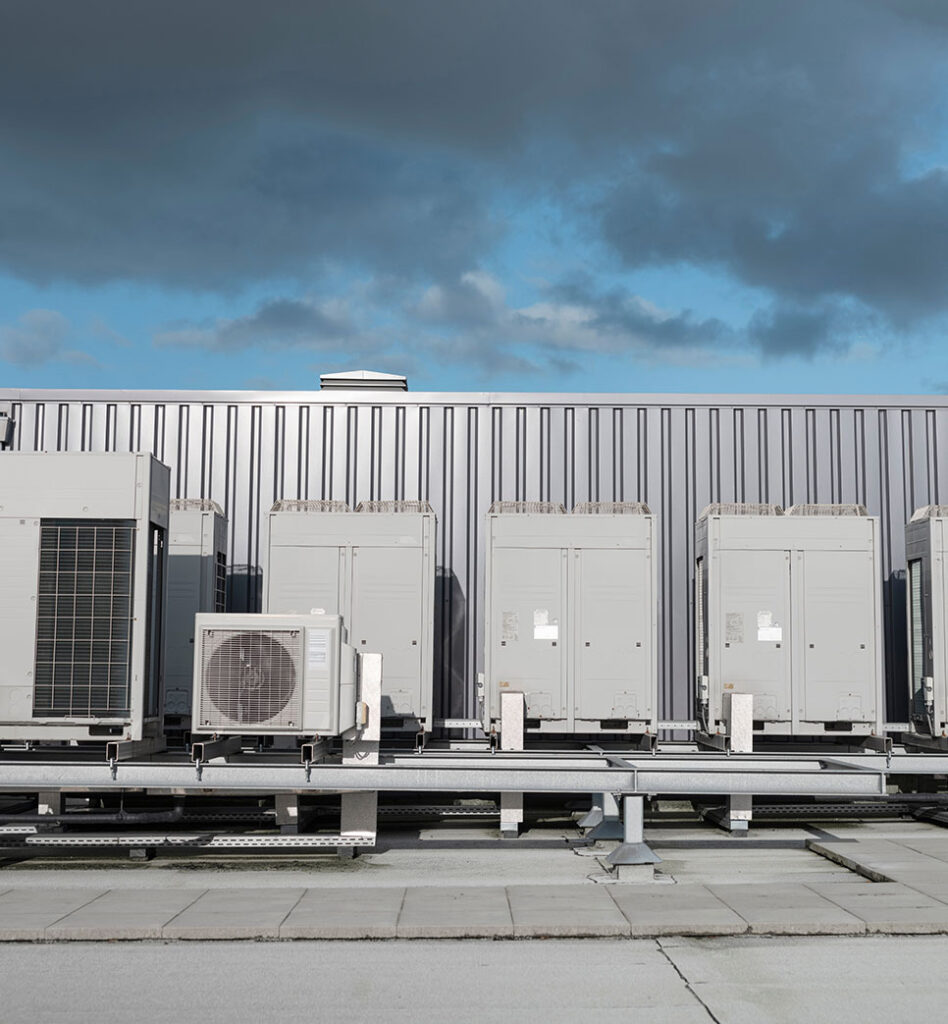
It’s not just the main unit that needs support. Condensers for split systems or exhaust fans are often mounted on equipment rails (or sleepers). These rails spread the load over a longer area. Structural placement of rails is critical; they should run perpendicular to the roof joists to distribute weight across as many members as possible, rather than running parallel and loading all the weight onto a single joist.
Retrofitting: Challenges in Replacing Existing Units
Replacing an old unit with a new one sounds simple—just swap them out, right? Structurally, this is often where the biggest risks lie. This is a core component of commercial HVAC replacement services, where unforeseen variables often arise.
The “Like-for-Like” Myth
Technology changes. A 20-ton unit manufactured in 1990 might weigh 2,500 pounds. A 20-ton high-efficiency unit manufactured today might weigh 3,200 pounds due to larger condenser coils needed to meet modern efficiency standards.
Conversely, newer units might be physically smaller but heavier, increasing the point loading (pounds per square inch). You cannot assume that because the roof held the old unit, it will hold the new one. A fresh structural evaluation is required for every replacement to ensure safety compliance.
Adapter Curbs and Weight Distribution
New units rarely have the exact same footprint as old ones. To avoid ripping up the roof to build a new curb, contractors use “curb adapters” (transition curbs). These metal funnels sit on the old curb and widen or narrow to fit the new unit.
While convenient, adapter curbs add height and weight. They raise the unit’s center of gravity, increasing wind load leverage and seismic risk. If an adapter is too tall, the added leverage might be too much for the old curb to handle. In some cases, the structural integrity of the old curb itself is compromised by rust, necessitating a full tear-out despite the extra cost.
Deterioration of Existing Support
Before a new unit is set, the existing support structure must be inspected. Over 20 years, a slow water leak might have rotted the wood blocking or rusted the steel joists underneath the old unit. Placing a new unit on compromised supports is dangerous. During a replacement, the moment the old unit is lifted is the only chance to verify the structural health of the underlying frame.
Waterproofing and Envelope Integrity
While structural engineering focuses on gravity and force, the “structure” of the building also relies on remaining dry. Water is the most destructive force to a building’s longevity.
Every penetration through the roof for electricity, gas, and ductwork is a potential leak point.
- Pitch Pockets: These are metal pans placed around pipes and filled with pourable sealer. They must be maintained to prevent shrinking and cracking.
- Counter-Flashing: The metal skirt that hangs over the curb flashing. It must be rigid enough to withstand wind but installed correctly to allow for thermal movement without tearing the roof membrane.
If the structural supports flex too much (deflection), the roofing membrane stretches. Over time, this repetitive stretching causes tears, leading to leaks that rot the very structure holding the unit up. Rigid structural support is the best defense against roof leaks.
Legal and Code Compliance
Structural considerations are not just best practices; they are the law. Local building codes dictate the requirements for roof loads, seismic bracing, and wind ratings.
When you apply for a permit to install or replace an HVAC unit, the city will typically require structural calculations stamped by a licensed engineer. Attempting to bypass this step to save money or time exposes the building owner to immense liability. If an unpermitted unit causes damage or falls during an earthquake, insurance coverage may be denied.
Professional contractors navigate this bureaucracy for you, ensuring that the installation meets the International Building Code (IBC) and all local amendments.
The Role of Future-Proofing
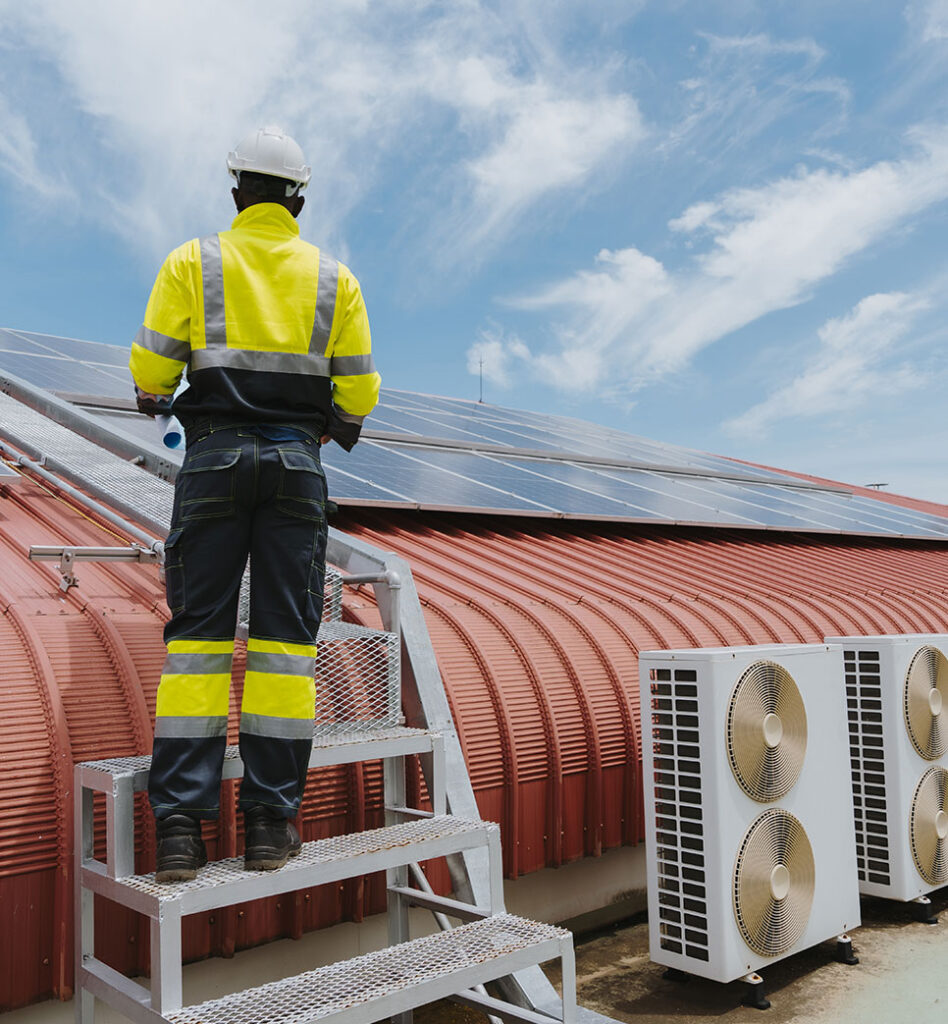
Finally, when assessing structure, consider the future. Are you planning to add solar panels later? Will you need to add more HVAC units as your business grows?
Reinforcing the roof now for future loads is far cheaper than doing it piecemeal. If you are opening up the ceiling or the roof deck to reinforce for one unit, it may be wise to strengthen the surrounding areas or install additional dunnage for future expansion.
Conclusion
The installation of commercial rooftop HVAC systems is a heavy-duty undertaking that goes far beyond connecting wires and ducts. It is about physics, engineering, and the long-term safety of your building. From the load-bearing limits of your joists to the vibration isolation of your curbs, every structural detail matters.
Neglecting these factors can lead to a host of expensive problems, ranging from annoying vibrations and chronic leaks to structural failure. Conversely, a well-planned installation that respects the structural demands of the building ensures that your new equipment will operate quietly, efficiently, and safely for its entire lifespan.
Don’t leave the integrity of your building to chance. Whether you need a simple assessment, a complex retrofit, or commercial HVAC repair services for existing structural issues, rely on experts who understand the engineering behind the equipment. By prioritizing structural considerations today, you secure the comfort and safety of your business for tomorrow.
Stay Comfortable Year-Round With Expert HVAC Service
Book a trusted technician to handle your heating or cooling issue—fast, professional, and done right the first time.
Book Service Now