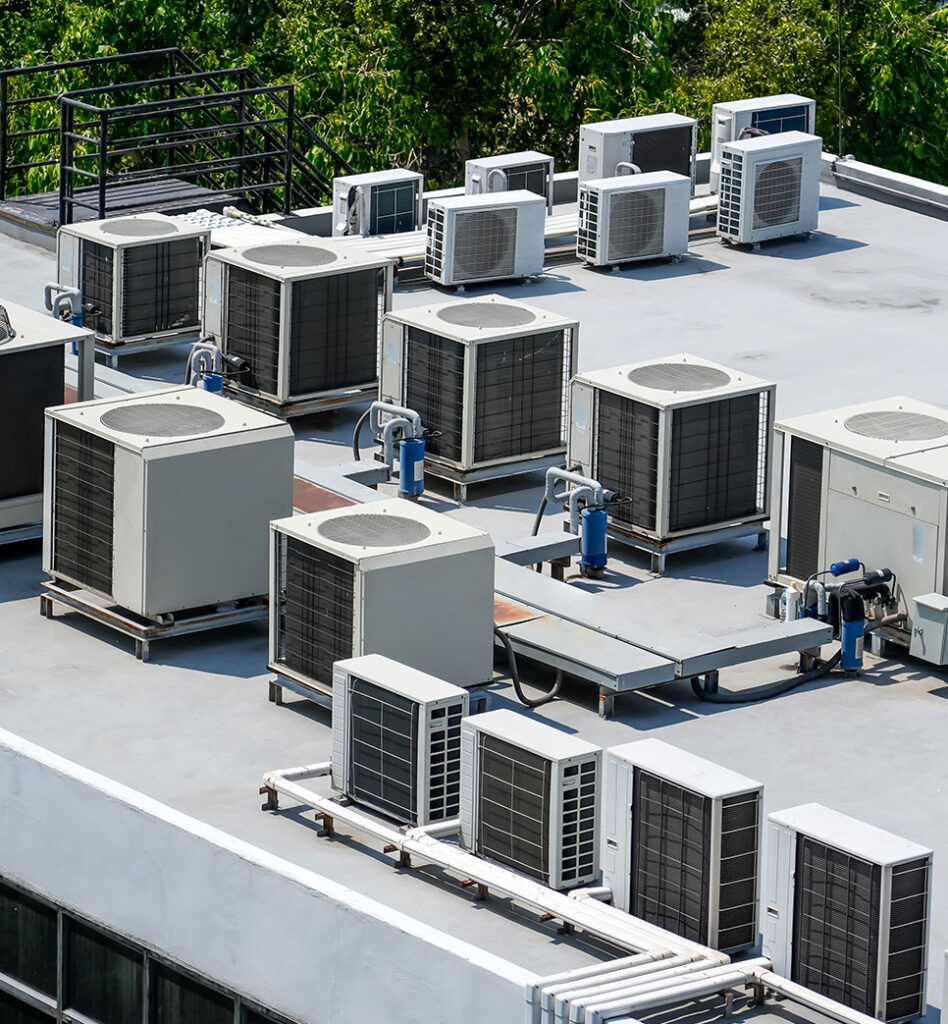
In the world of commercial facility management, few things are as disruptive as an unexpected HVAC failure. It usually happens on the hottest day of the year: the system groans, shudders, and falls silent. Suddenly, your business is thrust into a crisis. Customers are sweating, employees are distracted, servers are overheating, and you are scrambling to find a technician who can come out immediately.
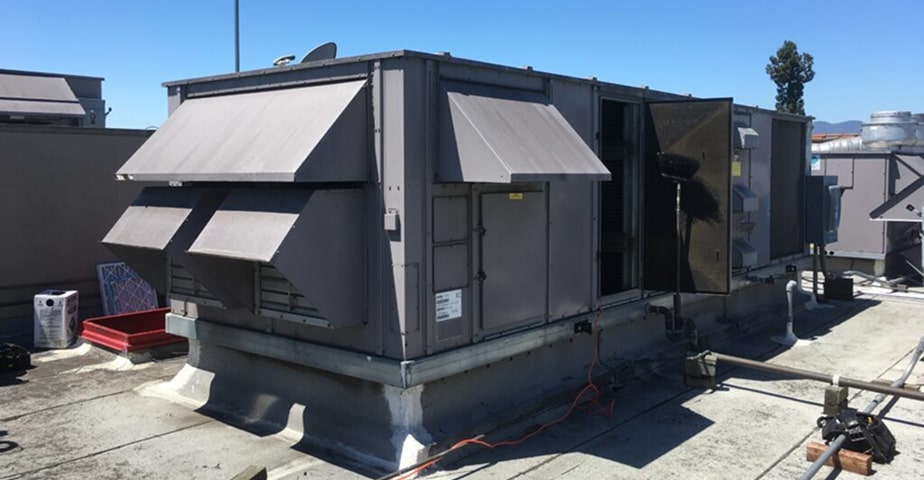
This scenario—the “break-fix” cycle—is the most expensive way to manage a building. You pay premium rates for emergency HVAC services, suffer lost productivity, and often face premature equipment replacement costs. Yet, despite the high stakes, many businesses treat their rooftop units (RTUs) as “out of sight, out of mind” until disaster strikes.
The solution to this chaos is simple, predictable, and cost-effective: routine maintenance. By shifting your strategy from reactive repairs to proactive care, you can virtually eliminate the surprise breakdowns that threaten your bottom line.
In this comprehensive guide, we will explore exactly how routine rooftop HVAC service acts as an insurance policy for your business. We will dissect the mechanics of maintenance, the financial math of prevention versus cure, and the tangible operational benefits of keeping your equipment in peak condition.
The True Cost of “Run-to-Failure” Management
To understand the value of maintenance, we first need to look at the alternative. “Run-to-failure” is a maintenance strategy where assets are deliberately allowed to operate until they break down. While this might save a small amount on monthly service fees, the backend costs are astronomical.
The Premium on Emergency Repairs
When a unit fails at 2:00 PM on a Tuesday in July, you don’t have the luxury of shopping around for quotes or scheduling a repair for next week. You need help now. Emergency service calls typically carry higher labor rates, especially if the breakdown occurs after hours or on weekends. Furthermore, if parts need to be expedited, overnight shipping fees can double the cost of materials.
The Hidden Cost of Downtime
The repair bill is often just the tip of the iceberg. The real damage is operational.
- Retail: Studies show that shoppers spend less time and money in stores with uncomfortable temperatures. A hot store can drive customers directly to your competitors.
- Restaurants: If the dining room is 85°F, you lose the lunch rush. If the kitchen ventilation fails, you may be forced to close for safety violations.
- Office Productivity: Research consistently links thermal comfort to cognitive performance. When office temperatures drift outside the optimal range, error rates go up and typing speeds go down.
- Inventory Loss: For businesses relying on temperature-sensitive stock (pharmacies, florists, grocers), an HVAC failure can mean thousands of dollars in spoiled goods.
By relying on commercial HVAC repair services only when things break, you are essentially gambling with your revenue stream. Routine service removes this gamble.
How Routine Service Prevents Catastrophic Failures
Routine maintenance isn’t just about changing filters (though that is important). It is a systematic inspection designed to catch small problems before they metastasize into major failures. Let’s look at the specific components that benefit from regular attention.
1. Protecting the Compressor: The Heart of the System
The compressor is the most expensive component in your rooftop unit. Its job is to pump refrigerant through the system. It works hard, and it generates significant heat.
- The Maintenance Fix: During a routine visit, technicians clean the condenser coils. Dirty coils act like a winter coat on your unit, trapping heat inside. This forces the compressor to run at higher pressures and temperatures to do its job. Over time, this stress causes the compressor to burn out.
- The Result: By keeping coils clean, you ensure the compressor runs within its design parameters, preventing a failure that could cost $3,000 to $5,000 or more to fix.
2. Electrical Connections: The Silent Killer
Rooftop units vibrate. They are also subject to thermal expansion and contraction as the sun heats the metal cabinet during the day and it cools at night.
- The Maintenance Fix: Over months, this movement loosens electrical screws and wire connections. A loose connection creates resistance, which generates heat. This can melt wires, pit contactors, or blow fuses. During a maintenance check, a technician tightens every electrical connection in the panel.
- The Result: You avoid sudden electrical shorts that shut down the entire system instantly.
3. Belts and Bearings: The Moving Parts
Many commercial units use belt-driven fans. These rubber belts are under constant tension and friction.
- The Maintenance Fix: Belts stretch and crack over time. If a belt snaps, the fan stops, airflow ceases, and the evaporator coil freezes into a block of ice. A technician checks belt tension and condition at every visit, replacing them proactively before they snap. They also lubricate bearings to prevent seizing.
- The Result: You avoid the “no airflow” call and the potentially expensive water damage that can occur when a frozen coil eventually thaws.
4. Drain Lines: Preventing Water Damage
Your air conditioner is also a dehumidifier. It pulls gallons of water out of the air on humid days. This water drains away through a condensate line.
- The Maintenance Fix: Algae, slime, and dust can clog these lines. If the water backs up, it triggers a safety float switch that shuts the unit off to prevent flooding. In worse cases, it overflows the pan and leaks through the ceiling. Routine service includes clearing and treating these lines.
- The Result: You prevent water damage to your building interior and avoid nuisance trips that shut down cooling.
Energy Efficiency: The Financial Bonus
While the primary goal of maintenance is reliability, the secondary benefit is hard cash savings on your utility bill. A neglected rooftop unit is an energy glutton.
The Efficiency Drift
A study by the New Buildings Institute found that rooftop units that are not maintained can suffer an efficiency degradation of 20% to 50%.
- Dirty Coils: When heat transfer is blocked by dust, the system has to run longer cycles to reach the thermostat setpoint.
- Low Refrigerant: A system that is just 10% low on refrigerant can see a 20% increase in electrical consumption because it struggles to cool the air.
- Clogged Filters: A dirty filter increases the static pressure the fan must overcome, forcing the blower motor to draw more amperage.
The ROI Calculation
Imagine your business spends $15,000 a year on electricity for HVAC. If your neglected units are operating 20% less efficiently than they should, you are wasting $3,000 a year—literally burning it up in heat and friction.
A comprehensive commercial refrigeration maintenance service contract might cost significantly less than that wasted energy. In many cases, the energy savings alone pay for the cost of the maintenance program. You essentially get the reliability and peace of mind for free.
Extending the Lifespan of Your Asset
Commercial rooftop units are major capital assets. Replacing a 10-ton or 20-ton unit is a significant construction project involving cranes, road closures, and significant expense. You want that asset to last as long as possible.
The 15-Year vs. 10-Year Reality
The average lifespan of a commercial RTU is roughly 15 to 20 years. However, in aggressive environments (like high heat or coastal salt air) without maintenance, that lifespan can shrink to 8 or 10 years.
- With Maintenance: The unit stays clean, lubricated, and calibrated. It runs smoothly, incurring minimal wear and tear. It easily reaches the 15-20 year mark.
- Without Maintenance: The unit grinds itself to death. Components overheat, rust spreads unchecked, and major failures occur early.
By investing in maintenance, you are deferring a $10,000+ capital expenditure by five to seven years. That is a massive return on investment for your facility budget.
Better Air Quality and Health
We often focus on the “temperature” aspect of HVAC, but the “V” stands for Ventilation. Your rooftop unit is the lungs of your building. It brings in fresh air and filters out pollutants.
The “Sick Building” Syndrome
If filters are not changed regularly, they become impacted with dust, pollen, mold spores, and bacteria.
- Bypass: Air will eventually find the path of least resistance, bypassing the clogged filter and sucking unfiltered dirt directly into the coil and ductwork.
- Mold Growth: A dirty, wet evaporator coil is a perfect breeding ground for biological growth. This gets blown into the occupied space, leading to odors and potential respiratory issues for employees.
Routine service ensures that high-quality filters are installed and changed on schedule, and that coils are chemically cleaned to remove biological contaminants. This creates a healthier, safer environment for everyone in the building.
What Does a Comprehensive Maintenance Visit Look Like?
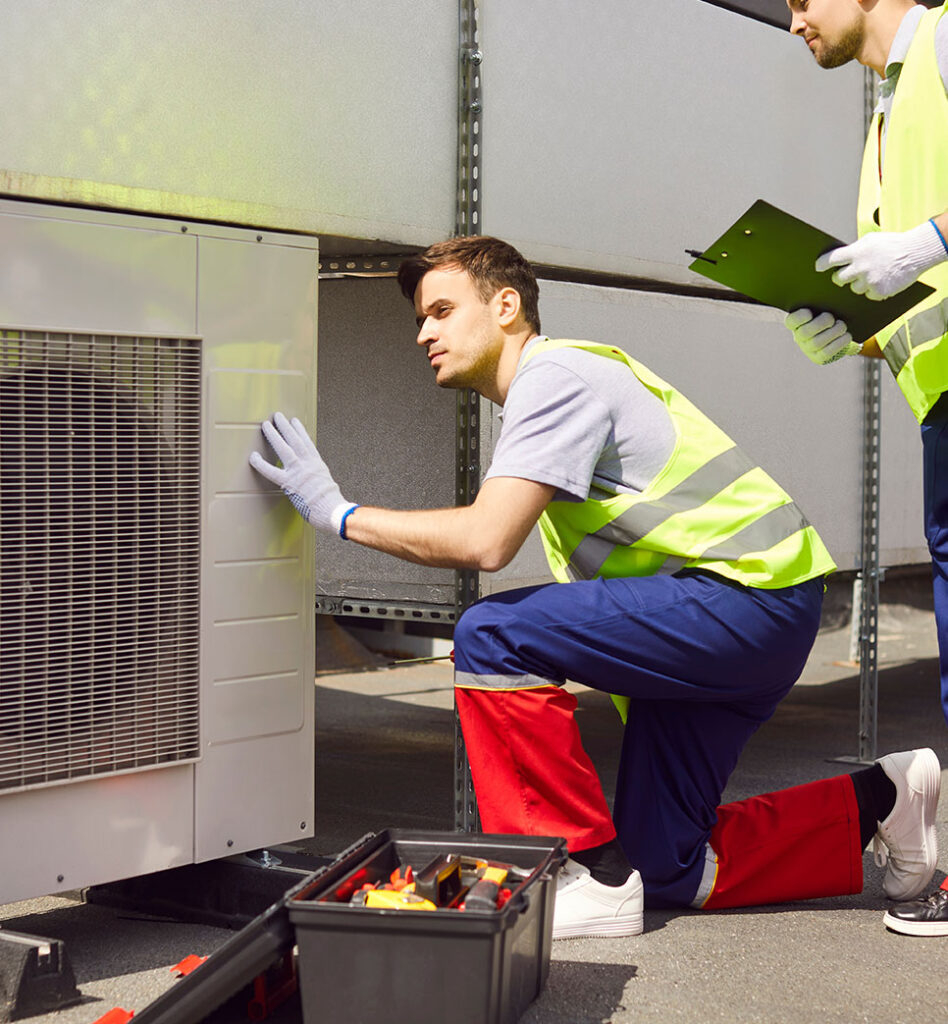
Not all “tune-ups” are created equal. When engaging a professional for maintenance, you should expect a rigorous checklist, not just a filter swap. A true preventative maintenance visit for a commercial rooftop unit should include:
1. Airside Inspection
- Replacing air filters.
- Checking the economizer operation (crucial for free cooling efficiency).
- Inspecting the blower wheel for debris buildup.
- Checking belt tension and alignment.
2. Electrical Analysis
- Tightening all control and power wiring connections.
- Measuring voltage and amperage on all motors and the compressor.
- Inspecting the contactors for pitting or burning.
- Testing capacitors for proper microfarad ratings.
3. Refrigeration Circuit Check
- Cleaning the condenser coil (often with water/chemical wash).
- Inspecting the evaporator coil.
- Checking refrigerant operating pressures.
- Monitoring superheat and subcooling to ensure optimal charge.
4. Heating Section (Seasonal)
- Inspecting the heat exchanger for cracks (carbon monoxide safety).
- Cleaning the burner assembly.
- Testing the ignition system and flame sensors.
- Verifying proper flue gas venting.
At 1-800-CoolAid, our technicians follow detailed protocols to ensure no component is overlooked. We document the condition of your equipment, providing you with a clear picture of your system’s health.
The Strategic Advantage of a Maintenance Contract
While you can schedule maintenance “as needed,” the most effective strategy for reducing emergency repairs is a formal maintenance agreement.
Priority Service
When a heat wave hits, HVAC companies are flooded with calls. If you are a “call-in” customer, you go to the back of the line. If you have a maintenance contract, you are a priority client. You jump the queue. For a business where cooling is critical, this guaranteed response time is invaluable.
Fixed Costs for Budgeting
A maintenance contract allows you to budget your HVAC expenses for the year. You know exactly what the preventative care will cost. It eliminates the rollercoaster of unpredictable repair bills.
Asset History Tracking
With a contract, your provider builds a detailed history of each unit. They know that Unit #3 had a belt change six months ago, or that Unit #1 has a slowly aging contactor. This data allows for predictive maintenance—fixing things before they break based on historical trends and known lifespans.
When to Start Your Maintenance Program
The best time to start a maintenance program was the day the unit was installed. The second best time is today. It is never too late to start caring for your equipment. Even an older unit can benefit significantly from a thorough cleaning and tune-up, potentially revealing minor issues that can be fixed cheaply before they become terminal failures.
Seasonal Timing
Ideally, commercial maintenance should happen at least quarterly (4 times a year).
- Spring: Preparation for the cooling season (coil cleaning, refrigerant checks).
- Summer: Mid-season check to ensure the unit is surviving the heat load (belt checks, filter changes).
- Fall: Preparation for the heating season (gas checks, ignition testing).
- Winter: Mid-season heating check and filter changes.
For lighter-use facilities, semi-annual (twice a year) might suffice, but quarterly is the gold standard for maintaining filter hygiene and catching issues early.
Conclusion: Peace of Mind is Priceless
Running a business is stressful enough without having to worry about whether the roof is going to cause a crisis today. Routine rooftop HVAC service gives you control. It turns an unpredictable, high-risk variable into a managed, predictable asset.
By investing in maintenance, you are not just “fixing ACs.” You are:
- Protecting Revenue: Ensuring your doors stay open and customers stay comfortable.
- Saving Money: Reducing energy bills and avoiding emergency labor rates.
- Extending Life: Getting maximum value out of your expensive equipment.
Don’t wait for the silence of a broken unit to remind you of the importance of maintenance. Take a proactive step today to secure your facility’s comfort and your peace of mind.
If you are in the San Francisco Bay Area and want to stop emergency repairs before they start, contact the experts at 1-800-CoolAid. Our team specializes in comprehensive commercial maintenance plans tailored to your specific needs. Let us handle the HVAC, so you can handle your business.
Frequently Asked Questions (FAQs)
How often should rooftop filters be changed?
In most commercial settings, filters should be changed quarterly (every 3 months). However, in high-traffic retail environments, restaurants with grease in the air, or areas with heavy pollen/dust, monthly changes may be necessary to protect the equipment.
Can I do the maintenance myself?
While a business owner can change filters, comprehensive maintenance requires specialized tools and licensing. Handling high-voltage electricity, pressurized refrigerants, and climbing roofs carries significant safety risks. It is strongly recommended to use a licensed professional for liability and safety reasons.
Does maintenance void my warranty?
Quite the opposite. Most manufacturer warranties require proof of routine professional maintenance to remain valid. If a compressor fails under warranty but the manufacturer finds the cause was a dirty coil from lack of maintenance, they can (and often will) deny the claim.
What is the difference between a “check-up” and a “maintenance contract”?
A check-up is a one-time transactional service. A maintenance contract is an ongoing partnership. Contracts usually include discounted labor rates on repairs, priority scheduling for emergencies, and a structured schedule of visits so you don’t have to remember to call.
My unit is new; does it really need maintenance?
Yes. Just like a new car needs oil changes to keep running well, a new HVAC unit needs filter changes and belt adjustments. The “break-in” period often sees belts stretch, and construction dust from a new building can clog filters rapidly. Starting maintenance early ensures the unit stays “like new” for years.
Stay Comfortable Year-Round With Expert HVAC Service
Book a trusted technician to handle your heating or cooling issue—fast, professional, and done right the first time.
Book Service Now