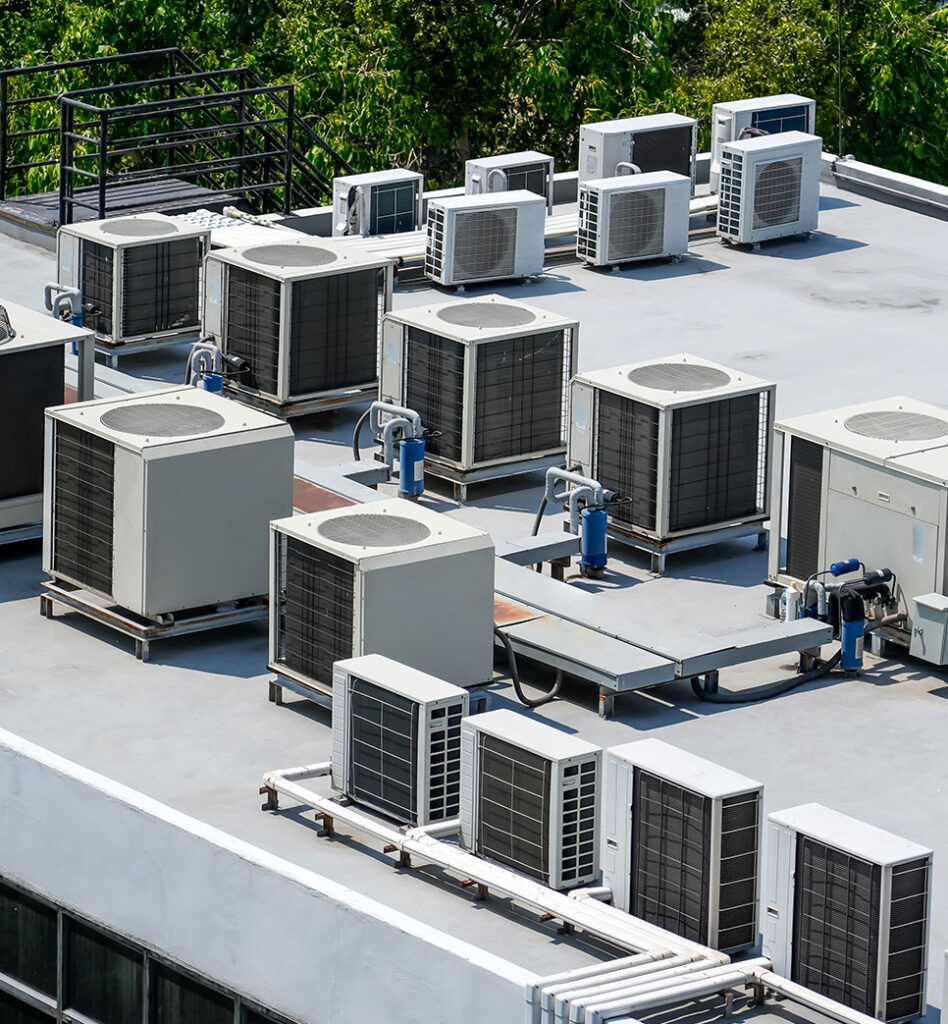
In the commercial sector, the phrase “time is money” is not a cliché; it is a literal operational metric. Every hour your doors are open, your facility generates revenue, supports productivity, and serves customers. However, there is a silent partner in your success that often goes unnoticed until it fails: your rooftop HVAC unit (RTU).
When a commercial HVAC system breaks down during peak operating hours—especially in the sweltering heat of summer—the clock starts ticking on financial loss. It begins with discomfort, escalates to distraction, and quickly culminates in lost sales, spoiled inventory, and long-term reputational damage.
The difference between a minor operational hiccup and a catastrophic revenue loss often comes down to one variable: speed. A fast, decisive response to an HVAC emergency is not just about restoring cool air; it is about protecting your revenue stream.
In this comprehensive guide, we will analyze the direct correlation between HVAC response times and business profitability. We will explore the hidden costs of downtime, the specific risks to different industries, and why partnering with a provider capable of rapid emergency HVAC services is a critical business strategy.
The Economics of HVAC Downtime
To understand the value of speed, we must first quantify the cost of delay. “Downtime” in facility management doesn’t always mean the building is closed, but it does mean the building is compromised. The financial impact of a broken rooftop unit ripples through every aspect of your business.
Calculating the Cost Per Hour
For a high-volume retail store or a busy restaurant, the calculation is stark. If the internal temperature rises above 78°F, customer dwell time drops precipitously.
- Retail: If your average hourly revenue is $2,000, and a hot store causes a 50% drop in foot traffic or sales conversion, a 4-hour delay in repair costs you $4,000 in direct lost sales. A 24-hour delay could cost you $24,000.
- Corporate Office: The cost is measured in payroll. If you have 100 employees earning an average of $30/hour, and the heat makes them 20% less productive (a conservative estimate for temperatures over 80°F), you are losing $600 per hour in wasted wages. Over an 8-hour workday, that is $4,800 lost—not including the cost of errors made by distracted staff.
The “Sunk Cost” of Utility Waste
Often, when a rooftop unit begins to fail, it doesn’t die instantly. It struggles. A compressor might short-cycle, or a fan might seize. While waiting for a repair technician, the system often continues to pull electricity—sometimes significantly more than usual—while providing zero cooling benefit. Fast repairs stop this energy bleed immediately.
Industry-Specific Risks: Why Speed is Non-Negotiable
Different businesses face different threats when the AC dies. Understanding your specific vulnerability is key to prioritizing your emergency response plan.
1. Restaurants and Food Service: The Double Threat
For restaurants, a rooftop HVAC failure is a two-front war.
- Front of House: Diners will not eat in a sweatbox. They will leave, and they likely won’t return. Negative reviews mentioning “it was so hot inside” can linger on Yelp or Google for years, deterring future customers.
- Back of House: Kitchens are already hot environments. Without functioning makeup air and cooling, a kitchen can become dangerous for staff, leading to heat exhaustion and potential OSHA violations.
- Inventory: If the HVAC failure is tied to electrical issues that also affect walk-in coolers, thousands of dollars in perishable stock are at risk.
In this environment, a 2-hour response time versus a “next day” response time can be the difference between a profitable dinner service and a total shutdown. This is why reliable commercial HVAC repair services are vital for the food industry.
2. Retail and Grocery: The “Walk-Out” Factor
In retail, comfort is a conversion tool. Customers linger in comfortable environments. In a grocery setting, HVAC failure poses a threat to open-air refrigeration cases. If the ambient temperature of the store gets too high, open coolers have to work overtime to keep milk and meat cold. Eventually, the coolers can’t keep up, leading to spoilage.
Rapid repair protects the “cold chain” integrity of the store, saving insurance deductibles and inventory restocking costs.
3. Tech and Data Centers: The Hardware Meltdown
For businesses with on-premise server rooms, HVAC isn’t about comfort; it’s about survival. Servers generate massive amounts of heat. If the cooling fails, server temperatures spike within minutes.
- Thermal Shutdown: Most modern servers have safety protocols that shut them down automatically if they overheat to prevent permanent damage.
- The Cost: Unplanned server downtime halts operations, crashes websites, and stops internal communications. The cost of data recovery and lost business uptime can reach tens of thousands of dollars per hour.
Speed here is measured in minutes, not hours.
The Anatomy of a Fast Emergency Repair
What actually happens when you call for emergency service? Why can some companies get you up and running in hours while others take days? The speed of resolution depends on three critical phases.
Phase 1: The Response (The “Boots on the Roof” Time)
This is the time between your phone call and the technician arriving at your facility.
- The Slow Way: You call a national call center. They take a message. They dispatch a ticket to a local subcontractor. The subcontractor calls you back to schedule. This game of “telephone” can waste 4-6 hours.
- The Fast Way: You call a local, dedicated provider like 1-800-CoolAid. You speak to a dispatcher who knows the area. A technician is routed immediately. “Boots on the roof” happens in under 2 hours.
Phase 2: The Diagnosis (Accuracy Matters)
Speed is useless without accuracy. A technician who rushes and misdiagnoses the problem wastes more time in the long run.
- The Slow Way: An inexperienced tech guesses. They replace a thermostat when the real problem is a high-pressure lockout due to a dirty coil. The unit runs for an hour and dies again.
- The Fast Way: A seasoned commercial technician uses systematic troubleshooting. They check pressures, superheat, subcooling, and electrical continuity. They find the root cause (e.g., a failed capacitor stressing the compressor) and address it.
Phase 3: The Part Sourcing (The Logistics of Repair)
This is the most common bottleneck in the industry.
- The Slow Way: “I need to order that part. It will be here in 3 days.” This sentence is a revenue killer.
- The Fast Way: The technician arrives in a fully stocked service truck. They carry universal motors, capacitors, contactors, and belts. They can perform the repair on the spot during the first visit. If a proprietary part is needed, a local provider has relationships with local supply houses to get the part same-day, not next-week.
Protecting Your Brand Reputation
In the digital age, a physical breakdown often becomes a digital problem. Customers are quick to share their experiences online.
The “One-Star” Review Effect
Imagine a scenario: It is 95°F. Your restaurant’s AC fails at 5:00 PM. You stay open, hoping it cools down.
- Outcome: Customers are miserable. They sweat through their meal. Three of them go to Google Reviews and leave 1-star ratings complaining about the heat.
- The Long Tail: Those reviews stay up forever. Future customers searching for “best dinner near me” see those reviews and choose your competitor. The revenue loss from that single night of broken AC continues for months.
Fast emergency repairs are reputation management. By fixing the issue before the dinner rush—or having a provider who can get there quickly enough to mitigate the temperature rise—you protect your brand’s standing in the community.
Mitigating “Panic Pricing” and collateral Damage
Speed also saves you money on the repair itself, indirectly. When a system fails, panic often sets in. Facility managers might make rash decisions to rent expensive portable spot coolers or pay exorbitant rates to unverified contractors just to get someone on site.
The Cost of Temporary Solutions
Portable AC rentals are a legitimate stopgap, but they are expensive. Renting 10 tons of portable cooling for a week while waiting for a slow repair contractor can cost as much as the repair itself.
By utilizing a commercial HVAC service provider known for rapid turnaround, you minimize or eliminate the need for these expensive temporary measures.
Preventing Collateral Damage
A rooftop unit that is “limping along” while waiting for a repair is often destroying itself.
- Example: A unit with a failed condenser fan motor. If left running (or if it tries to run intermittently), the compressor will overheat rapidly.
- The Consequence: What started as a $500 motor repair turns into a $3,000 compressor replacement because the repair wasn’t performed quickly enough.
Fast intervention stops the domino effect of mechanical failure.
The Role of Preventative Maintenance in Speed
It might seem contradictory, but the fastest emergency repair is the one you don’t have to make. However, when emergencies do happen, prior maintenance speeds up the fix.
Known History
If you have a commercial maintenance services contract, your provider knows your equipment. They know you have a 10-ton Trane unit on the roof. They know the model number.
When you call for emergency service, the technician arrives already knowing what they are walking into. They might even have the specific belt or filter size pulled from the warehouse before they leave the shop. This intelligence dramatically reduces diagnosis and repair time.
Access and Logistics
Regular service means the technician knows how to get on the roof, where the disconnect switches are, and who to talk to. These small logistical details can save 30-45 minutes per visit—time that is better spent fixing the unit.
How to Ensure You Get Fast Service
As a business owner, you cannot control when your unit breaks, but you can control who you call. Preparation is the key to speed.
1. Vet Your Provider Before the Emergency
Do not wait until the AC is smoking to search Google for “AC repair.” Do your research now.
- Check Availability: Do they offer true 24/7 service, or is it just an answering machine?
- Check Capabilities: Do they specialize in commercial rooftop units? Residential technicians often lack the tools and expertise for 480-volt commercial systems.
- Check Local Presence: A company based 50 miles away cannot respond as fast as a local San Jose or Bay Area provider.
2. Establish an Account
Set up a relationship with a provider like 1-800-CoolAid. Being an established customer often grants you priority status during heat waves when dispatch boards are full.
3. Empower Your Staff
If you are not on-site 24/7, ensure your shift managers know exactly who to call and have the authorization to approve emergency dispatch fees. Delaying a call by 3 hours because a manager “needed to ask the owner” is a common cause of avoidable revenue loss.
Case Study: The Cost of Waiting vs. The Value of Speed
Let’s look at a hypothetical comparison of two retail stores in San Jose facing the same HVAC failure on a 98°F Saturday.
Store A: The Reactive Approach
- Failure: 10:00 AM.
- Action: Manager spends 2 hours Googling cheap repair companies. Calls three, leaves voicemails.
- Response: Finally gets a callback at 2:00 PM. Tech can’t come until Monday.
- Result: The store remains hot all weekend. Traffic drops 60%. Perishable chocolate items melt (loss: $500). Total lost revenue estimated at $8,000.
- Total Cost: $8,000 revenue + $500 stock + Repair Cost.
Store B: The Proactive Partner
- Failure: 10:00 AM.
- Action: Manager calls 1-800-CoolAid immediately (number is on the wall).
- Response: Dispatcher routes a truck. Tech arrives at 11:30 AM.
- Resolution: Tech identifies a blown fuse and a loose wire. Fixes it by 12:15 PM.
- Result: The store is cool by 1:00 PM. Saturday rush is unaffected.
- Total Cost: One emergency service call fee.
The difference in ROI is massive. Store B paid a service fee but protected thousands in revenue. Store A tried to save on the service call and lost the weekend.
The 1-800-CoolAid Advantage
In the Bay Area, we understand the stakes. Our business model is built around the reality of commercial urgency.
- Rapid Dispatch: We utilize advanced fleet tracking to send the closest qualified technician to your site.
- Commercial Expertise: Our team deals with RTUs daily. We know the common failure points of major brands like Carrier, Trane, Lennox, and York.
- Inventory Depth: Our trucks are rolling warehouses, stocked with the most common commercial parts to ensure a high “first-time fix” rate.
We don’t just fix air conditioners; we restore your business operations.
Conclusion: Don’t Let a Breakdown Break Your Bank
A rooftop HVAC failure is a stress test for your business. It tests your patience, your staff’s resilience, and your financial buffer. While you cannot prevent every mechanical failure, you can choose how long the pain lasts.
Fast emergency rooftop HVAC repairs are an investment in revenue protection. They minimize the “burn rate” of lost sales, wasted wages, and fleeing customers. By prioritizing speed and partnering with a reliable, local commercial HVAC expert, you ensure that a breakdown is a minor inconvenience rather than a fiscal disaster.
Do not wait for the heat to rise. Ensure you have a plan in place. When the unexpected happens, trust the speed and expertise of 1-800-CoolAid to get you back to business as usual—fast.
Frequently Asked Questions (FAQs)
What is considered an HVAC “emergency”?
An emergency is typically defined by the impact on health, safety, or critical business operations. If the failure affects a server room, risks spoiling food inventory, creates unsafe working conditions, or completely halts business operations (like a retail store becoming too hot for customers), it is an emergency.
Does emergency service cost more?
Yes, emergency service—particularly after standard business hours, on weekends, or holidays—usually incurs an overtime labor rate or a higher dispatch fee. However, when weighed against the cost of lost revenue (e.g., closing a restaurant on a Saturday night), the higher rate is almost always the more economical choice.
How quickly can a technician arrive for an emergency call?
Response times vary by provider and demand. However, a dedicated local provider like 1-800-CoolAid aims to prioritize emergency commercial calls. In many cases, “same day” or even “within hours” service is the goal for critical failures.
What information should I have ready when I call?
To speed up the process, have the following ready:
- Business Name and Address.
- Site Contact Name and Phone Number.
- Nature of the Problem (e.g., “Unit is making a loud noise,” “No airflow,” “Thermostat is blank”).
- Unit Location (e.g., “The unit over the kitchen”).
- Access Details (e.g., “Need a ladder,” “Roof hatch is locked”).
Can I run my business while the HVAC is broken?
That depends on the internal temperature and your industry. OSHA has guidelines regarding safe working temperatures. If the indoor temperature exceeds safe levels (often considered 85°F+ for moderate work), you may be liable for employee health issues. In retail/hospitality, you can stay open, but customer satisfaction will likely plummet. It is a risk-reward calculation.
Stay Comfortable Year-Round With Expert HVAC Service
Book a trusted technician to handle your heating or cooling issue—fast, professional, and done right the first time.
Book Service Now